Feeds:
Posts
Comments

Yeoman

There are, in my home, many watches. But for five years, I’ve carried only one.

My watches date from the Age of Steam to the Age of Jets, bearing the marks of craftsmen from Victorian, Edwardian, Nouveau, Deco, and Mid-Century eras.

I have watches that were used to keep trains running on time, mark a valued employee’s retirement, chime the quarter hour, and show the time in the dark with radium-lit dials. Some glister with ruby bearings and gears of gold, their plates tooled with filigree, their enameled dials bright, while others are of stamped brass, paper faces, encased in cheap tin.

They are the watches of men both rich and poor, bespoke or mass-produced, but all came to me in somnolent neglect and the silence of disrepair. For each of them, I cracked their cases, disassembled their movements, cleaned and repaired and replaced the parts that were begrimed, bent, or broken, bringing them back to life, allowing their spring-loaded hearts to beat once again.

I used to swap them out, carry a different one every week, its chain hooked onto my denim belt loop, the watch itself tucked into the tiny right-hand pocket designed solely for the purpose.

But no longer.

Waltham, Elgin, Hampden, Ingersoll, and the others, high-end or base-born, all now lie stored in cushioned darkness, their mainsprings having ticked down to quiet rest.

Now, my watch pocket is empty, for my wrist carries my watch.

It’s a scuffed and scarred thing, with a crystal that’s a bit scratched, a bit chipped. It isn’t very old—a score of years at most—and it is decidedly plain, with square hands and numbers on a simple white face. It doesn’t even have a mainspring, the coiled powerhouse of nearly every other watch I own, but runs on a battery.

It’s a run-of-the-mill Timex Indiglo wristwatch. And it is my father’s watch.

When my father died, five years ago, and I was cleaning out his last abode, his watch was included in his effects. It is the watch he wore every day, whether he was out fishing for steelhead, sneaking a smoke out back, or painting a landscape, and it is—as was he—basic, uncomplicated, quiet, easy to read, dependable, sturdy, and consistent.

For five years, it’s been on my wrist doing yeoman’s work, ticking away, showing me the wee hours with its cyan glow, keeping perfect time. I’ve never changed the battery, not once in those five years. It is, as I said, dependable, sturdy, and consistent.

Someday, it too will run down, its battery spent, and that day, I suppose, when the new battery clicks into place, that will be when the watch will stop being his, and will then be mine.

k


Fallow Fields

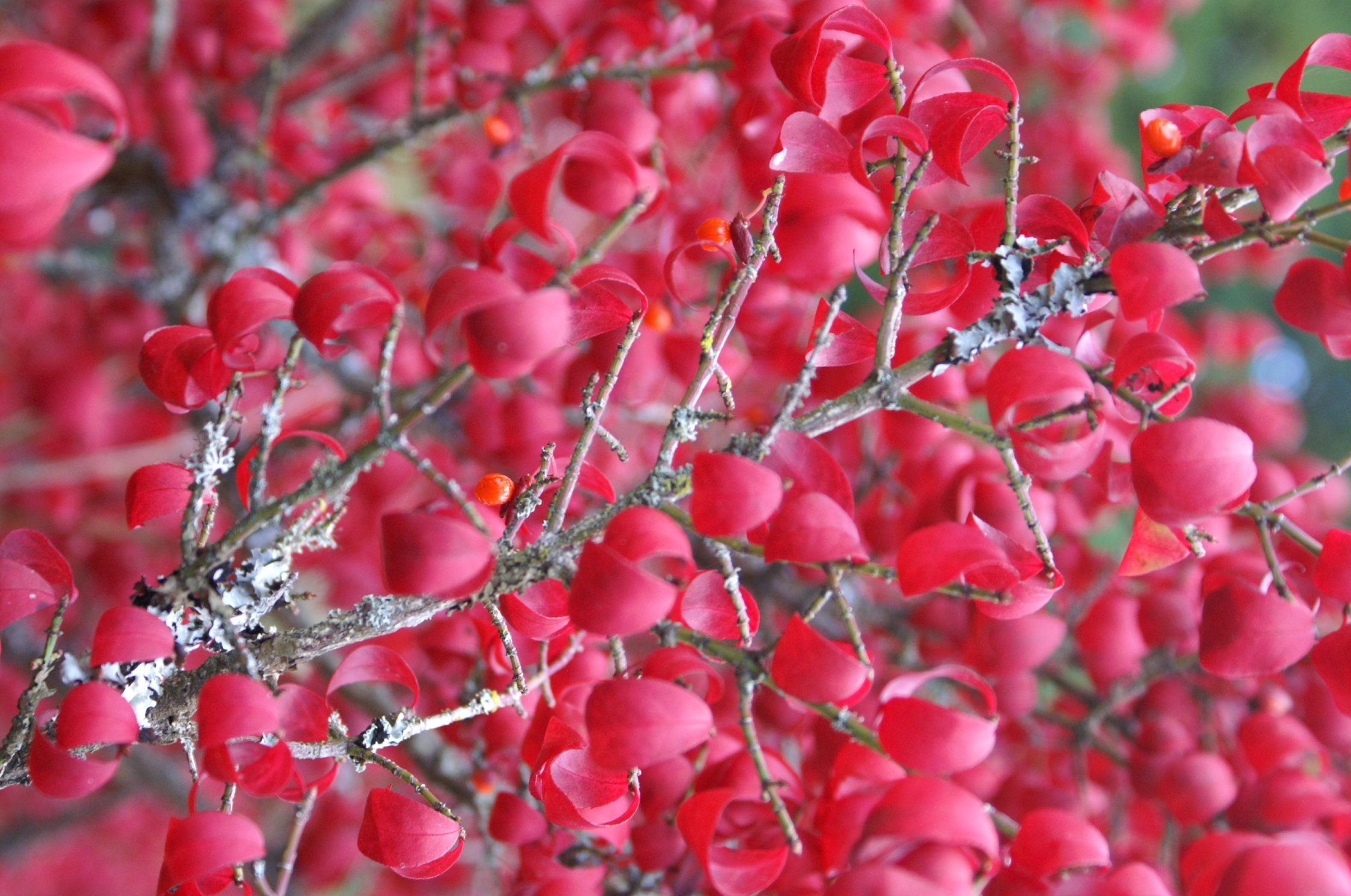
Maples at Seattle Arboretum

Well, sometimes the magic works. Sometimes it doesn’t.

I’m back from a two-week vacation and, for me, two weeks is the minimum required to feel like I’ve actually had a vacation. The first week I spend powering down—sleeping decent hours, relaxing, reading, puttering—but the second week is when my brain finally looks up, sees the sky, hears the birdsong, smiles, and forgets about the day job.

It was a good stay-at-home fortnight, filled with fall colors (in my gardens and around the Sound), blustery fall weather, rain, walks, movies, and even a bit of socializing. It was a rather creative time, as well. I finished building my hurdy-gurdy, cooked a couple of excellent meals, and managed to craft one or two fairly decent pieces for this blog.

But this week . . . eh, not so much.

Granted, the week back at work after well-spent time off is always difficult, but this one has been quite the challenge. You see, my retirement is out there, waiting. I can smell its heady aroma and hear its quiet song, lofted by the onshore breeze. Going back to the day job gets harder each time, but usually (thankfully) there’s a grace period granted to vacation-returnees: sufficient time to go through the mountains of emails; to catch up on all the changes, gossip, and news; and to ramp back up on the work we’d set aside during our weeks away.

This time, though, it was more of a “hit the ground running” type of week. I was met with an excessively aggressive deadline date (promised during my absence), plus a slew of quarterly meetings that stole a whole day that I really could have used trying to meet that promised deadline.

So, today, when I sat down in front of my blank sheet of paper and tried to come up with a poem or vignette, chicken-scratching my way around the metaphor that’s been in my head for a couple of days (family lineage as a river), I came up empty. Empty, that is, except for lines and stanzas written and then struck out, word clouds that dissipated into thin air, and several crumpled sheets of 11×18 newsprint on my office floor (which at least entertained the cat, if only for a few minutes).

I then compounded that frustration by spending the evening trying to solidify new ideas out of the ether—it’s not as though I had no ideas, just that I could bring none of them into sufficient focus to wrap words around—until, in the end, I cried, “Hold! Enough!”

And so here we are.

If I might torture another metaphor, every farmer knows that letting a field lie fallow for a time benefits the land and the crops. So, seeing as how I’ve been very creative during the past few months, I think I can allow myself a fallow week.

Here’s hoping that my crops rebound after the rest.

k

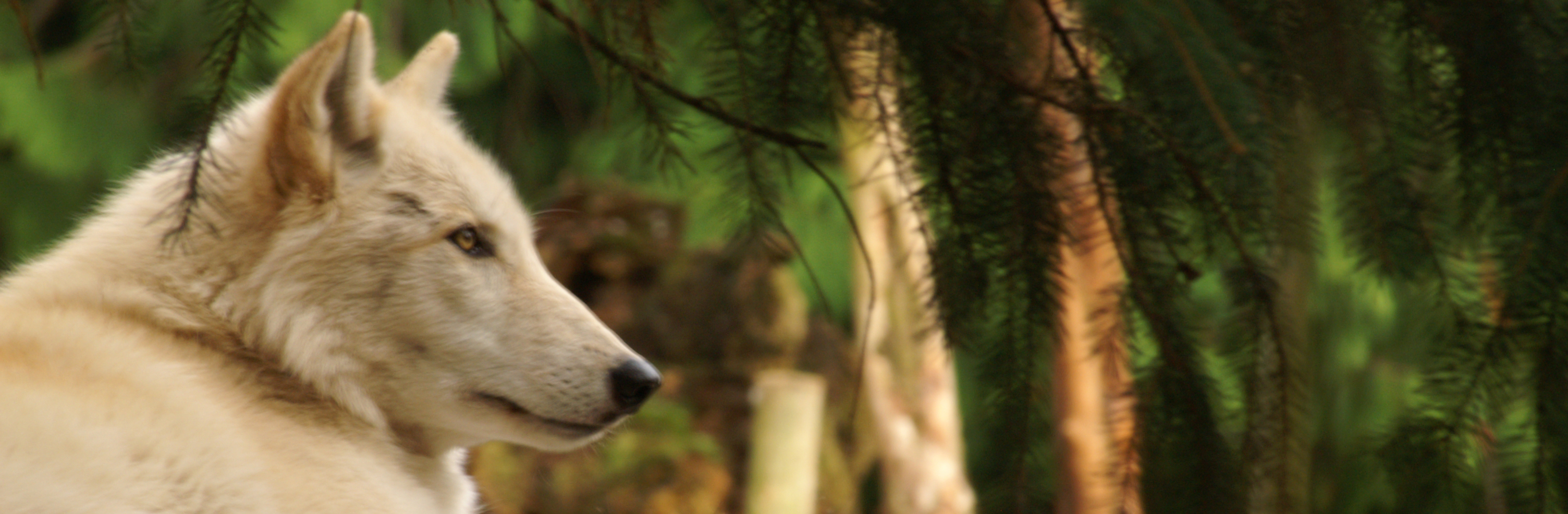
Wolves We Once Were

wolves we once were
and strong
with sharp-eyed mien
and lean-limbed hunger
joining together
to face
our foes

loyal to the pack
we protected our young
aided our weak
our society of many
united

but the fire drew us in
offered us warmth
against the world’s chill
taught us to hoard
the tossed scrap
rather than share
the pack-won prize

wolves we once were
but no more
having chosen the fire
our pack is weak
divided

with fleck-spittle snouts
we snarl at each other
through our broken fences
unable to wonder
who it is
that tosses us
their scraps

Puttering

the fraught world
retreats
    powerless
    in the face of
        recycling boxes
        tidying the garage
        fixing a broken chair

global tensions
dissipate
    impotent
    against the power of
        weeding the garden
        harvesting tomatoes
        clipping summer’s last rose

folded laundry
   smooths global supply chains
clean countertops
    muffle rattled sabers

they’re not solutions
   but they ease my pain
        for an hour
        or a minute
            and sometimes
            that’s all I need
                to continue

k

Autumnal Break


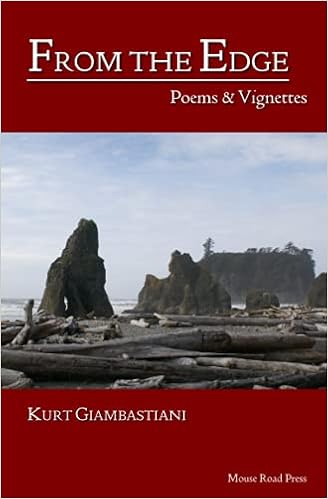
First, many thanks to those who showed interest in my new book, From the Edge (now available via Amazon). If you liked it, please  consider writing a review, as that helps drive its visibility.

Autumn figures strongly in From the Edge, as it is without doubt my favorite season (how’s that for a smooth segue?), so it should be no surprise that I’ve scheduled some time off for mid-October. We’re not going anywhere special—trips during the pandemic still carry too much anxiety—so we’re planning local activities and, as is our habit, we’re over-planning.

The kitchen white board now lists a few museums to visit and a couple of the bookstores we like to hit on stay-cations, but one category has grown out of all proportion to its fellows: Day Trips for Fall Color.

Seattle and the Puget Sound region are blessed in that we actually have four seasons. Much as we joke about us having only three—Summer (three weeks), Smoke (three weeks), and Rain (all the rest)—we really do have a distinct Spring, Summer, Autumn, and Winter. And though we’re known as the Evergreen State, we have many areas of deciduous flora that make for stunning fall color vistas.

In combination, the region and the season have another advantage: variable elevation. Fall colors peak at different times at different elevations, so if (as has happened) our fall vacation arrives and the colors aren’t ready down hear near the Sound, we can drive up into the Cascades or the Olympics, where the colors get a two-week head start. Of course, if it is peak color time here at sea level, we have a great collection of parks and gardens from which to view them.

So, the Day Trips for Fall Color list on the white board includes the near (Kubota Garden, Washington Park Arboretum, Japanese Garden), the close and basically sea-level (the Mountain Loop Scenic Byway, the Whidbey Scenic Isle Way, the Chuckanut Drive Scenic Byway), and the not-so-close and higher elevation (Stevens Pass Greenway, Leavenworth, and if we’re feeling adventurous, the Chinook Pass). It’s an embarrassment of fall-color riches.

More than just driving around to view the colors, though, we like to stop and enter the autumnal world, for there are scents and sounds that only come at this time of year, in leafy places when the colors rage.

There’s the crispness, a bit of sass, that thrives in the morning and evening air. There’s the urgency of chipmunks, seeking oil-laden seeds on which to grow fat for the coming winter. Birds, their feathers adapted for camouflage amid deep summer shadows or against dark wintry limbs, dart about in deep contrast to the bright riot of translucent hues. And the scents! The smell of moisture has returned after summer’s sere mien has passed. The earth-wood aroma of fallen leaves and rising mushrooms are the umami of forest glades. Rivulets and streams chuckle, happy in rebirth, and all around are the tiny paper-rustles of birds searching beneath leaves, the pit-pat of squirrels covering their caches, and the tentative steps of blacktail deer mincing along narrow, leaf-strewn tracks.

Autumn, to me, is a reward. It’s a reward for surviving the busyness of spring and the chores of summer. It’s the year’s twilight before winter’s somnolence. Autumn is the cognac by the fire before I turn in for the day.

And I intend to enjoy it.

k

You knew this was coming (either that, or you haven’t been paying attention): From the Edge, a collection of poetry and vignettes, is now live on Amazon! W00t!

In putting this together, I encountered needs that never arose with my novels. Primary among them was the concept of a coherent theme, and right behind that, organization. These aspects were new to me, as with novels they’re just part of the package. Here, though, I was making a whole out of things that were never written as parts of a whole, so theme and organization suddenly took on new importance.

Sure, I could have just collected “poems I like” or “things I wrote in chronological order,” but I wanted the whole to have something to say, as a whole. This goal proved quite a challenge, though, since none of these pieces was written with the others in mind.

The first task, naturally, was to winnow the hundreds of pieces I’d written since the late ’90s into a manageable pile. Immediately I divided them into “Maybe” and “No” piles, a process I repeated, each time with a more exacting eye. Eventually, I had an “Almost Yes” pile of eighty or so pieces, all poetry and short poetic prose that would fit on one or two pages.

Next was to distill from these a theme. This was difficult, and literally kept me up at night. Eventually, though, it became clear that many dealt with a transition, and from that the concept of liminality became prominent. The title, I felt, should evoke that concept, and after trying out many of those, I settled on From the Edge, as in: from the edge of the century, the edge of the continent, the edge of patience, the edge of life, from the edge of a transition from one state to the next.

Then I needed to make a final cut and organize the pieces and here I fell back into true to geek-boy form. I put the pieces in a spreadsheet, analyzed their content, and determined a meaningful structure.

Yes, seriously.

It’s not as crazy as it sounds (or so I tell myself). Many of the pieces had a “seasonal” component, reflecting a certain time of year. Each one also carried an “emotional weight,” and I didn’t want the reader to be hit by (what I felt were) several hard-hitters in a row. Topic was a factor; just as I didn’t want three heavy poems in a row, neither did I want having three “nature” poems bunched together. Finally, the length had to be considered, both (again) to avoid clumps of longer works, but also (and more importantly) to ensure that the works requiring two pages could be read without breaking the flow by turning the page.

The result is a selection of nearly fifty pieces, from winter to winter, exploring the nature of transition and transformation.

Or, at least, that is the intent.

The last decision I made was to break with one of my guiding principles and only offer this in hardcopy. Presentation has a greater impact on poetry than on prose, and I spent many (many) iterations getting the font, format, and layout just right. If I were to adapt the book to a digital format, most of that would be lost, so, sorry-not-sorry, you won’t be able to read these in Arial or Times New Roman on your phone. Want to read them? You’ll have to go old-school.

So, From the Edge is alive and has been released into the wild. Go catch one (if you can)!

k

Born on the Cusp

Born on the cusp
between two worlds

he never looked back
except with sadness

nor reminisced
but under pressure

from sons and daughters
eager to learn his source.

He kept that world
of loves and wars

tucked tight away
in his heart’s attic

for the world of his now
was challenge enough

without memories
of one that was no more.

k