Feeds:
Posts
Comments

For Want of a Pencil

Inspiration often comes from a surprising direction.

I recently had a birthday and my sister sent me a gift. It was a pack of pencils, with a cunning two-stage sharpener and a “point guard” (a metal cap that fits over and protects the pencil’s point, a thing of which I never before heard and now wonder how I ever lived without).

I have a thing about pencils. I’m very particular.

I do not like mechanical pencils. I positively loathe the disposable mechanical pencil (such wastefulness should be resoundingly decried). Give me a pencil of wood and graphite, every time.

Over the past six decades, I’ve always had a preferred brand.

  • First and for many years, it was the old-school yellow Ticonderoga #2. Nothing could beat it for availability, economy, smoothness of draw, and dark positive line.
  • Then I discovered Blackfeet Indian pencils and immediately fell for their natural wood finish and aromatic cedar wood (not to mention the cedar wood box each dozen came in); I was faithful to them for years after they were discontinued, but recently the price of a box became too expensive.

Disappointed by replacement options and running low on my stock of (now prohibitively expensive) Blackfeet, I did what any self-respecting stationery nerd would do. I switched to a fountain pen. I wrote all of the Fallen Cloud Saga with a fountain pen, but recently, as I’ve been concentrating more on poetry, I’ve returned to my first love, the pencil, meting out my Blackfeet Indian pencils with miserly oversight, running each one down to the absolute nub.

Then my sister’s gift arrived.

The pencils she sent are Blackwing 602s. As with the Blackfeet Indian pencil, they had a long and storied reputation; 602s were the preferred (and often exclusive ) choice of great talents: artists (Chuck Jones, Don Bluth), composers (Copland, Bernstein, Sondheim), playwrights (O’Neill, Laurents), and novelists (Steinbeck, White). Also as with the Blackfeet, the line was discontinued in the late 1990s (at which time Sondheim reportedly bought himself a lifetime supply).

The Blackwing 602, however, was revived in 2010, and my sister, knowing my love of All Things Stationery, gifted me with a dozen.

And they are wonderful.

Smooth, long, lean, requiring only the lightest touch for a dark line, with graphite tough enough to hold a fine point (but easy to re-tip, using the 2-stage sharpener), and with a wide eraser that can be extended as it’s used up, they are my new favorite.

“But wait,” I hear you say. “What was that bit up there about inspiration? Where does that come in?”0

Well, it turns out that, as I’ve been toying with these new pencils, using them for notes and analyses for my day job, I’ve grown dissatisfied with using these perfect pencils just for jotting down procedures and sketching out data flows. Even using them for poetry wasn’t enough.

The obvious thing, then, was to take out The Wolf Tree, the novel I’ve been working on since before the pandemic, which still needs a lot of writing.

Which means that the gift of a pencil has unexpectedly provided me the inspiration to get back to work on my novel.

And that’s a gift with a worth that’s far above rubies.

k
Bound by Water

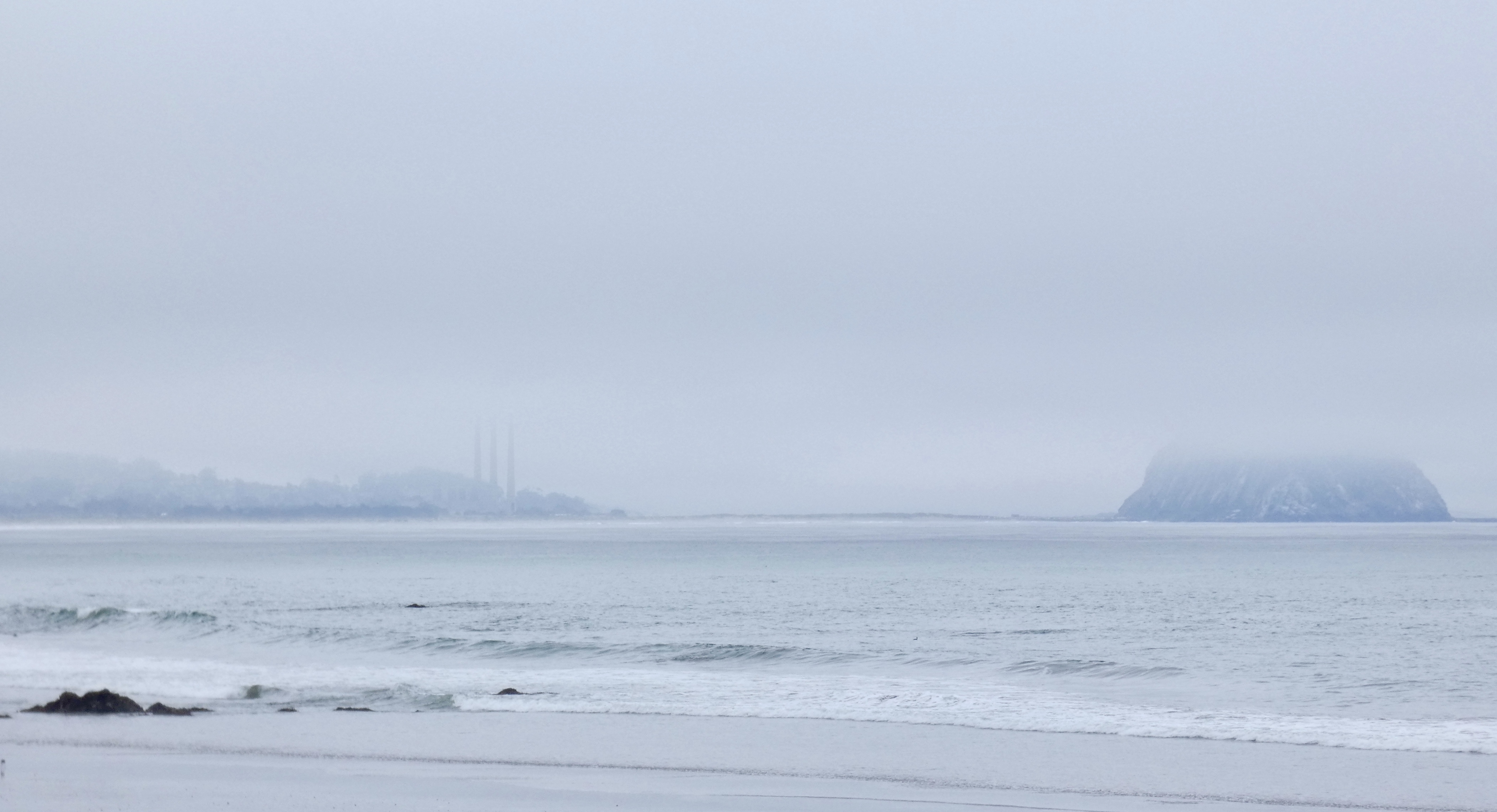
I was born in fog
welling from the coast’s cold waters,
mariners’ mournful cautions
echoing ’round my infant hollow,
earth-bound cloudbanks
tumbling over the ringing hills,
billowing down our mist-slick street,
infusing my new world with ancient distance.

I grow old beneath rain
birthed by distant, tropical seas,
cooled by winds scented with
salt and sand and sun-warmed kelp,
sped by sky-high rivers
to beat upon these tree-clad shores
and wash down to feed the tidal flats
with burbling, silted waters of myriad streams.

Between them is stretched a life
where my limbs grew fast as springtime rye
beneath shadows chased by auspicious suns,
where towering guardians of wood and stone
surrounded the humid masses or arid wild,
where my heart tasted honeyed love and sharp-tongued disdain,
traveling inland altitudes redolent
of mineral earth, verdant crops, and heady loam,
but never the cold, deep cradle
whose primeval memory flows in my veins.

Bound by water,
I have slept in many places,
but only near the sea
have I lived.

Happy Fourth Thursday

Today I am thankful for:
Two brothers, all bundled up in matching navy blue hoodie jackets, out on the cul-de-sac in the bright drizzle, playing a game.

The game is:
Proceed in stages from a starting point (the truck at the near end) to a goal (the far end of the block), by one player tossing a Frisbee ™ as far as they can but not so far (or wide) that the other cannot catch it. It must be caught, or the disc goes back for a rethrow.

Eminently scalable, simple and elegant in rules, it’s a beautifully cooperative game. They win together, full stop. There is no losing. There are only gradients of victory.

Looks like they’re going for a team best, now.

Happy Thanksgiving.

A week or so ago, I had a hankering to spend time with some old friends. We’d been out of contact for fifteen years, and I felt it was time to reconnect, to catch up, to share stories. So, for the past week, I’ve been hanging with Alain, Bronwyn, Wrdisten, Boduos, and the rest of the gang from old Breizh.

In other words, I re-read The Ploughman Chronicles, my 9th century historical high fantasy series.

And we had a blast. Literarily speaking, that is.

In the year AD 880, much of Europe was on the cusp between the old/pagan and new/Christian worldviews, and Brittany itself (where the series is set) was in open revolt against the expanding Carolingian Empire, so there’s a lot of historical intrigue woven into the books. Added to that, though, is an even greater intrigue between our world and the fabled Summerland, the land of the Fey, which lies beyond the Veil. Now throw in a prophecy, that there will come a man who will travel between, and master the power of both the line magic of the Veil and the earth magic of the sleeping gods.

For me, though, it is the characters I love most. I mean, they’re so . . . individual, so quirky, each with a distinct manner, their own way of speaking, and with motivations that are set (and revealed) in layer upon layer.

These books are not your usual high fantasy; I can’t think of another series that even comes close to it. Sadly, this series got no love from my agent—perhaps precisely because it isn’t your usual high fantasy—so they never had much opportunity to get shopped around. Also sadly, when I decided to publish them myself, my editing skills weren’t as sharp as they should have been, so I had to contend with the odd typo (and I really hate typos, especially when I’m the one who let them get into the final product).

But here’s where y’all come in.

You see, I love these books, even more so after my re-read, and I want to share them with you.

So, from now through Monday (November 22), the Kindle versions are free. You can find them both on this page at Amazon.

Download them for free, get the reading app for free, and (I hope) fall in love with them, for free.

Paperback versions are still available, of course.

So go, enjoy; tell a friend; hell, tell an enemy, I don’t care. I just want to share them. And if you like them, write a review. If you don’t, tell it to my agent; I think you’ll find a receptive audience there.

k

To Requite


your need is my desire
your desire is my hope
your hope is my dream
your dream is my heart
your heart is my home
your home is my love
your love is my comfort
your comfort is my need

Yeoman

There are, in my home, many watches. But for five years, I’ve carried only one.

My watches date from the Age of Steam to the Age of Jets, bearing the marks of craftsmen from Victorian, Edwardian, Nouveau, Deco, and Mid-Century eras.

I have watches that were used to keep trains running on time, mark a valued employee’s retirement, chime the quarter hour, and show the time in the dark with radium-lit dials. Some glister with ruby bearings and gears of gold, their plates tooled with filigree, their enameled dials bright, while others are of stamped brass, paper faces, encased in cheap tin.

They are the watches of men both rich and poor, bespoke or mass-produced, but all came to me in somnolent neglect and the silence of disrepair. For each of them, I cracked their cases, disassembled their movements, cleaned and repaired and replaced the parts that were begrimed, bent, or broken, bringing them back to life, allowing their spring-loaded hearts to beat once again.

I used to swap them out, carry a different one every week, its chain hooked onto my denim belt loop, the watch itself tucked into the tiny right-hand pocket designed solely for the purpose.

But no longer.

Waltham, Elgin, Hampden, Ingersoll, and the others, high-end or base-born, all now lie stored in cushioned darkness, their mainsprings having ticked down to quiet rest.

Now, my watch pocket is empty, for my wrist carries my watch.

It’s a scuffed and scarred thing, with a crystal that’s a bit scratched, a bit chipped. It isn’t very old—a score of years at most—and it is decidedly plain, with square hands and numbers on a simple white face. It doesn’t even have a mainspring, the coiled powerhouse of nearly every other watch I own, but runs on a battery.

It’s a run-of-the-mill Timex Indiglo wristwatch. And it is my father’s watch.

When my father died, five years ago, and I was cleaning out his last abode, his watch was included in his effects. It is the watch he wore every day, whether he was out fishing for steelhead, sneaking a smoke out back, or painting a landscape, and it is—as was he—basic, uncomplicated, quiet, easy to read, dependable, sturdy, and consistent.

For five years, it’s been on my wrist doing yeoman’s work, ticking away, showing me the wee hours with its cyan glow, keeping perfect time. I’ve never changed the battery, not once in those five years. It is, as I said, dependable, sturdy, and consistent.

Someday, it too will run down, its battery spent, and that day, I suppose, when the new battery clicks into place, that will be when the watch will stop being his, and will then be mine.

k


Fallow Fields

Maples at Seattle Arboretum

Well, sometimes the magic works. Sometimes it doesn’t.

I’m back from a two-week vacation and, for me, two weeks is the minimum required to feel like I’ve actually had a vacation. The first week I spend powering down—sleeping decent hours, relaxing, reading, puttering—but the second week is when my brain finally looks up, sees the sky, hears the birdsong, smiles, and forgets about the day job.

It was a good stay-at-home fortnight, filled with fall colors (in my gardens and around the Sound), blustery fall weather, rain, walks, movies, and even a bit of socializing. It was a rather creative time, as well. I finished building my hurdy-gurdy, cooked a couple of excellent meals, and managed to craft one or two fairly decent pieces for this blog.

But this week . . . eh, not so much.

Granted, the week back at work after well-spent time off is always difficult, but this one has been quite the challenge. You see, my retirement is out there, waiting. I can smell its heady aroma and hear its quiet song, lofted by the onshore breeze. Going back to the day job gets harder each time, but usually (thankfully) there’s a grace period granted to vacation-returnees: sufficient time to go through the mountains of emails; to catch up on all the changes, gossip, and news; and to ramp back up on the work we’d set aside during our weeks away.

This time, though, it was more of a “hit the ground running” type of week. I was met with an excessively aggressive deadline date (promised during my absence), plus a slew of quarterly meetings that stole a whole day that I really could have used trying to meet that promised deadline.

So, today, when I sat down in front of my blank sheet of paper and tried to come up with a poem or vignette, chicken-scratching my way around the metaphor that’s been in my head for a couple of days (family lineage as a river), I came up empty. Empty, that is, except for lines and stanzas written and then struck out, word clouds that dissipated into thin air, and several crumpled sheets of 11×18 newsprint on my office floor (which at least entertained the cat, if only for a few minutes).

I then compounded that frustration by spending the evening trying to solidify new ideas out of the ether—it’s not as though I had no ideas, just that I could bring none of them into sufficient focus to wrap words around—until, in the end, I cried, “Hold! Enough!”

And so here we are.

If I might torture another metaphor, every farmer knows that letting a field lie fallow for a time benefits the land and the crops. So, seeing as how I’ve been very creative during the past few months, I think I can allow myself a fallow week.

Here’s hoping that my crops rebound after the rest.

k