Feeds:
Posts
Comments

Archive for the ‘Culture’ Category

There’s a song that’s been on my mind lately. It’s called “Sunday,” by Les Friction†, a group that’s been on my tight rotation playlist‡ ever since I discovered them in 2011.

I love this song for several reasons. It starts out with a distinctly “Eleanor Rigby” vibe—a string octet playing a clipped ostinato with a tin-can percussion back—a lovely ariose melody drifting downward from the opening notes, singing of how “she” always wakes up late on Sunday mornings, takes her coffee, and heads out the door to a street populated by flower vendors and serenity. The lyrics take a turn toward longing, a searching for love, and feelings of hope, as we wander (at least in the music video that plays in my head) the streets, down from the Pantheon toward Notre Dame. And then BANG!, a chorus with full orchestra, chimes, and a pulsing rhythm section. Another verse and back to the chorus, followed by a 4+2 instrumental bridge that throws in strings and brass (clarino trumpet!) and even a glockenspiel (I’ve always been a sucker for a well-placed glockenspiel part), all building building building to a climax that breaches heaven before it stops . . . and the Rigby octet returns, recapitulates the quiet opening notes, and fades out to silence.

At its heart it is a love song, complex in structure and orchestration, but simple in its message: two souls seeking, destined to meet, to find, and to share the rest of their allotted time, to “live like every day is Sunday.”

Yeah, I’m fond of the song.

It has been, ever since I first heard it, how I’ve imagined my retirement. Living like every day is Sunday. Lazy Sunday. Sleepy Sunday. The Day of Rest.

But ever since I broached the T-minus one year mark toward my impending retirement, that outlook has changed. Sunday? Every day like Sunday? No. The closer I get to my last day of work, the more I have come to appreciate not Sundays but rather, Friday afternoons. (I mean, let’s be honest. Sundays come with some baggage. Sure, it might be a day after all the errands and have-to’s are done, a day when you can sleep in a bit, but it’s also a day that comes with the knowledge that the morning brings a return to work, a malaise we here call “Sunday-night-itis.”)

Friday afternoon, though—especially if you get off work a tad early—it comes with a feeling of freedom, of release, of celebratory drinks and the promise of the whole weekend ahead. If you manage it right, a properly used Friday afternoon can make it feel like the first day of a three-day weekend. Yeah. Friday afternoons are great, and while I won’t complain of the occasional lazy Sunday type of day, given the choice, I’d like to live each day like it’s Friday afternoon, with all the joy and hope and expanse of future time that it brings to bear.

Oh, I still love the song “Sunday,” and I’ll listen to it over and over in the coming years, but it is a song that speaks to the time-sense of the working stiff.

And in relatively short order, I won’t be that.

So, I’ll take Friday afternoons, please.

And thank you.

k

† Les Friction is an outgrowth of the group E.S. Posthumus (also on my tight rotation playlist), formed by the Vonlichten brothers, Helmut and Franz. The sound they created was heavily orchestrated and driving, used for many movie trailers and the NFL on CBS theme. After Franz’s sudden death in 2010, Helmut eventually returned to music and created Les Friction.

‡ Other similar groups on my tight rotation playlist include Two Steps from Hell, Thomas Bergersen, and Jo Blankenburg. Just sayin’.

Read Full Post »

When looking back on my life, I tend to see it as a series of chapters. Sometimes the chapter ends in a cliffhanger, and at others, it’s a smooth segue to the next part of my tale. The cliffhangers are rarely fun as they generally involve uncertainty, but the smooth segues are just as likely to be bittersweet as they are to be happy endings. This week is one of the latter, a quick flurry of activity that wraps up a major facet of my life, a transition for which I am ready but which still is tinged with sadness.

It was my father who infected me with a love of old cars. He was a fan of the MG-TD, a British car manufactured in the early ’50s, and he had one throughout my early years. For most of those years, it spent its time in the garage, unused, gathering dust, waiting for the funds that would bring it back to life. But while it never left its bay beneath the dark rafters, it took me around the world. Often I’d climb in, breathe air heady with the pungent smell of wax and gear oil, lean back into the creaking seat leather, run my hands across the smoothness of the polished walnut, grip the knurled ring of the gigantic steering wheel. I’d press buttons, move the stick shift around, sitting tall so I could see over the dash and out the windscreen into the darkness, and drive off into my imagination. I drove past pyramids and leaning towers, through canyons and forests, across countries and continents, all from the shadows of our garage.

There came a day, though, that my father had to face the facts; every year that the old car sat in the garage only added to the cost to make it roadworthy, and with a growing family, it was an expense he could no longer even plan to justify. And so there came a Sunday when a burly man with a tow truck showed up on our suburban street. I stood in the door from the kitchen to the garage, watching. Through the open garage door I could see my father and the man, standing in the harsh sunshine, talking in low tones. My dad nodded, the two men shook hands, and then the tow truck was backed up into our driveway. I went out into the blinding sun and stood by my dad; he stood there, arms crossed, brow creased, jaw set. Chains and straps and bars and hooks were attached and wrapped around our old friend, and with the sound of winches and whining motors, the back end was lifted, suspended over the smooth concrete slab of the garage floor. The driver said something to my father—I don’t recall the words but the tone was one of thanks—and then he climbed into the cab of the tow truck and started the engine.

What happened next remains a visceral memory, for that old MG had been one of the few constants in my life. In the few years prior to that day, we had moved from the only home I’d ever known, my mother had died, my father went through a period of grief, had eventually remarried, and then my twin brothers arrived. Nothing I knew was dependable, nothing was permanent, nothing except that car. So when I realized it was going away, not for repairs, but forever, the twisted rope of my emotions tightened toward breaking. And when the driver began to drag it out of the garage, the car’s front wheels locked, as if it didn’t want to go, as if it wanted only to stay, wanted me to drive it around the world, again and again. The tires squealed as it was dragged out of the garage onto the driveway, and screamed when they hit the asphalt. The car screamed as it was towed away, down the street, around the corner, and out of our lives. I looked up at my father—a man who never cried—and saw one great tear fall from his eye. Without a word, he turned, went into the garage, and closed the door on the empty bay.

I stayed there, standing in the driveway, sun hot on my head, the echoes of the car’s defiance still ringing in the air, until it faded from my ears. From my ears, but never from my heart.

I think of this day now because I am doing something similar. Pepper, our 1962 Triumph TR3-B roadster, who has been our joy for a decade, has been sold. Soon, a truck will arrive at my driveway, and a driver will, with chains and straps and bars and hooks, winch Pepper onto a flatbed truck for her journey to Beverly Hills where she is sure to find a new home. I, too, am likely to shed a tear (or two) as she is taken away, but unlike my father, I’m ready. She was tons of fun, and with her we explored the backroads of Seattle and Puget Sound, enjoying the 360° panoramic view from her open air cockpit, but now, with retirement looming, the costs and discomforts of keeping and driving a car that has no windows, no heater, and minimal shock absorbancy, well, let’s just say it’s time to turn the page.

So long, old girl. May the road rise up to meet you.

k

Read Full Post »

you stand there
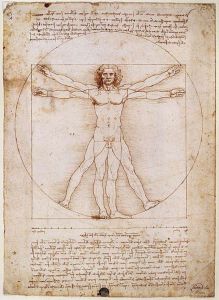
like Leonardo’s man
center of all
surrounded by
perfect Aristotelian
spheres of control
reaching out
from Self
to Heaven
and in these realms
you have arrayed
the spectra of the world
expertly arranged
perfectly codified
to the most trifling degree
from Those Held Dear
to the Alien Other
from Loved
to Hated
from Defended
to Attacked
but where
is the line
the demarcation
the boundary
between what realms
do you divide
the Worthy
from Undeserving
and why
for there is no line
that separates us
save the one
you draw

Read Full Post »

Is there no coming back,
no retreat from this landscape of ire,
this canyon of sorrow

Far beyond the limits of hope,
bordered by despairing walls,
unable to care

Except for our own kind,
our own mind-like echoes,
our mirror selves

Where every difference,
each flower of nuance,
challenges the power

Born of our righteous rage,
grown fat on bias and lies,
clothed in trappings of heaven

Armed with tools of denial,
building myriad barricades,
but never a bridge

To link us,
to lift us,
to exalt

In all that we are?

k


Read Full Post »

Book-learning, while useful, can only get you so far on the path toward competence. This is especially true in the arts. To learn a thing, often you simply have to do a thing.

But some learning curves are steeper than others. Some roads to knowledge are pitted with potholes. And along these paths there are always tigers in the bush, lying in wait, ready to ambush the unaware, the over-confident, the ignorant.

As recently mentioned, I am learning how to weave fabric using a rigid heddle loom, turning yarn into cloth. I began by reading books on the topic—primers and how-to manuals mostly—as well as by watching instructional videos. These were invaluable, giving me a sound enough foundation in the what/how/why of the craft, that I felt confident to purchase a loom and try my hand at the techniques I’d been reading about and viewing.

But, in any journey of knowledge, there are some elements that are so basic as to be considered already known. Axioms, truths, assumptions, things everyone knows; except, they’re not things everyone knows. Rather, they are things so basic that, if you know them, you forget that not everyone knows them.

Things like, how to open a hank of yarn.

We all know what a ball of yarn is. It’s not a hard concept to grasp. It’s a ball. Of yarn. You know, the thing cats play with. One of the ends is on the outside and the other is hidden, tucked away at the center of the ball. In the picture, it’s the small grey thing at lower right.

If you wind a ball of yarn but leave the center hollow, you get a cake of yarn. Cakes have one end on the outside, but give you access to the one at the center, too. You can pull from one, the other, or both. There are three of them in the picture.

You also might know what a skein of yarn is. It looks like a big ball of yarn that’s been sort of (technical term) smooshed into a football shape. As expected, it has one yarn end on the outside, but it also (often) has one that comes out from the center, and either one can be used.

Ball, cake, skein, these can be used as is, without issues.

But a hank of yarn? What the hell’s a hank?

Up until this week, I had no clue what a hank was, much less how to handle one. And none of my reading or weaving tutorials mentioned the term. Neither did any of the myriad tip-sheets on yarn have anything to warn me about what I was getting into.

So, when the box of yarn I’d ordered showed up this week—lovely yarn made of merino and cashmere, yarn so soft and light that I can barely feel it with my callused old-man fingers—I opened it up and, rather than the balls, cakes, or skeins I’d expected, I found only twisted, corkscrew spirals of yarn. Hanks. I’d seen them, but never held one before and, as I turned it over in my hands, it was clear that they had no discernible end, no visible access point.

I quickly figured that I was in trouble.

And I was correct. In the picture, the mare’s nest to the left is the trouble I found. It represents the first hank I opened.

It’s a ruin.

If I’ve learned one thing in life, it’s that mistakes are teachers. Mistakes can flatten learning curves. Mistakes can fill in the potholes waiting along that road of knowledge. Mistakes can alert you to the tigers.

But you have to let the mistakes do their work. You have to learn from them.

I have several more hanks to uncoil and wind into usable cakes. I am filled with trepidation as I proceed because I’ve proven that I can ruin the yarn; however, I’ve also proven that I can successfully cake-up said yarn, if I pay sufficient attention.

Fingers crossed.

k

Read Full Post »

no reason
for silence,
for shrouding
heart-born truths

they are
overwintered seeds,
motes hard-shelled
and inert

aching for
spring’s caress,
the taste
of rainwater

sow truths
in sunlight,
broadcast kindness
on the wind

nothing flowers,
nothing nourishes,
nothing grows
in darkness

k

Read Full Post »

Morse Code scarf in wool

As some know, a month or so ago I fell down a deep rabbit hole: I am learning how to weave—weave, as in, to make cloth from yarn or string. With a loom. And shuttles. Seriously old-school, low-tech stuff—and in doing so, I have received an unexpected gift.

Music.

I alluded to this new activity—here and here—in recent weeks (albeit obliquely), but in the past weeks it has become a full-on passion. All those books in the TBR pile? Forgotten. Those shows we were going to binge over the long weekend? Not happening. And sorry, but if I owe you a letter, it’s going to be delayed.

Weaving has infiltrated all my waking hours (and some of my sleeping ones, too). Not only has the learning curve been steep and chock-a-block with new words like “sley,” “heddle,” “gamp,” “raddle,” and “sett,” each new thing learned is like a hydra, sprouting new thoughts and questions with each answer. Hues for color palettes swoosh through my head. Wearable-fabric-as-art is now a thing for me. And inspiration strikes All The Time now, shining beams of creativity for pieces well beyond my technical expertise, illuminating ideas that I’m not sure are even possible with the tools I have.

And that’s all before I put warp to peg, weft to shuttle.

Once I get to that point, once I actually sit down and begin the weave, it’s all-involving. I’m so new to this, there is no muscle memory to kick in (a fact to which my upper back will attest), but the repetitive mechanics of working the loom, the rhythm of throwing the shuttle, the ever-present attention to tension and selvedges, these form the base of an activity which, like gardening, engages the motor-function/analytical part of my brain and leaves my creative functions free to “what if?” their way through myriad thoughts and ideas.

Then, as I become familiar with the patterns of motion for a project, as I introduce efficiencies into my movements, the world around me draws inward, and I enter a place of meditative serenity.

So, where does the music come in?

Houndstooth muffler in acrylic

The world is filled with distractions. Sirens, deliveries, hungry housecats, text message pings, K-drama sound effects; these can pop me out of my trance and make me lose track of where I am in a pattern. I could counter these with podcasts or books on tape, but the spoken word is sometimes just as distracting, sending my brain on little wonder-tours based on a thought or idea under discussion.

And that is where music comes in.

I used to listen to music a lot. My iPod (yes, I still have an iPod) has over 18,000 songs on it. That’s over 50 days of music, but ever since 2016 my music consumption rate has dropped off a cliff, replaced instead by various news broadcasts, analyses, and podcasts. In retrospect, this has not been good for my stress level; the world is not a friendly place, and focusing on news has only heightened my awareness of it.

It was, then, a surprise—as well as a surprise that it was a surprise—that when I plugged in my earbuds, put P!nk on shuffle play, and began weaving a Morse Code scarf (pictured, top right), I felt my brain relax and my heart ease as I slipped into the mood of the music. Since then, I’ve been re-exploring my own music collection, from symphonic metal to Tudor chamber music, from solo oud songs from Egypt to fully-synthesized renditions of Richard Rodgers classics.

And it has been like coming home.

I would have continued with this new weaving avocation even if I had not found this wonderful synergistic pairing, each activity feeding and supporting the other. Now, when I begin to imagine a piece to weave and colors to use, I’m also thinking about the soundtrack to go with it. Paul Hindemith? Jethro Tull? Hans Zimmer?

It’s like listening to a tapestry whilst transforming yarn into cloth.

I didn’t need an excuse to listen to music again. But I’m glad I have one.

k

Read Full Post »

« Newer Posts - Older Posts »