Feeds:
Posts
Comments

Archive for the ‘Music’ Category

We all are aware of folks who are fortunate to make a living at their dream job. Usually, this is a confluence of talent and hard work and luck; we “mortals” see them as world-class athletes, renowned experts, and global celebrities. But I know that there are folks out there living quiet lives, who are also working at their dream job, as a teacher, a firefighter, a decorator, a data analyst, and such. Not all dream jobs are splashy. And, the concept of “dream job” isn’t fixed, isn’t static; they change over time, as we grow and learn and become ourselves.

When I was in grammar school, my dream job—as it was for many—was to be a veterinarian. What could possibly be better than working with puppies and dogs and kittens and cats all day? So, when given the opportunity to spend the day at a vet clinic, I leapt at the chance (as did several of my schoolmates). The day started with grooming and nail clipping and such, but when we were introduced to the procedure called “expression of the anal glands,” I was out. Looking back, I’m pretty sure they popped that particular procedure into the day’s agenda so as to weed out the weak of spirit. Wise move.

Shortly thereafter, I was given a violin to play, and all thoughts of a “dream job” were set aside in favor of figuring out how, as a bookish, bespectacled violinist, I might survive into puberty. Somehow, through strategic applications of humor and social invisibility, I survived the wholly predictable bullying and made it into adolescence. At this point my success with the violin and my now well-honed acumen in pleasing those in positions of authority led to other musical opportunities. Violinists were a dime a dozen in grade school, but a viola player? Priceless. So, sure, I could try that. And I did. How about branching out? The jazz ensemble needs a bass player. Wanna? I’m on it. Band could use a tuba player. Any interest? You bet. I also tried bassoon and French horn, but sadly I met my match with piano and harp (playing two staves of music at once was, simply, sadly, beyond my ability).

But all of this was an academic exercise. None of it hit me as a “calling,” and none of it constituted a dream job. Could I see myself as a musician? Sure. It made my folks proud, it brought a certain frisson of fame during recitals and concerts, and it put me into the society of kindred souls, some brilliant, some pedestrian, but all of us akin to misfit toys searching for a home.

Then my high school orchestra teacher, the wonderfully eccentric Hugo Rinaldi (may his memory be a blessing) decided to start a “student conductor” program. Would I be interested? Oh hell yes!

Instant Dream Job.

Everything changed for me at that point. I had my first Life Goal: Symphony Conductor.

It was a great opportunity to learn, but it was also a thrill to stand up there, baton in hand, and lead an orchestra through a performance of stirring music. During those few years, I conducted musicians through symphonies and concerti and musicals and operas. I conducted orchestras, symphonic bands, marching bands, chamber groups, and pit orchestras. I loved it! It was a tremendous, not because I was the focal point on stage—that was actually the aspect I cared for the least—but because it was a collective experience, where through rehearsals and sectionals and repetition we all, together, brought a piece of music to life, and if I had done my job well, by the time we performed, I was merely a timekeeper, a reminder, an encourager, an adjuster of volume and balance and speed and precision.

And so, entering university, my dream of a life as a conductor was my goal.

Within two years, that dream was dead.

The conductor “path” at my uni had certain requirements. Beyond the music history, theory, and orchestration that were part of any performance major, it also had a specific requirement for proficiency on the piano. No way around it. In time, this requirement made perfect sense—most conductor path grads would go on to get teaching credentials, and when leading a school orchestra, being able to play the score on piano was an almost essential tool—but at the time, the revelation was devastating. The joy I experienced leading an orchestra from sight-reading to performance, that exaltation I felt as the conduit of an orchestra’s creative energy, it would never be, not for me.

I kept on with music for many years afterward, but it was not a dream job. I tried doing an end-run around the hurdles. When I was principal violist for a regional symphony, I tried to cajole the conductor into allowing me to lead the group so he could go out and check the balance (we really needed it in our concert hall), but ceding the podium, even for a few minutes, was something that particular conductor would never contemplate.

And so, eventually, the dream was not only dead but finally buried.

In time, I found other avenues of interest, and contemplated other “dream jobs.” As I grew older, more introverted, and (admittedly) more jaded about dealing with the public, my concept of a dream job became more solitary and cloistered.

“Successful novelist” was one dream job. I gave that two decade’s hard work before reality sunk in; the best I was able to achieve was “accomplished novelist.” A more recent iteration was “museum conservator,” specifically of documents and books, but by the time I began contemplating that, I knew it would remain more “dream” than “job.”

Now that I’ve retired, I have no need of a job of any kind, “dream” or otherwise. Now I am free to do what I will (as long as my health holds out, I guess).

In the end, though, I have to say that I’m not rueful over dream jobs never achieved, for I have dreams that I have achieved. A happy home, a secure life for my family, an excellent partner, a long marriage. And as for those dreams that lay broken along my life’s margins, they are what led me to achieve things nearly dreamed of, gave me a taste of perfection, and drove me to efforts I did not believe I could perform.

So I say: Regret no failure met in service of a worthy goal.

Onward

k

Read Full Post »

It was during a recent MRI that I discovered how much my relationship to music has changed.

I’d just been informed that this imaging session would include the use of a contrast agent, gadolinium, which was unexpected. I’ve had MRIs with contrast agents before—specifically back during our search for the cause of my TIA—and I find them annoying, not only because of the (admittedly slight) discomfort, but also because stating that “Heavy metal is in my blood!” is never as funny spoken out loud as it sounds in my head. And so, I was a little off my game, what with the plastic shunt in my arm, the supposedly noise-canceling cans over my ears, and my head deep inside the tube upon which angry ogres would soon begin to pound with ill-tuned hammers, when the technician spoke into the cans.

“Would you like some music?”

“Sure.” Music is almost always a good idea.

“What would you like to listen to?”

It should have been a simple question, and there was a time when it would have been a simple question, back in the day when I actually bought albums and played them so often that, even today, if I were to hear Jethro Tull’s Thick as a Brick, I could tell you the exact spot where my LP used to skip. But I don’t buy albums anymore. I stream them. More to the point, I rarely queue up specific albums, but rather I stream individual songs, lists of similar-sounding tracks, all curated by an algorithm. I don’t even know the names of many of the artists I listen to; their songs play past without my knowing who they are or the albums they’ve released. (That is, of course, if they release albums, instead of a long parade of singles and EPs.)

This simple question caused my brain to seize up. I tried to think of one of the artists I do know, but I also needed one whose name was easy to relate from the inside of a torpedo tube. The only names I was able to recall would either require that I spell them out—Halestorm, Les Friction. Ursine Vulpine—or were names that I didn’t even know how to pronounce—Nemesea, SVRCINA—so, instead of simply pulling up one of the clearly-named bands from my youth (Genesis, Yes, The Beatles), my brain went to its default, the music to which I was first introduced.

“Classical is fine.”

Turns out, J.D. Vance isn’t the only one who finds listening to classical music unusual, because as my little cubbyhole began to hum and whir and thump and bang, my technician treated me not to Mozart or Beethoven or Bach, but to orchestral renditions of popular songs—at least I presume they were popular songs; I only recognized one of them—which is rather like watching a very self-conscious person try to dance for the first time.

Thankfully, the supposedly noise-canceling cans over my ears didn’t, so the music was mostly drowned out by the MRI’s percussion section, and I found my toes tapping to the ogres’ hammers rather than to the milquetoast rendition of Sia’s “Chandelier.”

Thus, my Twenty Minutes in a Tube ended and I was released from my purgatory, free once more to return to my scattershot playlists of jumbled songs from artists I cannot name.

Progress? I’m not so sure.

k

Read Full Post »

  • “Top 10 Reads for the Summer”
  • “The Best Games of 2023, Ranked”
  • “Twelve Items Every Pantry Must Have”
  • “5 Movies You Need to See”
  • “Seattle’s Best Restaurants”

There is no scarcity of voices eager to tell us what to do, what to like, what is good. “Listicles” abound, plastered with headlines shot through with words like “Best” and “Ranked.” But, “Best” according to whom? Who decides how these things are “Ranked?” Not me, for sure. Probably not you, either. But here’s the thing:

  • I’m enjoying a book my friend didn’t like.
  • The music I’m listening to is probably not on your playlists.
  • I loathe brie cheese.
  • A well-maintained and -manicured lawn is my idea of a crime against nature.

In other words, my tastes are different than yours, and yours are different than mine. And that’s okay.

My tastes in music, books, and cuisine aren’t better than anyone else’s. Yes, I was trained as a musician, have written novels, and have taught myself to be a better cook, but my personal likes and dislikes in these areas aren’t better. Obviously, they have been influenced by what I’ve learned, but they’re not better. “Better” presumes there is some Platonic ideal against which all others are found lacking, and while this might work for some objects, when it comes to things like sandwiches, it’s useless. There is no “best” sandwich. There’s just your favorite kind of sandwich. And there’s mine.

“Bestseller” doesn’t mean “best,” and it damned sure doesn’t mean you’ll like it. Neither do awards, kudos, upvotes, likes, retweets, or some stranger’s rankings.

Where there are quantifiable characteristics that can be evaluated, let’s compare and discuss them; we might learn something, see something we never saw before, and possibly modify our opinion. But when we’re dealing with the unquantifiable, when we’re talking about basic visceral likes and dislikes, we just need to chalk it up to personal preference.

I’ll enjoy what I enjoy, and you do the same. I won’t think less of you because you love brie cheese (though I may wonder how you manage it).

In short, I don’t want to yuck your yum.

k

Read Full Post »

There’s a song that’s been on my mind lately. It’s called “Sunday,” by Les Friction†, a group that’s been on my tight rotation playlist‡ ever since I discovered them in 2011.

I love this song for several reasons. It starts out with a distinctly “Eleanor Rigby” vibe—a string octet playing a clipped ostinato with a tin-can percussion back—a lovely ariose melody drifting downward from the opening notes, singing of how “she” always wakes up late on Sunday mornings, takes her coffee, and heads out the door to a street populated by flower vendors and serenity. The lyrics take a turn toward longing, a searching for love, and feelings of hope, as we wander (at least in the music video that plays in my head) the streets, down from the Pantheon toward Notre Dame. And then BANG!, a chorus with full orchestra, chimes, and a pulsing rhythm section. Another verse and back to the chorus, followed by a 4+2 instrumental bridge that throws in strings and brass (clarino trumpet!) and even a glockenspiel (I’ve always been a sucker for a well-placed glockenspiel part), all building building building to a climax that breaches heaven before it stops . . . and the Rigby octet returns, recapitulates the quiet opening notes, and fades out to silence.

At its heart it is a love song, complex in structure and orchestration, but simple in its message: two souls seeking, destined to meet, to find, and to share the rest of their allotted time, to “live like every day is Sunday.”

Yeah, I’m fond of the song.

It has been, ever since I first heard it, how I’ve imagined my retirement. Living like every day is Sunday. Lazy Sunday. Sleepy Sunday. The Day of Rest.

But ever since I broached the T-minus one year mark toward my impending retirement, that outlook has changed. Sunday? Every day like Sunday? No. The closer I get to my last day of work, the more I have come to appreciate not Sundays but rather, Friday afternoons. (I mean, let’s be honest. Sundays come with some baggage. Sure, it might be a day after all the errands and have-to’s are done, a day when you can sleep in a bit, but it’s also a day that comes with the knowledge that the morning brings a return to work, a malaise we here call “Sunday-night-itis.”)

Friday afternoon, though—especially if you get off work a tad early—it comes with a feeling of freedom, of release, of celebratory drinks and the promise of the whole weekend ahead. If you manage it right, a properly used Friday afternoon can make it feel like the first day of a three-day weekend. Yeah. Friday afternoons are great, and while I won’t complain of the occasional lazy Sunday type of day, given the choice, I’d like to live each day like it’s Friday afternoon, with all the joy and hope and expanse of future time that it brings to bear.

Oh, I still love the song “Sunday,” and I’ll listen to it over and over in the coming years, but it is a song that speaks to the time-sense of the working stiff.

And in relatively short order, I won’t be that.

So, I’ll take Friday afternoons, please.

And thank you.

k

† Les Friction is an outgrowth of the group E.S. Posthumus (also on my tight rotation playlist), formed by the Vonlichten brothers, Helmut and Franz. The sound they created was heavily orchestrated and driving, used for many movie trailers and the NFL on CBS theme. After Franz’s sudden death in 2010, Helmut eventually returned to music and created Les Friction.

‡ Other similar groups on my tight rotation playlist include Two Steps from Hell, Thomas Bergersen, and Jo Blankenburg. Just sayin’.

Read Full Post »

OK, Boomer. This is for you.

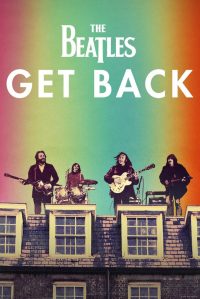
Last week, we signed up for a month of Disney+, and did so specifically to watch Peter Jackson’s documentary, “The Beatles: Get Back.

The Beatles were the soundtrack of my earliest youth, before I even knew who they were. I saw them on Ed Sullivan (“Why are all the girls screaming?”) and when my family took a road trip to Disneyland, I saw posters for them pasted on every block in L.A. (“Hehe. They spelled ‘beetles’ wrong.”). By the time I really knew who they were, they had begun to change, shifting from the classic rock and roll of Hard Day’s Night to the more musically complex tracks on Rubber Soul and Revolver. I followed them devotedly into their psychedelic phase, reveling in the rabbit hole of conspiracy theories that swirled around them during the Sgt Pepper/Abbey Road years. And, like most people at the time, I blamed Yoko for everything in the global post-mortem of the band’s break-up.

It’s no surprise, then, that I was willing to drop eight bucks to sign up with Disney+, just to watch Jackson’s three-part documentary about that final period.

What was a surprise was how moved I was by it, and for totally unexpected reasons. (more…)

Read Full Post »

Natalia has been with me for over forty-five years; Jess, over fifty.

Natalia and Jess have been my constant companions. They have accompanied me on journeys around the country and to foreign lands, accruing enough miles to circumnavigate the globe, twice. They’ve been there for every important event of my adult life. When I have needed them, in every instance, they have performed to the best of their ability.

I love them both dearly, and I want nothing for them but the best and fullest that life can offer.

Which is why it’s time for them to go.

(more…)

Read Full Post »

Hugo RinaldiThis week one of my high school teachers passed away. Reminiscing about our relationship got me thinking about the nature of teaching. It’s a very nebulous and squirmy thing, teaching is.

Hard to pin down. Hard to define.

Hugo Rinaldi taught music at San Rafael High School, leading the orchestra. Where most students only have a particular teacher for a single class, for a semester or perhaps a school year, I was Hugo’s student for my whole four-year run at SRHS. He conducted the school orchestra, the youth orchestra, and the chamber orchestra, all of which I was a member. He encouraged me to switch from violin to viola. He gave me the opportunity to conduct orchestras, bands, operas, and musicals.

Being a music teacher, Hugo didn’t have “classes” in the usual sense. There were no syllabi, we had no tests. We had rehearsals. Our homework was to practice our parts. Our finals were the concerts we gave for our proud (but often wincing) parents. He didn’t instruct us on how to play our instruments; that was the realm of our private music teachers. Hugo taught us how to play in an orchestra.

Big whoop, right? Like I’ll use that in my daily life.

Here’s the thing: I do. (more…)

Read Full Post »

Older Posts »