Feeds:
Posts
Comments

Posts Tagged ‘short fiction’

Having been pleasantly surprised by my recent re-read of a sci-fi/fantasy series I’d loved as a teen, I decided to extend this run of good luck and re-read another series that was influential to my own writing style (when I eventually got one).

I first crossed paths with Roger Zelazny’s works—both short form and long—in high school. It was before I’d read much fiction at all, and thus I did not have a lot of knowledge to bring to the experience. Despite this lack (or perhaps because of it), Zelazny’s stories and novels stuck with me, shaping my appreciation of the written word from then on. Zelazny was one of the triumvirate of authors who influenced my youthful enthusiasm for fiction, along with grandmasters Anne McCaffrey (a major influence, I discovered last week) and, of course, Ray Bradbury.

Each of these authors drew a different type of appreciation from me. McCaffrey’s prose was not what stayed with me, but rather her characters and their relationships, which were crucial to the workings of her plots. In considering Bradbury, I admit that none of his novels stuck with me, but his short fiction! Oh, what magic I found there. The books that collected his short works in a thematic whole—The Illustrated Man or The Martian Chronicles—were treasure boxes to read and re-read.

Roger Zelazny, though, held a special place in my pantheon, and not just because he was the only one of the three I actually met. Back in the ’70s, I didn’t have the breadth of experience to understand what I so enjoyed about his works, but yesterday, as soon as I began his Nine Princes in Amber, I could pinpoint it precisely. Where McCaffrey’s prose was straightforward, and Bradbury’s was as near to poetry as one can get in prose, Zelazny’s writing has a distinctive “voice,” matched to the mind of the character, and integral to the tenor of the storyline. As I began this book, I heard echoes of Hemingway, of Chandler and Hammett, along with the flow and descriptive power that was Zelazny’s own. That “voice,” that touch of the hard-boiled detective, was a crucial element of the character in that opening chapter—Corwin, a man out of space and time, without memories, must navigate a dangerous world filled with people bent on his demise. It was all fedoras and noir on silver nitrate and razor-sharp repartee and chiaroscuro lighting until, amazingly, subtly, color crept into the world along with Corwin’s recovered memories, and the “voice” shifted as well, matching again the mindset of the Corwin’s evolution.

I was lucky enough to meet Mr. Zelazny in the early ’90s, after I’d made my first professional-level short story sale. It was at a sci-fi convention here in Seattle, and I was trying to learn as much as I could about the craft, and meet as many “pros” as I could (a terribly difficult task for an introvert like me), but I’d been met with nothing but condescension and rudeness from nearly every established writer I approached. But I put that aside as I’d come primarily because Zelazny was a featured guest. I’d heard him read from his forthcoming book (A Night in the Lonesome October), and I’d brought my limit of three books for him to autograph (my beat-up vintage copies of the two-volume Amber omnibus and a dog-eared paperback copy of Four for Tomorrow).

Having been scorched by other authors at the convention, I expected a perfunctory meeting at the signing table, but I was determined to let Mr. Zelazny know how influential his works had been on my own nascent attempts as a writer. Instead of just signing my old books and moving on with a nod, he asked if I was submitting my work; I said yes, and that I’d been in a recent issue of a small professional magazine. He knew the magazine, actually had back issues, and wrote down my name so he could look up my story. After all the bristles and cold-shoulders I’d received that weekend, a kind word from a writer so important to me was a gift dearer than rubies. Did he really have back issues of a small-run magazine? Was he really going to read my story? I don’t know; he might have merely been encouraging me, a gentlemanly gesture to a budding young man who had kept three of his books safe and secure for a score of years. Still, I like to think he might have.

Reading these old favorites again, though, now with my older, wiser eyes, I feel the old desire to craft words renewed. I want to finish reading all of these titles I’ve pulled from the stacks, but after that . . . after that, I think I have work to do.

k

Read Full Post »

Most of all, he enjoyed pruning the Japanese maples.

They stood beneath the canopy of evergreens–spruce, pine, fir, cedar, cypress–the giants of his garden. The tall conifers took the brunt of the weather, snarling into the winds, sacrificing muscular branches heavy with sap and resined scent to protect the more delicate growth at their feet. There was little to prune on these living towers; mostly he just carted away what the ocean-birthed storms snapped off, trimming back broken stubs, fulfilling his custodial chores while they, aloof and inscrutable, heads in the louring clouds, faced the southwesterly winds, ready for the next gale.

The other maples, the vine maples, were not his favorites, being a bit too boisterous, sending up trunk after slender trunk, reaching outward with multiplicative hands, begging for alms of sunlight. Pruning these, even the eldest of them, was like wrangling twelve-year-olds on a class trip. Just retrieve the one and you find that two others have ranged away from the pack. He loved them for their fall displays, though; their sudden, explosive shift from simple summer green to riotous fires of autumn could happen during a single night’s slumber. He was especially fond of the precocious one in the back, tucked under the pendant drapery of the grandmother spruce, because that maple was always first to change clothes, eager for colorful sweaters and winter’s onset.

But most of all, he enjoyed pruning the Japanese maples. Not the winter’s pruning, but in summer.

In winter, when they slept naked beneath the grey blankets of somnolent skies, he would trim them for shape, for strength, for optimal overlap and layering, and with an eye toward the tripartite growth that would come in spring. This, though, this was straightening the curled hand of a sleeping child, tucking them in beneath the covers. It was the trees, and it was him; two species, separate, unattached, isolate.

In contrast, the summer pruning–he could think of no other metaphor–was making love. The leaves of the Bloodgood–deep magenta, finely serrated, with thin, questing tips–rustled as his hands moved through the branches. The Autumn Moon’s leaves–pale green, delicate, so sensitive to light that a week’s sun would make them blush and August’s searing gaze could shrivel whole branches–bent to his ministrations, be it to rub out the dried tip or snip off a sere frond.

The two of them, though they were as old as others he’d planted, were barely half as tall. Theirs was a patient habit, a measured expansion, with each branch testing the world in three directions: one twig right, one left, one forward and upward. As his fingertips moved down each limb, each branch, each twig, he could divine their logic. They knew their limits and worked within them: send out scouts, read the reports, proceed only if conditions are favorable. He loved their caution to the point of emulating their unhurried approach in his own life. Knowing that his eyes could sense things they could not, knowing where the dappled sunlight would be best, he would pinch here, pluck there, and encourage them toward the unseen goal. Of their failures, his gentle caress revealed the abandoned twigs, stiff and pale where successes remained supple and green, and he would thumb them off. The snips were a last resort, for each leaf was a gem in the rough.

For when Summer packed its bags and Autumn came home to do its laundry, the evergreens remained dark and disinterested columns and the vine maples played frat-boy pranks on one another. But between the constancy and the chaos was the slow flood of color of his Japanese maples. The Bloodgood’s leaves crept from maroon to red to rust to scarlet to a crimson so sharp it could cut, while the Autumn Moon caught fire, dropping green for chartreuse, adding dry-brushed pinks, until October’s cold hearth brought the touch of orange hearthfire to each leaf.

He was aging, now, knees creaking, back growing stiff, while for these trees their youth was barely begun. He wondered–frankly, he worried–about what would happen to them once he’d passed. “Scatter my ashes on my trees,” he’d often say, though he only dreamed he would die while still near them. For as long as he could, he would remain there, caring for them at the same tempo they lived.

Because, most of all, he enjoyed pruning the Japanese maples.

k

Read Full Post »

My youth plays out in monochromatic Super 8, all shadows and light, soundless but for the clacking whir of the projector, each jumpy image spattered by specks of dust that flash past, gone before they even register in the mind.

Around me, I see the shining, sun-bleached hills behind our houses, wild land laced by the trails I hike in adventures that are my haven, my freedom, my escape. I see the black-and-white blurs of schoolmates as they race their Flexi-Flyers headlong down the sloping streets. I see my family—mother, father, sister—wave and laugh, speaking silent words to whomever runs the camera, as they go about their daily lives.

All is shades of grey, wan and distant.

In my home, though, moving past the dark stain of lawn, the walls of pale grey stucco, and the brightly trimmed opening of the doorway, beyond the shadowed living room where children dare not tread, through the kitchen with its charcoal-colored wood, and into the chiaroscuro of the family room, there is a red chair.

It is red. So red.

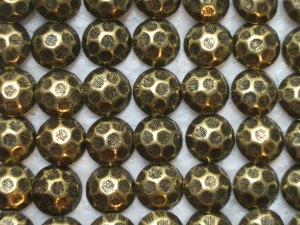
It stands in the ashen jumble of the room like an open wound, colored the red of blood, bright and arterial, shiny as a skinned knee. Upholstered leather is nailed to its frame by rows of brass tacks that glint in the streaming sunlight, their rounded heads faceted by the hammer blows that set them.

It is an old chair—I do not know a time when it was not there—a holdout from days before my birth. Wing-backed, claw-footed, it is large, its arms stained by the grip of a thousand hands. Here and there the leather is a bit dry and has cracked, revealing tufts of excelsior and batting. It creaks when I climb up, as if complaining, as if I am an unwelcome intruder, and perhaps I am, for it is my father’s chair, and his alone. I curl up in its empty embrace, breathing in its captured aromas of Old Spice and Bond Street.

And on this day, this one day, it is the chair in which my father sits and, for the last time in our lives, gathers me up in his arms, in his warmth, in his scent. It is the chair in which he tells me of my mother’s death. 

After that day, I do not know what happened to that chair. I still see the wall of books, the ancient davenport, the old B&W television on its tubular stand, the corduroy love seat, the sliding-glass door that opens out on the too-bright patio, all these I see in the flickering cinema of remembered youth, but there is a dark spot, a lacuna, a patch of emotional blight where the chair once stood. After that day, I do not remember it being there. I do not remember my father ever sitting in it again. I have excised it from my past, wished it out of existence. 

In my experience, time does not heal, but it does teach. Sometimes it teaches us to understand and adapt, while at other times it teaches us how to cope and survive. The disappearance of that red chair is just such a lesson, learned during the sixty years that separate me from that day. That chair, the cauldron of my earliest grief, has bled out, its color used up, the power of its memory spent.

And I can live with that.

k


Read Full Post »

Fingers deep in waking earth
  clearing ferns from wintry somnolence

Their feathered, spiked, serrate fronds
  release spores in ochre clouds

Raindrops drum my hat brim
  enthusiastic paradiddles of spring

Hands set blade to swordleaf
  trimming old stems and rusted detritus

From the center I lift accreted duff
  revealing curls, verdant and sleepy

Nestled in that fiddlehead crown
  is the confidence of rebirth

Hope is spring’s eternal gift
  a promise of life
    and all it contains


Read Full Post »

Twenty-odd years ago (when I was just starting out with speculative fiction), I wrote the short-short below. It was a light-hearted look at a theory that was, back then, just emerging into the popular culture. Several recent headlines brought it back to mind, and it ain’t so funny, anymore.


(more…)

Read Full Post »

The Princess Gang rolled into the cul-de-sac on the same day Mr. B’s plum tree decided to bloom.

That’s the first line from a story that started flowing yesterday. Remembering, of course, that (say it with me) all first drafts are crap, it’ll obviously go through some revisions, but the important thing is that it was followed by a thousand words of a quiet little story that’s been pinballing around my brain for over a year.
The reason I share this is because nothing like this has happened for a long, long time.

Yes, I’ve written some fiction in the past handful of years. Most of it has been in posts on this very blog—vignettes, word imagery, poems—all meant for immediate consumption. I’ve also been slugging my way through a championship bout with a new novel which, though reportedly of good quality (especially for a first draft), has been the most difficult fiction project of my life. But a short story, a for-real short story? It’s been years. The last one I wrote was “The Book of Solomon.” It’s good, and it found a home in The Timberline Review, but I wrote that story years ago, and there has been zip-a-dee-doo-dah since.

Then yesterday: Boom. My pen began to work. My brain began to conjure. It was like my voice suddenly returned after a decade of muted trauma.

Why? (more…)

Read Full Post »

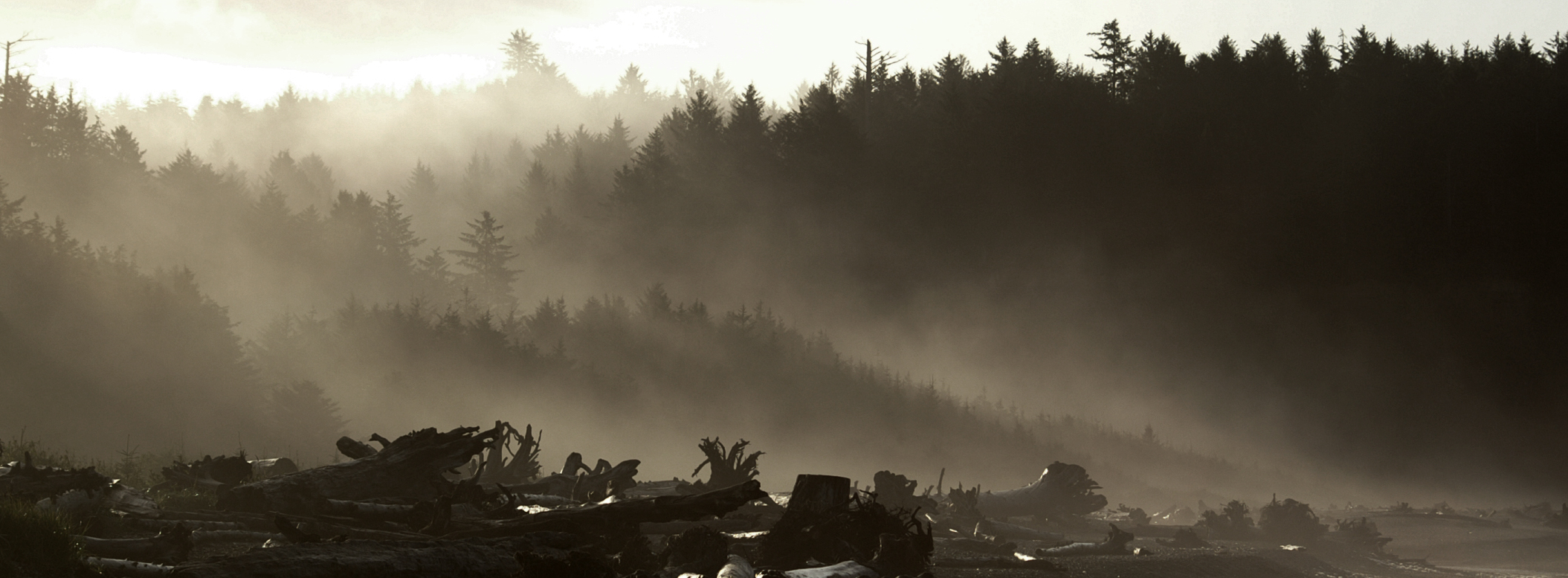
at the cliff’s edge
the earth falls
through giddy space 
to clammy sands
sunlight spears the steel wool clouds
and blazes from gunmetal curls
brined winds press me back
with death-cold hands

hot anger fills me
magma of rage
ready to spew forth
and boil the sea below
as I ponder the choice between
a hateful god
slayer of the young
and no god at all

humanity
we are
upright beasts gifted
with massive power
over nothing
with dreams of eternity
circumscribed by birth and death
we are
ephemeral
mayfly deities
standing at the verge
in sight of the distant shore
ready to leap
to fly
to perish
on a solitary sojourn
that has no arrival


Read Full Post »

Older Posts »