Feeds:
Posts
Comments

Eating Poor

I am fortunate. I am fortunate because, once, I was poor.

You learn a lot from being poor. You get creative. Take food, for example.

During times when I struggled to make ends meet, I sometimes modified my diet, experimenting with less expensive substitutes (alternatives like textured vegetable protein) and more economical methods (yes, you can cook pasta with only a bowl and an electric tea kettle, but it takes a while). I learned where to find the best prices for food (including dumpsters behind grocery stores) and learned that when to shop is sometimes as important as where to shop.

When I was studying music in Jerusalem, I didn’t have much income. My scholarship covered my tuition and living quarters, but I still had to pay for food and clothing, books and supplies, transportation and postage and phone tokens. My parents usually sent a monthly stipend, but (adjusted for inflation) it was only about $150, which left me with a lot more month than money. I supplemented this by cleaning houses and playing gigs with the Jerusalem Symphony, but none of that was steady work.

It didn’t take long for me to find that the most economical place to shop for food was in the shuk. The shuk was like a farmer’s market, with aisles of open-air stalls selling fruit and veg and meats and spices, but it didn’t have the artisanal frippery and carnival vibe that permeate modern suburbia’s weekend analogues. No, the shuk was a place where working people shopped daily, filling a mesh bag with produce warm from the sun and bread warm from the ovens, taking it all home for the family meal. Vendors knew their regular customers, greeting them by name or honorific, chatting about current events or family woes, as together they searched for the ripest melon, the heftiest chicken, the most pungent cardamom, the sweetest halvah.

Prices were displayed, sometimes on a board above, but usually written with chalk on small slates propped up behind the stacked wares. As the day progressed, the desert heat intensified, creating a heady mélange of aromas, and the slates would become clouded by half-erasures and rewrites as prices were adjusted downward.

This was the time to shop: toward the end of the day, when vendors were especially eager to sell, sometimes at a loss, rather than cart what was left back into storage, and it was there, at just such a time, that I perfected my haggling technique (posted prices being merely a starting point, a suggestion as to where your journey would begin).

My girlfriend and I, low on funds, were looking for bargains, and the shuk, now in its last sun-drenched hour, was ready to supply them. Some stalls—the baker, the poulterer, the cheese-monger—had already shut down, their stock exhausted or the heat too punishing, but that was fine with us; we couldn’t afford chicken or cheese, anyway, and we could get simit—large sesame-topped loops of bread—from street vendors in the morning on the way to class. And there were plenty of vendors still open, willing to ride it out until closing in the hopes of a few last sales.

We bought a kilo of rice and some of that textured vegetable protein (aka TVP, aka kibble for people), then wandered past burlap sacks filled with nuts and seeds of all colors and sizes, until we came to a spot where the air was redolent with an almost indescribable mixture of warm wood, sweet hay, and a hint of something nearly but not quite citrus: tomatoes.

Two tomato vendors were set up across the pedestrian aisle from one another. One man was fanning himself with his newspaper and the other dabbed at his brow with a paisleyed kerchief. Before each one was a large display tray with a pyramid of deep red, glossy, perfectly ripe, and now fairly warm tomatoes. The prices were about two-thirds of what they had been that morning, but the first vendor had set his per-kilo price several agorot (subunits of shekels) below his across-the-aisle competitor’s.

So I ignored him and went to the second vendor.

We inspected his tomatoes. They were lovely, hand-filling Romas, perfect for a meatless ragout of TVP, to be served over rice, seasoned with wild herbs we’d pick along the road on our way home. I looked at the tomatoes, looked at the slate behind them, then looked at the vendor as I offered him half of his chalk-smudged price.

Naturally, he was wounded by such a paltry sum, but he did knock ten agorot off the price, bringing his price below that of his neighbor.

I shook my head, and walked two steps across the aisle.

The second vendor’s stock was just as good, just as ripe, just as inviting as the first. I offered him the price I offered the first vendor, but he, too, found it much too low. He had children at home, a family to feed. But—and there’s always a “but”—he liked the look of us, so he knocked ten agorot off of his price until he was the cheaper of the two.

I went back to the first vendor, raising my counter-offer, at which he rubbed at the slate and dropped his price again.

At this point, I didn’t have to go back to the second vendor. All I had to do was look over at him, gesture to the first vendor’s slate, and raise an eyebrow.

The second vendor scrubbed and wrote a lower price on his slate.

I looked back at the first vendor. Scrub. New price.

Second vendor, same.

Eventually, the second vendor got down nearly to my counter-offer, at which point the first vendor laughed, put down his slate, and conceded. We went to the winner, bought a kilo, and went home, snagging some wild saltbush and rosemary along the way.

As I said, though, being poor taught me many things beyond how to haggle for tomatoes. I learned how to live within my means, how to budget, and the importance of putting some funds by for the future. I also learned to be grateful for what I did have, rather than fuming over what I didn’t.

Most importantly, though, it taught me empathy for others in similar straits, as well as how easy it is to fall into a bad situation. One accident, one bad decision, and bam! you’re in trouble, trouble that may dog you for years. While I’ve never been completely destitute, I was close enough to see it from my seedy flat in the bad section of town, and I don’t wish that upon anyone.

I’ve tasted poverty; it’s bitter and dry and degrading, and I’ve worked hard to avoid it. But many others are not as lucky as I have been. For myriad reasons, and despite their best efforts, too many families struggle to survive, here in my country and around the world. At least here, where we have the wherewithal to help, we should help, and yet it is so hard to get agreement on this, a matter that to me is a very basic truth.

I wonder if those who complain about our efforts to help those less fortunate, who berate the government’s efforts to address a problem that half the nation seems eager to ignore, who ridicule those who demand a wage that provides them enough for food and shelter, I wonder if those people would benefit from a few months living on TVP and tomato sauce.

k

Cherries are, without question, my favorite fruit, and now, in early summer, they are plentiful. However, as with my last recipe post about pickled asparagus, there just isn’t enough time to consume all the cherries before they go off, so I’ve been playing with various ways to preserve them.

Which led me to having bowls of leftover cherry-stones.

Which, in turn, led me to orgeat.

Orgeat (pronounced OR-zhat) is an almond-infused syrup used in flavored coffees, tiki cocktails, and Italian sodas. Not being a big drinker of any of these, I’d never heard of orgeat before, but I am now a big fan. A glass of ice, a shot of orgeat, and some lightly carbonated San Pellegrino water make the most refreshing post-gardening quaff I’ve ever had the pleasure to imbibe.

What does this have to do with cherries? Well, cherry-stones are an optional (to some, but essential to me) ingredient in making orgeat.

Traditionally, orgeat is made with bitter almonds, but they’re hard to find and way more expensive than makes sense to me. Sweet almonds are commonly used in homemade orgeat, but by including cherry stones, I  add back a touch of bitter to temper the syrup’s sweetness.

This recipe is also eminently modifiable. Try different types of nuts. Try different flower-waters. Try skins on/skins off. This recipe is a guide to whatever is in season, whatever is available, adaptable to your particular tastes. See the Notes section for ideas on variations and uses. Continue Reading »

Who’s a Heat Wimp?

I can handle triple-digit heat. I lived in Jerusalem for a couple of years. I’ve camped in the deserts of California, Nevada, and Arizona. In summers of my youth, my folks dragged us all to northern Minnesota to visit relatives where the humidity was 99% and the temperature was higher.

Here in Seattle, we can all handle high-heat days. We regularly get temps in the 90s and often have a few days in the mid-100s.

In August.

But June? Jeez, give us a chance to acclimate, why don’t ya?

The month of June in Seattle is often referred to as “Juneuary” due to its tendency to flip-flop between typically rainy days in the low 60s and gloriously clear days in the mid-70s. The average temperature for June is 69°F (21°C).

Yesterday, 28 June 2021, it was 107°F (42°C), the peak of the most intense, most protracted heat wave in our history, and the city stopped.

We saw it coming. We had a week in the 80s, then a week of high 90s, and all the forecasts were warning us: Sunday and Monday, the streets would be lava.

And they were right. Concrete sidewalks buckled. Asphalt pavements melted. Insulation on wires began to sag and slough off. Expansion joints on bridges shut as the steel girders expanded.

Seattle was not built for this. Our infrastructure was not built for this. Our homes were not built for this.

In Seattle, our homes are built to retain heat, not dissipate it. The vast majority of homes have no central cooling, and more than half don’t have any A/C at all. Businesses, especially in older buildings, are often in a similar fix, relying on fans to keep the air circulating for some evaporative cooling.

I’m lucky. Fifteen years ago, when our furnace died, we replaced it and also put in central A/C. But even with the A/C blasting, it had to fight our insulated roof and insulated windows that kept the heat in, and the best it could do was keep the house ten degrees cooler than the outside. For many of our neighbors, it was hotter in their homes than outside, and it was an oven outside.

It’s been this hot before. I went to a Moody Blues concert at an outdoor venue on the hottest day of that year: 109°F. We sat in the steamy heat with our frozen bottles of water and our wine spritzers, but we survived. It was August. We’d had a two-month run-up of increasingly hot temps, and we were ready for it.

But this. This is a classic case of too much, too soon, and for too long.

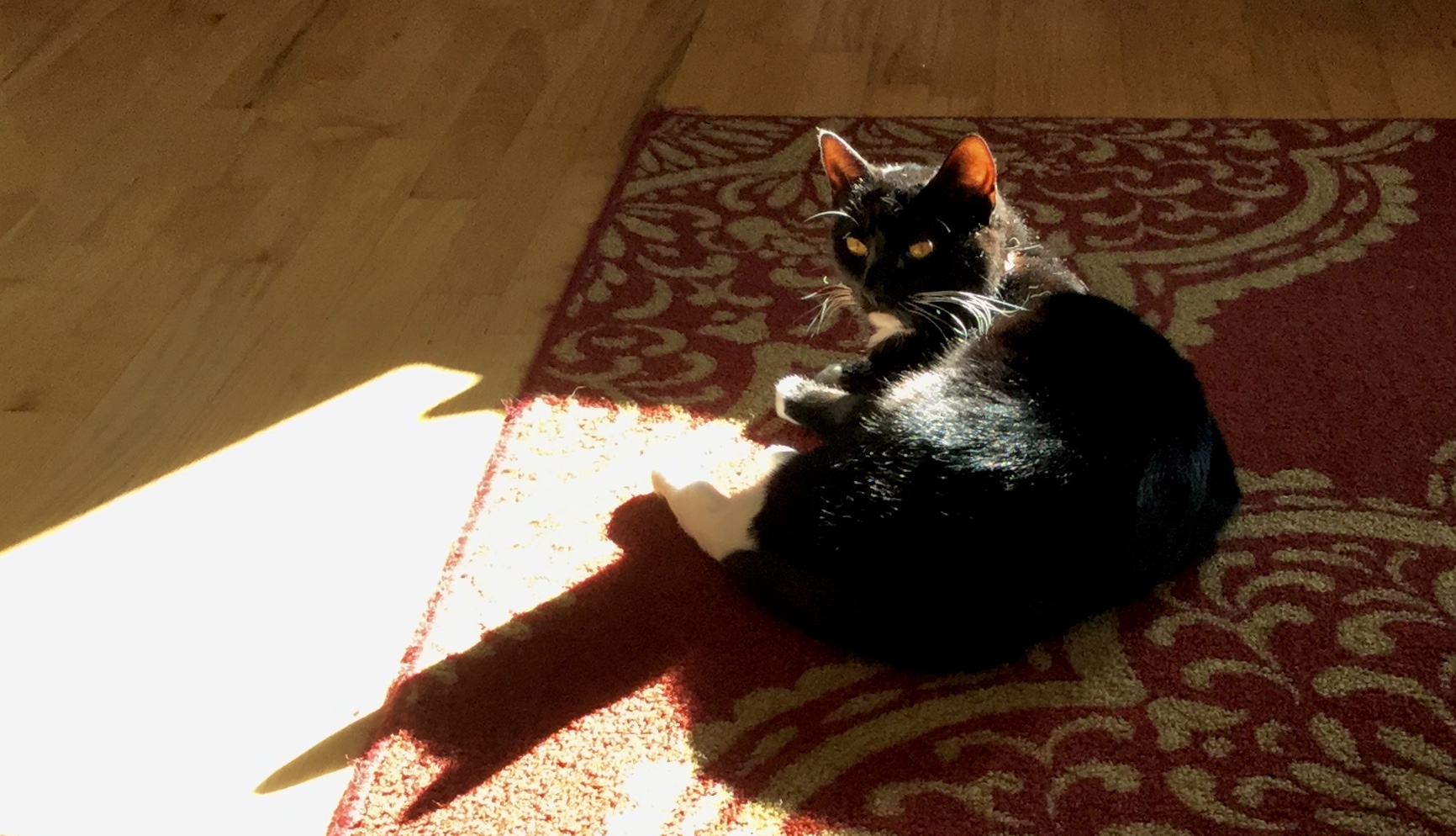
We had some respite overnight. The winds picked up and some of that blessed marine layer came onshore. The overnight lows dropped into the mid-60s. I’ve had all the windows open since the cat woke me at 5AM, but the mercury is starting to climb, so I need to go around and button it up, to trap as much of that coolth and I can.

It’s 7:30AM.

Gonna be another scorcher.

k

Photo by Pixabay on Pexels.com

Growing up, there were two foods I hated: liver and asparagus.

As an adult, I learned that the reason I hated those foods: my mom cooked the bejeezus out of them, turning the former into chew-toys and the latter into grey-green cylinders that were half vegetal mush and half indigestible cellulose. While liver never made it into my Top Ten, asparagus has become one of my favorite foods.

I roast my asparagus. I sauté it. I blanch it for salads and drop bias-cut slivers into soups. I add it to omelettes, quiches, crepes, pasta. I like it thick as a finger or thin as a cocktail straw. And now, I have a new way to enjoy it: pickled.

Don’t fear; this isn’t canning, with its attendant protocols and fears of botulism. No, this is easy. This is my kind of pickling: refrigerator pickling. It won’t keep on shelf through the nuclear winter, but it will last in the fridge for a month, no sweat.

The result is a spear that is tangy, savory, possibly with a bit of heat (your choice), but that’s still firm with a hint of crispness.

Great for snacks, salads, and the perfect accompaniment to charcuterie.

Continue Reading »

The Key

It is not a needle.
It is not a syringe
It is a key
that fits my front door
but now that I have it
will I use it?
Am I ready
to leave my distanced redoubt?
Is my unmasked heart prepared
to trust those I meet?
I cannot say
but the key turns
the dust-dry tumblers
the bolt withdraws
the door creaks open
I squint at the sun
of a different year
smell the aromas
of an unmapped summer
hear the surf noise
of my lifeblood’s anticipation
and I step outside

Taking a Breather

Occasionally, the tyranny of social and news media becomes too much for me to handle.

About ten days ago, I reached my limit, full up to here with the naïveté of the left, the mendacity of the right, the fear-mongering of the media, and the narcissistic selfishness of humanity in general.

I needed a break. From damned near everything. Continue Reading »

Understanding My Father

My father was a distinctly midcentury man.

He was a man of tract homes and manual transmissions, cigarettes and pipe tobacco, straw hats and huaraches, sand dunes and surf fishing, Frank Sinatra and Mel Tormé, pancakes with his kids on Saturday morning and roasted meats with his dad at the table on Sunday nights.  He was a dry martini/red wine with ice kind of guy: uncomplicated, elemental, rustic, reserved.

And yet, in his final decade, I found him nearly indecipherable. Continue Reading »