Feeds:
Posts
Comments

Write, Don’t Edit

Heinlein’s First Rule of Writing is:

  1. Write

Sounds simple, right? Yeah, but really, really hard to do. And to this rule, I would humbly add a corollary:

  1. Write, don’t edit

This is even harder. What Heinlein meant was, “Don’t just talk about writing; do it.” What I’m talking about is what that “do it” clause means.

Admittedly, for most of us, just collecting enough time, energy, and mental focus to put words on paper is a massive challenge, but once you finally start to “do it,” don’t screw it up by wasting that precious combination. Don’t edit every written word. When you stop to back up and edit your work it before it’s done, you’re interrupting the flow of the story and the flow of your creative mind. You are letting your analytical brain stand there like the TSA, holding up every word for inspection, examining each and every phrase with a critical eye, making your prose (essentially) take off its shoes and belt and stand there, hands in the air, hoping its pants won’t fall down. In this instance, your mind is your own worst enemy, with one hemisphere fighting against the other.

The logical, left hemisphere gets in the way of the creative, right hemisphere. Of course, when dealing with language and the written word, you can’t go “all right brain, all the time.” No, you need that left brain to help you turn the movie inside your head into scribbly bits on a white page. The struggle is in managing that left side; you need to rein it in until it listens to you, and no “left brain whisperer” exists. You need to use brute force, smash-down, alpha-brain techniques here. You need to squash your every left-brained impulse to edit as you right-brain write. And believe me, it’s hard.

The reason this is so difficult is because when I say “edit,” what you should read is “second-guess.” That’s really what we’re doing when we write and edit simultaneously. We’re second-guessing our every word, every phrase, every metaphor, description, scene, and chapter. And boy-o-boy does that take time away from what we really want to do: Write.

As I said before, this is my own personal bugbear, my own monster in the closet. Even writing this post, I’ve had to struggle against it. The first third of the article was written with every line written twice or three times as I went back and rehashed my prose. For the last two-thirds, I forced my editing mind into quiet submission, only giving it the occasional typo to fix as I went along. And here’s the kicker: in the same amount of time, I wrote twice as much.

There is a time to edit. Editing is an important part of the “Write” portion of Heinlein’s First Rule. But put it where it needs to be: after you finish.

Write. Finish. Then edit.

k
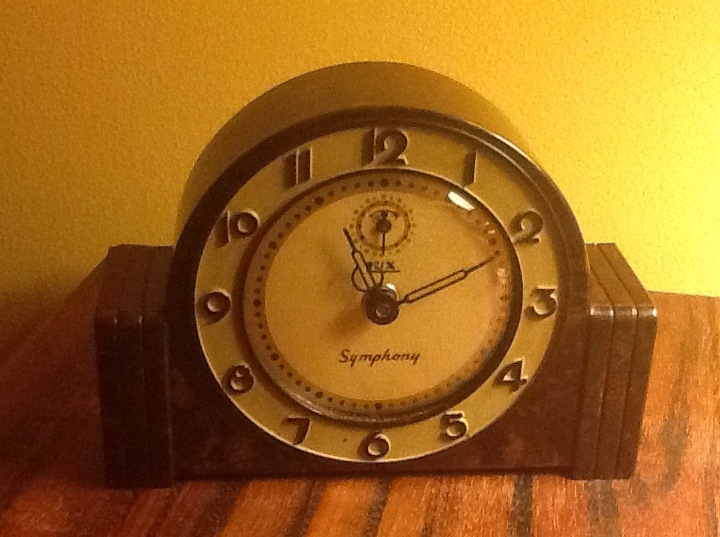
I was born in Northern California, and all my young life, I was lulled to sleep by sounds of the night.

In the spring, the tadpoles came into frog-hood and set up a chorus that filled the moonlit air. On mist-shrouded evenings, the foghorns mourned across San Rafael Bay. On trips to the coast, the darkness was awash with the rumble-rush of waves and the bark of seals. And always, everywhere, as soon as twilight settled in, crickets began to sing, each one weaving a thread into the tapestry of sound, one reedy note at a time, to blanket the night.

The sound of crickets, ubiquitous and constant, came to mean something to me. Unknowingly, cricketsong meant home, security, and peace.

Then I moved to Seattle.

For months after moving here, I felt uneasy, unsettled. Even after I got a permanent job, a spot in the regional orchestra, and moved into a cute bungalow in a quiet neighborhood, I felt…at odds with the place. It struck me one evening when I was out tending the garden. It was a bucolic scene: the light had moved from dusk into gloaming, the horses across the bridle trail that backed our yard munched contentedly at grass, and the scent of roses was thick after the day’s warmth.

And nothing made a sound. No frogs, no night-birds, not even a cricket.

Seattle, as it turns out, has no crickets. I’m guessing that this is due to the moisture and the lack of summer heat, but I don’t know. What I do know is that crickets will sing constantly through the evening unless you come near them. Thus, a night without cricketsong felt ominous, as if something was out there, lurking, silencing the crickets with its presence.

I got used to it, over time, learning to sleep well and find peace without cricket-aid. And then, last night, I replaced my electric alarm clock.

The Lux “Symphony” is a wonderful piece of Art Deco design from the 1930s and, after a good cleaning/oiling, mine now runs perfectly. Last night, I took my electric clock away and put the Lux on the nightstand.

Laying down to sleep, I felt suddenly younger. It wasn’t hard to pinpoint the source. The sound of the clock’s mechanism, the twice-per-second tick of the brass and steel escapement, made a quiet background noise that filled a void in my brain. The Lux had become, in essence, a mechanical cricket, and its constant, unerring heartbeat struck within me a chord long left silent. I slept well and woke refreshed; it may be coincidence, but something tells me otherwise.

A Double-Edged Blog

No one has said it yet; they don’t have to. There’s already a little schoolmarm voice in my head that says it loud and clear:

You shouldn’t be wasting time with a blog! You should be writing!

True, and yet…

Working on posts and pages for this blog takes time; I cannot deny it. But what I have found is that the time spent on the blog isn’t really wasted. On the contrary, I find that writing here invigorates my drive to write and exercises my technique. It also reinforces my love of the written word as I play with phrases and concentrate on the structure and focus of the much shorter form a blog post requires.

Just as a musician must work at scales and etudes, and just as a painter may create a small study for a larger work, so must a writer flex and build up literary “muscle.” When I had more time (and to be honest, more discipline), I would exercise my chops by writing a short story, but that in itself is a large expenditure of effort, especially when compared to the usually small and isolated payoff.

Thus, most importantly, I find that a blog post gives me an immediate payoff, as well as providing possible feedback via comments and re-blogs. These two things are very strong motivators, and are simply not part of the long marathon of writing a novel (especially for a Basher, like me).

So now, when that schoolmarm voice goes off in my head, I shall remember that time spent on this blog is not necessarily time wasted, and that every art and skill requires practice and study.

I spent the weekend working on my recipe for pozole, a traditional stew from Mexico, and it’s been impossible not to see this wonderful dish as Mexico’s answer to the Vietnamese phở. It’s a hearty stock, chock full of meat and a starch, served with a variety of garnishes that the diner can add to personal taste. And I suspect, as with phở, devotees will spend their lives searching for that perfect bowl of pozole.

Take a good stock—my preference is turkey stock—and add seared, grill-marked hunks of pork for a long, slow simmer. Shred the pork, add a nice mole sauce to the mix, and fill it out with a batch of hominy. This is your base, and it’s a good one; good enough to have all on its own.

But wait! There’s more!

You can split up the work on this dish, breaking it up over two days. On Day One, you take the long-duration tasks and prepare the stock and the meat, even prepare the mole. On Day Two, you put it all together, giving you time to spend with guests (and look like a master chef!)

Hang on! It gets better!

Now give everyone a steaming bowl of hearty goodness and let them add, well, just about anything they want: slices of buttery avocado, crumbled bits of salty queso fresco, chopped herbs like cilantro or oregano, whisper-thin shreds of green cabbage or romaine, crisp-fried tortilla strips. Squeeze a wedge of lime over the whole thing and dig in.

Heaven!

Laphroaig Cask StrengthI hate being right, sometimes.

Last month, the Washington voters’ decision to put down the state-run liquor stores went into effect. Yesterday, we went to Costco—not the smartest move on the Friday before the Fourth of July, I’ll grant you—and I took the opportunity to cruise their “liquor aisle.” What I saw was sad, depressing, and infuriating. It was also totally predictable. I know this, because I predicted it.

First (and foremost, I’ll say), as a fan of single malt whisky, it was a desert. A massive aisle of liquor and only one single malt. A good one, as it turns out (Macallan), but it had been re-branded with the Costco Kirkland label and was $75/bottle. This told me that the days of going into my local liquor store, chatting with the staff, getting advice on varieties, and selecting from at least a dozen Islay single malts alone, were truly dead and buried. I was standing the Henry Ford version of Single Malt Hell: You can have any brand of whisky you want, as long as it’s ours. Our state-run liquor stores had variety in spades: 50 tequilas, 25 rums, and dozens of single malts from highland and low. Costco, Safeway, and their ilk carry perhaps 50 different types of liquor, period. Selection, and therefore choice, are gone.

As a fan of small businesses and keeping my local dollars in local hands, it was just another example of an abject failure by the voting public. Due to a particularly convoluted rhetoric, when we got rid of the small, neighborhood (state-run) liquor stores, we said that only big stores could sell liquor. As a result, there isn’t a small business in the state that can sell liquor. Only Costco, Safeway, and other giants with the requisite square footage are allowed to purvey liquor. (Ironically, those mega-stores dedicate less square footage to liquor than we originally had in the state-run stores.) So now, not only do my liquor dollars fail to fill state coffers, they often don’t even stay in the state, and they certainly don’t go to bolster small local business. And in smaller towns, you now may have to travel miles to find a store large enough. The law has some provisions for “specialty” stores, but I haven’t seen or heard of any yet.

Of course, the final part in this debacle is the state’s loss of revenue. We won’t know for a while if the taxes Costco and Safeway must now collect on liquor will offset the government’s loss, but I predict we’ll come up losing there, too, and remember that so far I’m 2 for 2. And though that bottle of vodka looks good at $29, it doesn’t look as good when you get to the checkout and find it also has $12 worth of taxes on it.

What was so bad about the government running our liquor stores?

  • We didn’t have choice? Balderdash; we certainly did, much more so than we do now.
  • We didn’t have competition? True, but competition also means prices will be as high as the market allows, which won’t necessarily be lower than it was. And, when you add up your total bill, your savings probably amount to a buck or two. I’d pay the extra to see my Laphroaig single malt back on the shelf!
  • The government shouldn’t be in the business of making money? Why the hell not? The public demands a lot from the government and as far as I’m concerned they can sell WA.GOV mousepads if it’ll help build a revenue stream to support essential services.

Overall, it’s a cock-up. We voted for it, and we got it, but it’s a cock-up.

k

Swoopers and Bashers

It wouldn’t be right to finish out the first week of what is in essence an author’s blog without a post about writing.

If you’re not familiar with me or my writing, I have eight novels and dozen or so short stories and articles that have seen print. Publishers of my novels run the gamut, from Big House publishers to Small Press publishers to Just Me publishers. Likewise, my short stories have been in magazines, newspapers, anthologies, and small ‘zines. So, them’s my creds.

And so, as a writer with some accomplishments, I’ve learned a thing or two about writing. One thing I’ve learned is about discipline.

Writers’ working styles generally fall into two categories; I call them Swoopers and Bashers.

A Swooper is someone who can sit down on a Friday evening and churn out 30,000 words by the time “Meet the Press” airs on Sunday morning. A Swooper generally embodies that old advice, “Write first, Edit later,” and when “in the zone” is a formidable opponent in any writers’ workshop challenge. The Swooper style goes well with the organic technique for plotting and outlining (more on this next week), as the Swooper can readily rework or completely rewrite any problems that arise. If Swoopers have a weak link, it is that it is easier to slacken one’s discipline. After all, if you know you can write 30k words in a weekend, you can let that deadline cruise on toward you at full speed without worry. If you’ve just put 30k words to paper, that feeling of accomplishment can last for weeks or (as I’ve sometimes seen) months. Yes, Swoopers are the “hares” of the writing world.

Which obviously leaves Bashers as the “tortoises.” I can say this with impunity because I am a Basher.

A Basher works hard to get 1,000 words a day, 5k words in a week. Some of us are Bashers because we just can’t find a chunk of time large enough to put down more than that, but for the most part, we Bashers are as we are simply because, well, we just don’t write fast. The plot is continually percolating in our heads, twisting and permutating, and we just can’t see that far ahead. Whereas a Swooper can careen down the storyline, comfortably blindfolded, seeing the twists and turns as they appear, we Bashers want to see the road, judge it, and evaluate its worth before committing to it. We are also notorious self-editors, and if you saw some of my long-hand composition, with criss-crosses and arrows and circles and strike-outs paragraphs, you’d understand. We often plot and outline a book to death before writing “Chapter One,” and we are the ones who lose faith in our own creation, thinking it stupid and moronic, repeatedly during the creative process.

Importantly, we Bashers cannot fool ourselves into false confidence. We know we’re slow, and we know we’ll have to struggle to meet our deadlines.

But both styles require discipline, resolution, and repeatedly renewed commitment to put that pen onto that paper and scribble out a story.

Which now I seriouslymustdo.  FC:Book V won’t write itself.

Have a good weekend.

k

Yesterday was a big news day.

The Supreme Court (SCOTUS) both struck down and upheld the Affordable Care Act (ACA), Chief Justice Roberts was the swing vote, and SCOTUS proved it was a deliberative body. It was also a big day for bookies in Vegas, as lots of people lost their bet (including me). What the Obama administration managed to do was to lose their argument, but win the case, with SCOTUS acting like a soft-hearted teacher, helpfully pointing out the answers the administration should have given on the exam.

All in all, big stuff, and important stuff. But what I can’t figure is: why were we even there?

By all I’ve read and heard, Americans favor and support just about everything in the ACA. Coverage for children to age 26? Great! No lifetime caps or pre-existing conditions? Brilliant! Assistance for rural hospitals, increased coverage mobility, greater access to preventive care? All these things get a big thumbs-up from the American public. And yet, a large faction of Americans are against the ACA? Why?

For some, of course, it’s because their party are against it. They’ve been whipped into a froth by demagogues using red-meat phrases like “socialism,” “redistribution of wealth,” and “death panels.” And, in this day of divisive, über-partisan politics, you cannot escape the Faithful Base gnashing their teeth, and for these folks there is no reasoning or logic.

But for others, the only part that sticks in their craw is the “individual mandate.” And this is the source of my mystification.

You, Mr/Ms ACA-Opponent, you work hard.  You go to work, you pay your taxes. You support your family, and you provide them with health care coverage so that when something unfortunate happens, you don’t go bankrupt to pay the hospital bills and end up on the street. But, over there is a guy who doesn’t want to buy health insurance; he’d rather spend his money on something else, because he knows that if he gets really sick, he can just go to the emergency room and the hospital can’t turn him away.

So, why do you, Mr/Ms ACA-Opponent, why do you want to pay for that guy?

k