Feeds:
Posts
Comments

Archive for the ‘Culture’ Category

My first first date was a disaster.

I was a sophomore in high school and wasn’t old enough to drive, so Mark and Julie (my upperclassmen friends) agreed to a double-date. It was going to be great. Mark had an ancient, rusty, squeak-shocked Austin-Healey sedan. He and Julie would get me and then Lori (my date), and drive the four of us to Sausalito for dinner at the Alta Mira. From there, we’d go into the City where we had tickets to see an off-Broadway production of a play. We’d be home late, but not too late.

I was terribly nervous. I should note at the outset that Lori and I were barely friends. Beyond saying “hey” in the halls, pretty much the first conversation we’d had was my stuttering invitation, asking her out. The fact that she had agreed was, in itself, a victory (in my book, anyway), so my nervousness had a large helping of anticipation added to the basic impression of doom. But I wanted it to be a special night, so Mark and Julie and I planned the itinerary well in advance. What could go wrong?

Not being able to find Lori’s house was the first thing to go wrong. She lived on a narrow hillside side street, and the house was set back from the road, up a juniper-covered slope, accessible only by a twisting, shadowed stairway lit by a dim lamp up at the house. We must have driven past it five times before we noticed it.

Despite being late for our reservation, dinner wasn’t bad. The Alta Mira was a legend where I grew up. A grand old hotel tucked up in the fog-blanketed hills above Sausalito, it had a fancy restaurant and it was famously difficult to find (locals had had T-shirts printed up that said “No, I can’t tell you how to get to the Alta Mira.”). Driving up to this fancy-schmancy place in Mark’s rust-bucket drew sniggers from the valets, but we shrugged it off. We were having dinner at the Alta Mira!

We then drove across the Golden Gate and into the City, down to a tiny theater situated in an ill-lit corner of the Mission District. I wasn’t much of a theater-buff, so I knew nothing about the play we were going to see: Norman . . . Is That You? It was a relatively new play—this was 1973 and it had only premiered in ’70 (to middling reviews)—so I was going in blind. The play, we quickly learned, dealt with a young man coming out to his parents. As I said, this was ’73, so the general attitude toward LGBTQ+ folks was decidedly unfriendly, and it was definitely not a given that everyone was comfortable with the topic of homosexuality. Suffice it to say that my date did not seem comfortable with the topic.

Leaving the theater, our conversation was three-sided, with Lori maintaining a sentinel-like silence as we walked back to the car.

Which wasn’t where we had parked it.

Stolen? Couldn’t be. Who would steal a rust-laced, barely-functional junker like that? Then we saw the sign: No Parking 11PM–5AM, All Vehicles Will Be Towed.

It was 11:10 PM.

At the bottom of the sign, a phone number for the impound lot was printed, so the next task was walking to find a phone booth (remember, kids, mobile phones weren’t even a twinkle in Steve Jobs’ eye at this point). We found one a few blocks away, via which we learned that the impound lot was a fair distance, too far to walk, especially in the heels Lori had chosen. Mark and Julie and I pooled our cash; we probably had enough to get the car out of impound, but we weren’t sure, so paying for a cab was out of the question; even the streetcar was an iffy proposition. We decided our best way to get at all close to the lot was to do a hop-on/hop-off run on cable car. In the late hours, they weren’t so strict about payment if you were just on for a few blocks.

Eventually, we made it to the lot, had enough for the fine, and sprung Mark’s car from the hoosegow. By this time, Lori’s silence had become so intense that it had a gravitational field. When we finally rattled our way up her street and Mark stopped in front of the long, dark stairway, Lori was out of the car before I could round the vehicle to open her door. She was halfway up the flight by the time I reached the foot of the stairs. She never looked back.

Frankly, I do not blame her one tiny little bit.

We never went out again. We never actually spoke again. It was a long time before my next first date.

My last first date, on the other hand, was better. I’d learned a lot in the intervening years. Still, though, I did manage to break the First Rule of First Dates as, over our lunch of enchiladas and tamales, I told her we were going to get married and have a great time growing old together. (I’d known her all of two weeks, and to be honest, it had taken a lot of discipline not to tell her that when we first met.)

Despite this obvious faux pas, on Monday (Valentine’s Day 2022) we celebrated the fortieth anniversary of that last first date, and had our forty-first Valentine’s Day meal of Mexican food to commemorate it.

So, yeah, the last one went a bit better.

k

Read Full Post »

These past few weeks, a large cadre of Americans has been decrying the “cancel culture” that is coming down like a ton of bricks on Joe Rogan and Spotify, whilst simultaneously applauding the RNC’s censure of politicians with whom they disagree. In addition, this tranche of the conservative mind-bank is paving the way for suing teachers and school districts, should they have the temerity to teach kids about social issues, as well as—surprise surprise—continuing to indulge in its penchant for banning books.

Frankly, I was surprised that the RNC was so stupid as to believe they wouldn’t get any blowback for characterizing the January 6th riot as “legitimate political discourse,” but it definitely did not surprise me that conservatives are still into banning books.

Banning books—banning any type of artistic expression, really—is the worst way to control said expression. Know why I went to see The Last Temptation of Christ? Because of the furore raised by the so-called “religious right.” Know why I read Lolita? Because someone believed it would scar me for life. Know why, this week, I bought a copy of Maus: A Survivor’s Tale? Because a Tennessee school district banned it and I’m too old to have had the opportunity to read it in school. (In fact, in the weeks since Maus was banned, it has risen to the top of bestseller lists, and I’m pretty sure some of those purchases were made by families who specifically wanted to get it into their children’s hands. So, not a great model for successful social engineering.)

This all got me thinking about the practice of banning books. Who does it, and why? At the outset, it’s clear that books have been challenged by factions on both sides of the political spectrum. The left has challenged books here and there, for use of the n-word and for racial stereotypes, but by far these actions trend more heavily to the conservative side.

The American Library Association has for decades tracked the most challenged/banned books, and has compiled lists of the Top 100 Banned/Challenged Books, by decade, since the ’90s. The reasons books have been banned break out as follows (multiple reasons can be given for a single title, so the percentages total more than 100%.)

  • 92.5% — Sexual content
  • 61.5% — Offensive language
  • 49% — Unsuitable for age group
  • 26% — Religious viewpoint
  • 23.5% — LGBTQIA+ content
  • 19% — Violence
  • 16.5% —Racism
  • 12.5% —Drug, alcohol, and tobacco use
  • 7% —”Anti-family” content
  • 6.5% — Political viewpoint

I researched some of these more deeply and found that of those deemed unsuitable for an age group, the books were intended for juvenile and/or young adult readers. I also found that for books tagged with the “political viewpoint” reason, many of the complaints were not about the political views put forth in the book, but were in regards to the personal views of the author. One book, The Grapes of Wrath, was banned—and I’m not kidding—because it portrayed Kern County, California in a negative light.

Yesterday, I went around the house, pulling banned books off my stacks and gathering them together. I found about two dozen, from the Holy Bible to Jack London to Stephen King to George Orwell. While some of them are still TBR, I’ve read most of them, including many that I read when I was in school. Banning them, taking The Great Gatsby or Flowers for Algernon or To Kill a Mockingbird off the shelves at my school would have done nothing to further my education. And good luck keeping me from reading The Lord of the Rings.

Sheltering our youth from ideas in the name of education is both a folly and a disservice. It’s also a fruitless exercise because kids will find a way, and banning a book is a sure-fire motivation for a curious youth. I mean, do you think I was over 18 when I saw my first Playboy? Do you think I was 13 when I saw my first PG-13 movie? Do you think I was 21 when I had my first beer? Hehe . . . no, to all of the above.

Now, I do not think that all art is appropriate for all ages. Some books, due to their themes or topics, should be introduced with curation and context by someone familiar with the age group and the subject, someone like, oh, I don’t know, maybe a teacher. But what one particular 15-year old may find disturbing, a different child of thirteen might handle fine, especially when supported by teachers and family.

I once met an 8-year old girl who told me she loved my Fallen Cloud Saga. I actually winced when I heard her say that, because I really did not intend those books—with their occasional scenes of violence and sex and themes of prejudice and racial hatred—for a prepubescent audience. But the girl’s mother was standing right behind her, beaming over her child’s precocious intellect and, talking further with them both, I had to admit that the mom’s decision to let her daughter read my books was fine. For her daughter.

And there’s the rub. Not all kids are alike, not in any way. There are all sorts of ways to tailor curricula to address specific parents’ concerns and fulfill individual students’ needs, all without banning certain books for all students.

Banning books is stupid and does not advance the intended goal. One wonders why they even bother anymore.

k

PS. If you’re wondering where I come down on the Joe Rogan/Spotify fracas, I dropped my Spotify membership. And if you’re now wondering why I’m okay with “banning” Rogan but not okay with banning books, consider that:
(a) I’m not banning Rogan; I’m merely refusing to support him and his exclusive carrier, and
(b) there’s a big difference between banning a book because it has uncomfortable truths in it, and refusing to support Rogan’s continued pattern of providing a platform to spread lies and misinformation.
—k

Read Full Post »

I was in a foul mood all last week, so when a friend offered her opinion of a movie I’d recently enjoyed, deeming it “fairly good, while predictable,” I took it as a passive-aggressive reference to my low-brow viewing choices.

Naturally, she did not mean it that way and (thankfully) I have a strict “reread before hitting enter” policy when posting to social media, so no damage was done, but it did get me thinking.

The movie in question is of the “coming of age” variety and my friend’s evaluation was, to be frank, pretty spot-on. The movie is predictable, as we follow a young man growing up, navigating the pain of early adulthood until, at movie’s end, he comes to terms with his father’s history of absence and utter unreliability.

Predictable. Trite. Cliché. I’ve used these words to describe (in negative terms) both books and movies. I’ve done so here on this blog, and usually I’ve not been kind about it. So, why do I look down my nose at some formulaic works, yet enjoy others? Why do I consider some works to be entertaining, even though they are utterly predictable?

We’re all familiar with the old argument about story archetypes, how many there are, and how old. According to common wisdom, there are only seven archetypal plots (though opinions differ, and widely so). Whether this is true or not, formulas are used to build stories, especially in film—the coming of age plot, the rom-com, the murder mystery—and they are often followed to the point where you can set your watch by what happens on screen. Eighteen minutes into an episode of Murder, She Wrote? A body is going to drop in three . . . two . . . one . . .

Why do we enjoy such stories, even when we know how they’ll work out? And when do we not enjoy them?

I returned to the movie under discussion, and found that my enjoyment had nothing to do with the story’s predictable nature. I knew the boy would grow up and be happy. I knew the boy’s father would remain an irredeemable two-dimensional deadbeat dad. I knew the boy would have some sort of confrontation with his father and, in so doing, accept his own adulthood. I knew all this would happen, and to be honest, those were the least engaging sections of the film.

What grabbed and held my interest were the differences, the ways in which the writers deviated from the expected. As one example, it was how a collection of men—grandfathers, uncles, and pseudo-uncles—cooperated to raise a boy, communal fathers to an abandoned son, a composite role model that was both counterpoint and counterpart to the flawed original. The formula, that’s the foundation on which the whole is built, the scaffolding that supports what is new, but it’s the differences that set it apart.

Absent these differences, that’s when formula is a problem. That’s why the 1998 shot-for-shot remake of Psycho was a flop: simply filming it in color wasn’t enough of a difference.

But with sufficient differences, ah!, now we have variations on a theme, the same story told from a different point of view, and we enjoy the result. Otherwise, we’d never watch another rom-com, see a new staging of Macbeth, or read another mystery novel. We’d be all “Been there; done that,” and set off in search of the totally new (and good luck with that).

Some will argue that there are no original stories; that everything is an interpretation of one of the seven archetypes; or a fanglement, a mash-up of two or more to fashion what merely seems new. I disagree but will allow that, in most cases, it is true. We do tell the same stories, over and over, and we enjoy the retelling, the predictability.

So, when I begin to fret that my current work-in-progress is just another old tale retold, I’ll make a point of remembering the differences I’m working into it. Style, setting, sub-plot, backstory, characterization, tone, structure, pacing—differences large and small all adding to a unique outcome.

Formulas just are; it’s how we employ them that determines if they’re worth the time.

k

Read Full Post »

06Jan2022

One year ago today, my journal entry ended with: “Self-medication was required.”

This year, it’s still too early to know what the day will bring.

What today is supposed to bring is suffused in mundanity—an appointment with a chimney sweep, a couple of deliveries, an inch of rain—but if 2021 taught me anything, it’s that we can never really know what the world at large will toss into the mix.

Looking back on the year between, though, I’d have to say the auspices are not promising.

Monday, we both got our COVID booster shots. Our immune systems kicked into high gear, building the desired antibodies and so, by Tuesday, as expected, we were a bit under the weather. Some of our social media contacts chided us for putting such “poison” into our bodies; one even sent us a ten-minute video on how it magnetizes our bodies. (FYI: it doesn’t.)

In a friend’s most recent letter, she told me that some people in her circle—all functional adults capable of holding down a full-time job—upon reading a book that could be classified as “magic realism,” were of the belief that because “back then, people were closer to nature,” the magic described in the book was real. (FYI: it wasn’t.)

Recently, heavy snows—in winter—are being pointed to as clear evidence that climate change is a hoax, while tornadoes and wildfires in December are dismissed with the label “God’s will.” (FYI: it isn’t and they aren’t.)

And, to bring it back around, two in five Americanstwo in five—believe that hundreds of individuals across the nation somehow conspired to flawlessly submit thousands of fraudulent ballots, all without leaving the slightest trace of their crimes, all to oust a sitting president whose approval rating on its best day couldn’t touch the 50% mark. (FYI: they didn’t.)

“I did my own research” has become the mantra of the age, with grand swathes of the American population opting to trust a few hours spent on Google, searching for what they want to hear, rather than give an iota of credence to the knowledge and experience of experts who’ve studied these topics for decades.

We are in a Desert of Reason, where logic and critical thought are as rare and precious as water in the Sahara. Common sense is not only uncommon, it is strenuouslyand at times violentlyeschewed.

Today will play itself out, ending as it will with a bang or a whimper, but either way, as it was last year, self-medication may be required.

k

Read Full Post »

Back when I was a panelist at writing/sci-fi conventions, I would occasionally pop in at the workshops, where pros read/critiqued story submissions and provided a professional’s view. The critiques were honest assessments, often served with actual “pro tips,” but the stories submitted were usually—to be honest—pretty awful.

On one such occasion a pro author/editor I knew provided a critique that was both the shortest I’ve ever heard as well as the definition of “damning with faint praise.”

Her critique: “It’s very nicely typed.”

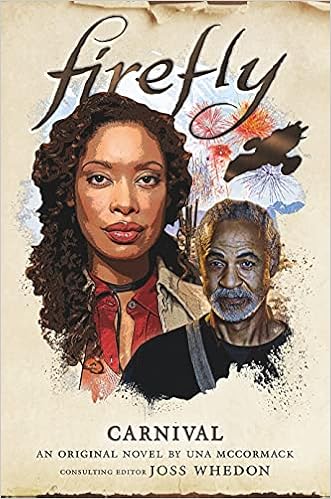
The newest title in the Firefly novel ‘verse is Una McCormack’s Firefly – Carnival, from Titan Books, and sadly, the best thing I can say about it is that “It’s very nicely bound.”

I’ve complained loud and long about previous titles in this series—the lone exception being Tim Lebbon’s entry, Firefly: Generations (also the only one with a title that comes with a colon instead of an en dash . . . go figger—as the entries written by James Lovegrove have been massive disappointments. Learning that this title was penned by a different author gave me hope.

Misplaced hope, as it turned out.

The basics of the plot are: Mal and crew are hired to provide security for a shipment and escort it across town from the train station to the space port where, once loaded, it flies off and they get paid. Naturally, things go wonky, the shipment goes astray, and two of Serenity’s crew are taken hostage—by the employer who hired the team—as collateral pending return of the goods or compensation for the loss. Failure, within 48 hours, and the “collateral” will be sent back in boxes.

Now, if that’s not a goofy enough setup for you, it gets better. Or worse. Example: the job pays 200 platinum (a ridiculously high wage for a few hours’ work) but when the crew is told they have to cover the losses, the sum is only 500 platinum (more than they have, of course, but 200 Pl is an unreasonable chunk of that profit margin).

The story unfolds and we learn that (unsurprisingly) nothing is as it seems, and therein lies the tale.

McCormack is a best-selling author of many television and movie tie-in novels, but reading this I came to the conclusion that those titles were best-sellers based on an established fan base and not on the style or content because . . . damn.

For any book set in the Firefly ‘Verse, you have to deal with the show’s excellent use of dialect and language. As with other books, the occasional sprinkling in of “g-less” gerunds (i.e., shootin’ and flyin’) helps evoke the tone from the show, and the reader fills in the rest. Lovegrove, for all his faults, did this well. McCormack does not. They pop up all over the place and, most troublesome, she throws them into non-dialogue sections, including those that are straight narrative and not part of a character’s internal thoughts. In addition, she decided to spice it up with other dialect elisions, such as “platinum” becoming “plat’num” which (to my ear at least) has no audible difference and only disturbs the eye as we trip over it. (In her defense, McCormack is a Brit who may very well have better diction than we Americans, so this may have made sense to her.)

Stylistically, the prose is pedestrian and flat, without any beauty. At regular intervals—presumably to evoke a feeling of action or a character making a quick assessment of surroundings—McCormack drops into a paragraph of fragment sentences. This in itself isn’t a bad practice, as it reads with more urgency, but when she drops pronouns and subjects from the beginning of the sentence, we have to re-read to make sure we get it, which obviates the point of the fragments.  In fact, McCormack often creates sentences where the syntax is imprecise or vague, and it can be read with one of two (sometimes opposite) meanings depending on inflection. This is simply poor writing, and should have been caught and fixed.

Sadly, the editors seem to have taken holiday on this book. And, halfway through, the proofreaders seem to have gone to join them. This is less McCormack’s fault than Titan Books’, though the author is not off the hook either. Content errors. Out-of-place references to current pop-culture. Missing punctuation. Typos. For all of these, the author gets proofs, too, and there are simply too many errors late in the book to deny a lackadaisical process from start to finish.

In short, it’s a hot mess and I found myself remembering Lovegrove’s less-than-stellar titles in the series with something approaching fondness.

The Firefly novels are now one for six, with Lebbon’s book being the only one worth the time. It’s sad, but it’s clear at this point that these are simply revenue streams—something I should have figured going in—hackwork without interest in the actual art and craft of writing.

Frankly, I don’t know that I’ll bother with any future titles. My love for the show, its original use of language, the depth of its characterizations, begins to suffer from such low-bar fare.

In short, these books are beginning to damage my calm.

k

Read Full Post »

OK, Boomer. This is for you.

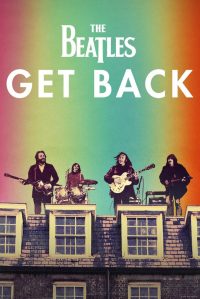
Last week, we signed up for a month of Disney+, and did so specifically to watch Peter Jackson’s documentary, “The Beatles: Get Back.

The Beatles were the soundtrack of my earliest youth, before I even knew who they were. I saw them on Ed Sullivan (“Why are all the girls screaming?”) and when my family took a road trip to Disneyland, I saw posters for them pasted on every block in L.A. (“Hehe. They spelled ‘beetles’ wrong.”). By the time I really knew who they were, they had begun to change, shifting from the classic rock and roll of Hard Day’s Night to the more musically complex tracks on Rubber Soul and Revolver. I followed them devotedly into their psychedelic phase, reveling in the rabbit hole of conspiracy theories that swirled around them during the Sgt Pepper/Abbey Road years. And, like most people at the time, I blamed Yoko for everything in the global post-mortem of the band’s break-up.

It’s no surprise, then, that I was willing to drop eight bucks to sign up with Disney+, just to watch Jackson’s three-part documentary about that final period.

What was a surprise was how moved I was by it, and for totally unexpected reasons. (more…)

Read Full Post »

Today I am thankful for:
Two brothers, all bundled up in matching navy blue hoodie jackets, out on the cul-de-sac in the bright drizzle, playing a game.

The game is:
Proceed in stages from a starting point (the truck at the near end) to a goal (the far end of the block), by one player tossing a Frisbee ™ as far as they can but not so far (or wide) that the other cannot catch it. It must be caught, or the disc goes back for a rethrow.

Eminently scalable, simple and elegant in rules, it’s a beautifully cooperative game. They win together, full stop. There is no losing. There are only gradients of victory.

Looks like they’re going for a team best, now.

Happy Thanksgiving.

Read Full Post »

« Newer Posts - Older Posts »