Feeds:
Posts
Comments

Archive for the ‘Movies’ Category

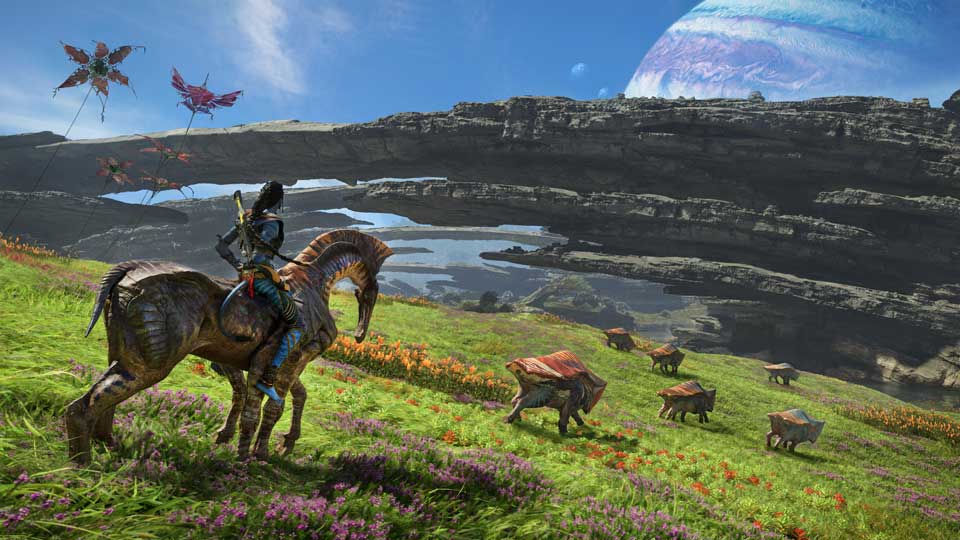
Yes, I’m rather behind the curve on this, as Ubisoft’s game, Avatar: Frontiers of Pandora, was released late in 2023; since I no longer have a gaming posse, I’m exploring some of the open world solo games that I missed in recent years. And yes, I’ve been critical of the Avatar movie franchise (probably here, but definitely elsewhere), ever since seeing the first Avatar movie in theater back in 2009; though the films are undeniably gorgeous and technological marvels, I’ve not warmed to their plots, writing, or acting.

With those caveats laid bare, you might expect me to be lukewarm on this title. Nope. I loved it. Here’s why.

I just finished the main story, which I did not complete in a rush. I took my own sweet time, sticking mostly with the main quest-line, but enjoying the many side quests as well. I took my time because, unlike many games I’ve played since retiring last April, this game world was a real pleasure to explore. Moreover, it felt like a cohesive world, a world that made sense despite being complex and intricate, where the flora and fauna were reflective of the various biomes had micro-biomes, and where the sub-cultures of the Na’vi had likewise tailored themselves to interact best with their environment, be it forest, mountains, or plains.

The goal of the game is simple: save the world from rapacious invaders (e.g., humans). We play the game as one of the Na’vi, the tall, blue-skinned people who live in their pre-industrial idyll where they live in close harmony with the ecosystems of their moon, Pandora. Humans have arrived and, holding true to their historical nature, use their advanced technology to exploit the moon’s resources, regardless of the damage to the ecology or to the native inhabitants. Sound familiar? Yeah. Pretty much why I didn’t care for the movies.

However, where the movies do little more than put a glossy coat of paint on analogues of [insert name of indigenous people here], the game has more elbow room to flesh out the cultures of the Na’vi clans. Each sub-culture has art and rituals that are tied to the unique nature that surrounds them, and while yes, there are similarities between Terran and Na’vi cultures, it doesn’t feel like a direct lift from one to the other. The Zeswa, for instance, are a nomadic clan that wander the Upper Plains, but they are not hunters; rather, they are herdsfolk, protecting the massive zakru—large animals that provide a milk-based diet—as the beasts migrate across the landscape. Everything from art to tradition to recipes to clothing is reflective of the open steppes and the winds that cross them.

From a gameplay standpoint, it’s a smooth and polished product. The option to switch between first-person and third-person viewpoint is a big deal; it’s seamless and on-the-fly, and trust me, there are situations where first-person is what you want, but when I was running through the forest, leaping from stone to massive willow trunk, it was third-person I wanted. Combat is flexible, though geared more toward ranged weaponry and stealth than melee. And as you have more weapon options than quick-slots to choose from, you’ll definitely find yourself developing a style. The skill advancement system is simple, specifically in that you do not have to choose a “tree” to devote your skill points toward. Sure, at the beginning, you’ll pick what you feel is important, but by game’s end, you’ll have more than enough points to acquire every skill on every tree. And as for crafting, the game makes it easy to add ammunition on the fly, but requires more attention when crafting gear or weaponry, an exercise that you can make as easy or difficult as you choose. as some designs require very specific items of a very high quality; you may not need that high-end heavy bow, but ooooh, wouldn’t it be nice?

But where I think this game really shines is in the story line. Much like my other Top Five game, Horizon: Zero Dawn, this game weaves a story that has twists and turns, betrayals and unexpected alliances. Not all humans are bad, not all Na’vi are good, and in the course of the main quest-line we encounter politics and power plays and a real search for self and growth. And while the overarching impetus can be boiled down to “eco-warrior vs industrialist,” there are some good interpersonal dramas that are well-crafted and excellently timed. The use of cut-scenes is limited but well executed.

Small things, too, pleased me about this game. There’s a fairly big cast of NPCs, but unlike some other studios (cough-cough-Bethesda-cough), each one I talked to had a unique facial structure made even more distinct by age, clothing, decoration, and the excellent work of the voice actors. Traveling the world, I began to learn what plants and animals were nearby by their sounds. Even the quality of light was different, depending on the terrain, the biome, the weather, and the time of day. And the voice work was top-notch. One of my pet peeves about sci-fi is the indiscriminate use of meaningless apostrophes in alien names, but here—as in Na’vi and Ri’nela, the people and one of the characters—the voice actors use those apostrophes as glottal stops (like the apostrophe in Hawai’i or in the break in the phrase “uh-oh”). Little things, but they all help bolster the realism of the world.

It is not a perfect game. It has glitches. It has a few bugs. I got “clipped” into inescapable areas a few times (I tend to explore . . . a lot), but a quick Fast Travel sorted that out. There were times when the foliage would flicker, usually when the sun was low in the sky or the clouds began to gather. There were two spots where a side-quest refused to start, but a quick visit to Reddit helped me get past the bugs. And, after a few days’ worth of reclaiming drill sites and coming across RDA patrols, I saw the patterns that allowed me to game these small encounters. To be honest, though, these were not even annoyances, and were much less prevalent here. Maybe it’s a good thing, waiting two years to start a game. Hehe.

Mostly, though, it is just a gorgeous game world. Once I got my ikran (one of the quasi-mini-dragons one can fly around) and was able to bond with a direhorse (great for the plains), I often eschewed all Fast Travel in favor of taking the scenic route. I expect you will, too.

I’m about to embark on the two DLCs that came out a while ago, and there’s a new one—From the Ashes—released to coincide with the third movie in the franchise. I’ll wait for the movie to hit a streaming channel, but in all likelihood I’ll buy the expansion.

k

Read Full Post »

It struck me today that I need to change my perspective.

I am still thinking like an employed person. True, I still am employed, but not for much longer. In fact, I only have fifteen more days of employment; three business weeks before I am retired. Yet, when looking ahead and planning, I still, to a great extent, fall into the decades-long habit of planning around my workday responsibilities. Is it a school night? Then I can’t stay up ’til 2AM gaming with my crew. Am I on call? Then thank you, no, to the second whisky. How much will travel time eat into my week off?

Case in Point: Dune: Part Two.

For a long time, now, I have not enjoyed going to the cinema. Aside from the jarring juxtaposition of watching an adaptation of a Regency drama with distant gunfire and muffled explosions bleeding through from the multiplex theater next door, I find the experience over-loud, over-priced, and chock-a-block with people who are—more often than I care to admit—rude, inconsiderate, and entirely capable of ruining my movie-going experience.

So, though all my friends are raving about how good D:P2 is, I’ve been steeling myself for the long wait until it hits a streaming service and then comes out on disc (I’ll be watching the three movies annually, once I have them all at hand). I mean, why test my tolerance by braving the cinema along with the crowds that will also want to see it on any given weeknight or weekend day?

But today, I realized how silly and outdated that perspective is. In three weeks, I’ll be retired. Next month, there’s no reason I can’t’t go to the cinema mid-week, midday (along with all the other old folks). I might even get a senior discount. I’ll still have to contend with SFX sound bleeding in from the theater next door, but I’m thinking that won’t be as big an issue with D:P2 as it might otherwise be.

To be honest, I’ve missed the cinema experience, at least the way it used to be. My sister and I, ages ago, went in a gang to a “Weekend of Epics” in Petaluma, where we saw, back to back: The Bible, Ben-Hur, Cleopatra, and Lawrence of Arabia. It was an all-day event, over thirteen hours of screen time (plus intermissions and meal breaks). And it was a gas, because the only people in attendance were movie nerds who were totally into the immersion of watching old movies in a darkened theater. No teens on dates. No young couples with crying babies. Just folks who were willing and able to devote nearly sixteen straight hours to a movie-going experience.

I don’t ever expect to capture that feeling again, but if there’s even a chance of feeling a fraction of that magic, I’ll risk the disappointment.

k

Read Full Post »

  • “Top 10 Reads for the Summer”
  • “The Best Games of 2023, Ranked”
  • “Twelve Items Every Pantry Must Have”
  • “5 Movies You Need to See”
  • “Seattle’s Best Restaurants”

There is no scarcity of voices eager to tell us what to do, what to like, what is good. “Listicles” abound, plastered with headlines shot through with words like “Best” and “Ranked.” But, “Best” according to whom? Who decides how these things are “Ranked?” Not me, for sure. Probably not you, either. But here’s the thing:

  • I’m enjoying a book my friend didn’t like.
  • The music I’m listening to is probably not on your playlists.
  • I loathe brie cheese.
  • A well-maintained and -manicured lawn is my idea of a crime against nature.

In other words, my tastes are different than yours, and yours are different than mine. And that’s okay.

My tastes in music, books, and cuisine aren’t better than anyone else’s. Yes, I was trained as a musician, have written novels, and have taught myself to be a better cook, but my personal likes and dislikes in these areas aren’t better. Obviously, they have been influenced by what I’ve learned, but they’re not better. “Better” presumes there is some Platonic ideal against which all others are found lacking, and while this might work for some objects, when it comes to things like sandwiches, it’s useless. There is no “best” sandwich. There’s just your favorite kind of sandwich. And there’s mine.

“Bestseller” doesn’t mean “best,” and it damned sure doesn’t mean you’ll like it. Neither do awards, kudos, upvotes, likes, retweets, or some stranger’s rankings.

Where there are quantifiable characteristics that can be evaluated, let’s compare and discuss them; we might learn something, see something we never saw before, and possibly modify our opinion. But when we’re dealing with the unquantifiable, when we’re talking about basic visceral likes and dislikes, we just need to chalk it up to personal preference.

I’ll enjoy what I enjoy, and you do the same. I won’t think less of you because you love brie cheese (though I may wonder how you manage it).

In short, I don’t want to yuck your yum.

k

Read Full Post »

I was in a foul mood all last week, so when a friend offered her opinion of a movie I’d recently enjoyed, deeming it “fairly good, while predictable,” I took it as a passive-aggressive reference to my low-brow viewing choices.

Naturally, she did not mean it that way and (thankfully) I have a strict “reread before hitting enter” policy when posting to social media, so no damage was done, but it did get me thinking.

The movie in question is of the “coming of age” variety and my friend’s evaluation was, to be frank, pretty spot-on. The movie is predictable, as we follow a young man growing up, navigating the pain of early adulthood until, at movie’s end, he comes to terms with his father’s history of absence and utter unreliability.

Predictable. Trite. Cliché. I’ve used these words to describe (in negative terms) both books and movies. I’ve done so here on this blog, and usually I’ve not been kind about it. So, why do I look down my nose at some formulaic works, yet enjoy others? Why do I consider some works to be entertaining, even though they are utterly predictable?

We’re all familiar with the old argument about story archetypes, how many there are, and how old. According to common wisdom, there are only seven archetypal plots (though opinions differ, and widely so). Whether this is true or not, formulas are used to build stories, especially in film—the coming of age plot, the rom-com, the murder mystery—and they are often followed to the point where you can set your watch by what happens on screen. Eighteen minutes into an episode of Murder, She Wrote? A body is going to drop in three . . . two . . . one . . .

Why do we enjoy such stories, even when we know how they’ll work out? And when do we not enjoy them?

I returned to the movie under discussion, and found that my enjoyment had nothing to do with the story’s predictable nature. I knew the boy would grow up and be happy. I knew the boy’s father would remain an irredeemable two-dimensional deadbeat dad. I knew the boy would have some sort of confrontation with his father and, in so doing, accept his own adulthood. I knew all this would happen, and to be honest, those were the least engaging sections of the film.

What grabbed and held my interest were the differences, the ways in which the writers deviated from the expected. As one example, it was how a collection of men—grandfathers, uncles, and pseudo-uncles—cooperated to raise a boy, communal fathers to an abandoned son, a composite role model that was both counterpoint and counterpart to the flawed original. The formula, that’s the foundation on which the whole is built, the scaffolding that supports what is new, but it’s the differences that set it apart.

Absent these differences, that’s when formula is a problem. That’s why the 1998 shot-for-shot remake of Psycho was a flop: simply filming it in color wasn’t enough of a difference.

But with sufficient differences, ah!, now we have variations on a theme, the same story told from a different point of view, and we enjoy the result. Otherwise, we’d never watch another rom-com, see a new staging of Macbeth, or read another mystery novel. We’d be all “Been there; done that,” and set off in search of the totally new (and good luck with that).

Some will argue that there are no original stories; that everything is an interpretation of one of the seven archetypes; or a fanglement, a mash-up of two or more to fashion what merely seems new. I disagree but will allow that, in most cases, it is true. We do tell the same stories, over and over, and we enjoy the retelling, the predictability.

So, when I begin to fret that my current work-in-progress is just another old tale retold, I’ll make a point of remembering the differences I’m working into it. Style, setting, sub-plot, backstory, characterization, tone, structure, pacing—differences large and small all adding to a unique outcome.

Formulas just are; it’s how we employ them that determines if they’re worth the time.

k

Read Full Post »

OK, Boomer. This is for you.

Last week, we signed up for a month of Disney+, and did so specifically to watch Peter Jackson’s documentary, “The Beatles: Get Back.

The Beatles were the soundtrack of my earliest youth, before I even knew who they were. I saw them on Ed Sullivan (“Why are all the girls screaming?”) and when my family took a road trip to Disneyland, I saw posters for them pasted on every block in L.A. (“Hehe. They spelled ‘beetles’ wrong.”). By the time I really knew who they were, they had begun to change, shifting from the classic rock and roll of Hard Day’s Night to the more musically complex tracks on Rubber Soul and Revolver. I followed them devotedly into their psychedelic phase, reveling in the rabbit hole of conspiracy theories that swirled around them during the Sgt Pepper/Abbey Road years. And, like most people at the time, I blamed Yoko for everything in the global post-mortem of the band’s break-up.

It’s no surprise, then, that I was willing to drop eight bucks to sign up with Disney+, just to watch Jackson’s three-part documentary about that final period.

What was a surprise was how moved I was by it, and for totally unexpected reasons. (more…)

Read Full Post »

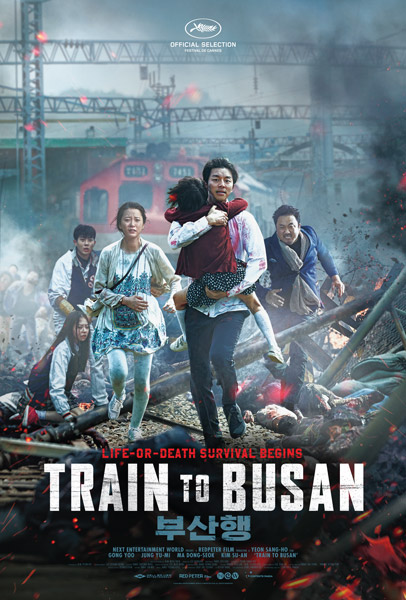
A lot of today’s pop culture cinema leaves me cold. Superheroes. Vampires. Zombies. Especially zombies.

What is it with zombies? I don’t watch The Walking Dead. I don’t get all fidgety waiting for the next zombie apocalypse video game. And I certainly don’t queue up to see the latest action-packed, gore-spattered, plucky regular-guys facing walls of crazed, offal-eating zombies.

Usually.

(more…)

Read Full Post »

Miss me? Did you even notice I was gone? Hehe…Probably not.

Either way, it was an interesting holiday fortnight, writing-wise—a couple of rejections, a friend had his book series canceled, another friend’s newest got some great reviews, and one of my books is going out-of-print—but the one piece of writerly news that really sparked a discussion was a bit involving CBS, Paramount, and Star Trek.

You remember Star Trek, right? That other sci-fi mega-franchise. The one with good writing? The franchise that actually did break new ground?

Yeah. That one. Star Trek.

(more…)

Read Full Post »

Older Posts »