Feeds:
Posts
Comments

Posts Tagged ‘vignettes’

This morning, I awoke surprised as last night, in my dream, I died, that fearful thing we were always told would mean we’d seen our last waking day. Yet here I am alive and telling my tale of how I dreamt that, after a struggle, I’d succeeded in my grand task, but failed to save myself.

I lay in a hospital bed. The room was bright, the machines beeped, but when the klaxons sounded I turned my head and saw the monitor’s lines go flat, its numbers tick down to zero. I know it was it I who watched, as I felt my conscious self hanging on for a few brief breathless moments as my candle guttered out. There was no sudden pain, no last struggle against the dark, or if there was, I was unaware as my form and I had already parted ways. I heard no celestial choirs, saw no flights of angels. What filled me as my vision faded was neither terror nor fear, not even anxiety.

I felt free.

Free. Released, unfettered, one final exhalation filled with serenity and peace, the struggle over, the grand task complete, a life, concluded. I wanted nothing after, did not pray for heaven, feared no hell. I was simply content to have loved well and done my best.

That’s it.
Love well.
Do your best.
Naught else is worth tallying.

Read Full Post »

the boy stood there as I drove by
staring at me as if
he’d never seen my like
and of course he hadn’t
for I was a new thing
the first of my kind
to him
and I thought

oh, please, give me those eyes
those new eyes
eyes that have not yet learned
to see the world
as pigeon-holed types
sorted and rendered into
a broad-brushed tonal pastiche

driving on I prayed
let me see things
in their wondrous uniqueness
not just as
a house a fence a woman walking her dogs
but as

this house
clad in bright happy greens
partnered by a particolored sweetgum tree
brass bright on its red door
mullioned windows glinting
in shafts of the morning’s autumn light

this fence
gap-toothed and silvered with age
mottled with lichen
bent by the storms of years
a ragged highway for squirrels
racing from yard to yard

this woman
bundled in her well-worn tweed
grey hair peeking out from under a magenta cloche
breath puffing like word balloons as she talked
to the tired waddling retriever his snout misted with age
to the jaunty-stepping shepherd that looked up to ask
am I a good dog today?

let me live in this real world
let me revel in this multifarious creation
let me see life as it is

give me new eyes
again

Read Full Post »

I do not recognize my hands, today,
hide-wrapped and rough,
fingers moving all as one, a unit lacking youth’s independence,
working like
a team of horses, fingers yoked in tandem,
brushing crumbs or combing hair,
reaching out
claw-like, deliberate, mechanical.

Gone is the fluidity
that typed like a piano etude,
that tested the strength of rain
fingers splayed, palm up to the lowering sky.

They seem, now, more like my father’s hands,
leathered, laced with welted scratches from thorn or cat,
thick fingers slightly curved, open,
as if holding the memories
of tools and wood and mugs and plates
and books and pens and paper
and forks and spoons
and a sweetheart’s hand.

They do not close as once they did,
so tightly that they could catch
my breath on winter days,
and when now they speak
in gesture they are
slow, brutish, leaving most
to context and implication.

And, of course, the pain they carry, that is new as well,
the constant reminder of dull aches,
the sharp-edged recriminations of grip and release.

I have always seen them, in many ways, as extensions of me,
strong and supple, quietly expressive,
nimble in deed and thought, switching with ease
from fountain pen
to computer keys,
from kitchen knife
to garden tool,
from dovetail jig
to a viola’s strings
to my true love’s hair.

This still is true, I suppose, as they and I both are
a good bit older, a dash more tired,
content to spend time in restful contemplation.

We still do all the things we used to, only
with a mindfulness that comes from
a slow paring down of life from what we need
to what we desire
to do, to feel, to create.

Perhaps I do not recognize them
because I do not know who I am,
in this time.

Perhaps they are teaching me.

Clever hands.

Let’s learn together.

Read Full Post »

He let the book down onto his lap and closed his eyes. The window ushered in the breeze of early morning, cold and full of the electric scent of coming rain. He luxuriated in the feeling of gooseflesh on his arms—what was it called? horri-something? yes, horripilation, when the skin grows tight and the hair stands up—as the cold air sailed past him, over him, through him. It had been an unpleasantly brief night, one filled with aches and discomfort. Aging wasn’t easy, or so his body told him, frequently. But the early morning’s grey-shrouded light, the breeze heavy with moisture seasoned by salt from shoreline waves, the feeling of the book’s rough paper still tingling in his fingertips, this was life, this was being alive, and the perfect way to start the last day of June near the edge of Puget Sound.

k

Read Full Post »

Most of all, he enjoyed pruning the Japanese maples.

They stood beneath the canopy of evergreens–spruce, pine, fir, cedar, cypress–the giants of his garden. The tall conifers took the brunt of the weather, snarling into the winds, sacrificing muscular branches heavy with sap and resined scent to protect the more delicate growth at their feet. There was little to prune on these living towers; mostly he just carted away what the ocean-birthed storms snapped off, trimming back broken stubs, fulfilling his custodial chores while they, aloof and inscrutable, heads in the louring clouds, faced the southwesterly winds, ready for the next gale.

The other maples, the vine maples, were not his favorites, being a bit too boisterous, sending up trunk after slender trunk, reaching outward with multiplicative hands, begging for alms of sunlight. Pruning these, even the eldest of them, was like wrangling twelve-year-olds on a class trip. Just retrieve the one and you find that two others have ranged away from the pack. He loved them for their fall displays, though; their sudden, explosive shift from simple summer green to riotous fires of autumn could happen during a single night’s slumber. He was especially fond of the precocious one in the back, tucked under the pendant drapery of the grandmother spruce, because that maple was always first to change clothes, eager for colorful sweaters and winter’s onset.

But most of all, he enjoyed pruning the Japanese maples. Not the winter’s pruning, but in summer.

In winter, when they slept naked beneath the grey blankets of somnolent skies, he would trim them for shape, for strength, for optimal overlap and layering, and with an eye toward the tripartite growth that would come in spring. This, though, this was straightening the curled hand of a sleeping child, tucking them in beneath the covers. It was the trees, and it was him; two species, separate, unattached, isolate.

In contrast, the summer pruning–he could think of no other metaphor–was making love. The leaves of the Bloodgood–deep magenta, finely serrated, with thin, questing tips–rustled as his hands moved through the branches. The Autumn Moon’s leaves–pale green, delicate, so sensitive to light that a week’s sun would make them blush and August’s searing gaze could shrivel whole branches–bent to his ministrations, be it to rub out the dried tip or snip off a sere frond.

The two of them, though they were as old as others he’d planted, were barely half as tall. Theirs was a patient habit, a measured expansion, with each branch testing the world in three directions: one twig right, one left, one forward and upward. As his fingertips moved down each limb, each branch, each twig, he could divine their logic. They knew their limits and worked within them: send out scouts, read the reports, proceed only if conditions are favorable. He loved their caution to the point of emulating their unhurried approach in his own life. Knowing that his eyes could sense things they could not, knowing where the dappled sunlight would be best, he would pinch here, pluck there, and encourage them toward the unseen goal. Of their failures, his gentle caress revealed the abandoned twigs, stiff and pale where successes remained supple and green, and he would thumb them off. The snips were a last resort, for each leaf was a gem in the rough.

For when Summer packed its bags and Autumn came home to do its laundry, the evergreens remained dark and disinterested columns and the vine maples played frat-boy pranks on one another. But between the constancy and the chaos was the slow flood of color of his Japanese maples. The Bloodgood’s leaves crept from maroon to red to rust to scarlet to a crimson so sharp it could cut, while the Autumn Moon caught fire, dropping green for chartreuse, adding dry-brushed pinks, until October’s cold hearth brought the touch of orange hearthfire to each leaf.

He was aging, now, knees creaking, back growing stiff, while for these trees their youth was barely begun. He wondered–frankly, he worried–about what would happen to them once he’d passed. “Scatter my ashes on my trees,” he’d often say, though he only dreamed he would die while still near them. For as long as he could, he would remain there, caring for them at the same tempo they lived.

Because, most of all, he enjoyed pruning the Japanese maples.

k

Read Full Post »
My youth plays out in monochromatic Super 8, all shadows and light, soundless but for the clacking whir of the projector, each jumpy image spattered by specks of dust that flash past, gone before they even register in the mind.

Around me, I see the shining, sun-bleached hills behind our houses, wild land laced by the trails I hike in adventures that are my haven, my freedom, my escape. I see the black-and-white blurs of schoolmates as they race their Flexi-Flyers headlong down the sloping streets. I see my family—mother, father, sister—wave and laugh, speaking silent words to whomever runs the camera, as they go about their daily lives.

All is shades of grey, wan and distant.

In my home, though, moving past the dark stain of lawn, the walls of pale grey stucco, and the brightly trimmed opening of the doorway, beyond the shadowed living room where children dare not tread, through the kitchen with its charcoal-colored wood, and into the chiaroscuro of the family room, there is a red chair.

It is red. So red.

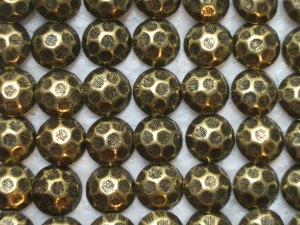
It stands in the ashen jumble of the room like an open wound, colored the red of blood, bright and arterial, shiny as a skinned knee. Upholstered leather is nailed to its frame by rows of brass tacks that glint in the streaming sunlight, their rounded heads faceted by the hammer blows that set them.

It is an old chair—I do not know a time when it was not there—a holdout from days before my birth. Wing-backed, claw-footed, it is large, its arms stained by the grip of a thousand hands. Here and there the leather is a bit dry and has cracked, revealing tufts of excelsior and batting. It creaks when I climb up, as if complaining, as if I am an unwelcome intruder, and perhaps I am, for it is my father’s chair, and his alone. I curl up in its empty embrace, breathing in its captured aromas of Old Spice and Bond Street.

And on this day, this one day, it is the chair in which my father sits and, for the last time in our lives, gathers me up in his arms, in his warmth, in his scent. It is the chair in which he tells me of my mother’s death. 

After that day, I do not know what happened to that chair. I still see the wall of books, the ancient davenport, the old B&W television on its tubular stand, the corduroy love seat, the sliding-glass door that opens out on the too-bright patio, all these I see in the flickering cinema of remembered youth, but there is a dark spot, a lacuna, a patch of emotional blight where the chair once stood. After that day, I do not remember it being there. I do not remember my father ever sitting in it again. I have excised it from my past, wished it out of existence. 

In my experience, time does not heal, but it does teach. Sometimes it teaches us to understand and adapt, while at other times it teaches us how to cope and survive. The disappearance of that red chair is just such a lesson, learned during the sixty years that separate me from that day. That chair, the cauldron of my earliest grief, has bled out, its color used up, the power of its memory spent.

And I can live with that.

k


Read Full Post »

My first first date was a disaster.

I was a sophomore in high school and wasn’t old enough to drive, so Mark and Julie (my upperclassmen friends) agreed to a double-date. It was going to be great. Mark had an ancient, rusty, squeak-shocked Austin-Healey sedan. He and Julie would get me and then Lori (my date), and drive the four of us to Sausalito for dinner at the Alta Mira. From there, we’d go into the City where we had tickets to see an off-Broadway production of a play. We’d be home late, but not too late.

I was terribly nervous. I should note at the outset that Lori and I were barely friends. Beyond saying “hey” in the halls, pretty much the first conversation we’d had was my stuttering invitation, asking her out. The fact that she had agreed was, in itself, a victory (in my book, anyway), so my nervousness had a large helping of anticipation added to the basic impression of doom. But I wanted it to be a special night, so Mark and Julie and I planned the itinerary well in advance. What could go wrong?

Not being able to find Lori’s house was the first thing to go wrong. She lived on a narrow hillside side street, and the house was set back from the road, up a juniper-covered slope, accessible only by a twisting, shadowed stairway lit by a dim lamp up at the house. We must have driven past it five times before we noticed it.

Despite being late for our reservation, dinner wasn’t bad. The Alta Mira was a legend where I grew up. A grand old hotel tucked up in the fog-blanketed hills above Sausalito, it had a fancy restaurant and it was famously difficult to find (locals had had T-shirts printed up that said “No, I can’t tell you how to get to the Alta Mira.”). Driving up to this fancy-schmancy place in Mark’s rust-bucket drew sniggers from the valets, but we shrugged it off. We were having dinner at the Alta Mira!

We then drove across the Golden Gate and into the City, down to a tiny theater situated in an ill-lit corner of the Mission District. I wasn’t much of a theater-buff, so I knew nothing about the play we were going to see: Norman . . . Is That You? It was a relatively new play—this was 1973 and it had only premiered in ’70 (to middling reviews)—so I was going in blind. The play, we quickly learned, dealt with a young man coming out to his parents. As I said, this was ’73, so the general attitude toward LGBTQ+ folks was decidedly unfriendly, and it was definitely not a given that everyone was comfortable with the topic of homosexuality. Suffice it to say that my date did not seem comfortable with the topic.

Leaving the theater, our conversation was three-sided, with Lori maintaining a sentinel-like silence as we walked back to the car.

Which wasn’t where we had parked it.

Stolen? Couldn’t be. Who would steal a rust-laced, barely-functional junker like that? Then we saw the sign: No Parking 11PM–5AM, All Vehicles Will Be Towed.

It was 11:10 PM.

At the bottom of the sign, a phone number for the impound lot was printed, so the next task was walking to find a phone booth (remember, kids, mobile phones weren’t even a twinkle in Steve Jobs’ eye at this point). We found one a few blocks away, via which we learned that the impound lot was a fair distance, too far to walk, especially in the heels Lori had chosen. Mark and Julie and I pooled our cash; we probably had enough to get the car out of impound, but we weren’t sure, so paying for a cab was out of the question; even the streetcar was an iffy proposition. We decided our best way to get at all close to the lot was to do a hop-on/hop-off run on cable car. In the late hours, they weren’t so strict about payment if you were just on for a few blocks.

Eventually, we made it to the lot, had enough for the fine, and sprung Mark’s car from the hoosegow. By this time, Lori’s silence had become so intense that it had a gravitational field. When we finally rattled our way up her street and Mark stopped in front of the long, dark stairway, Lori was out of the car before I could round the vehicle to open her door. She was halfway up the flight by the time I reached the foot of the stairs. She never looked back.

Frankly, I do not blame her one tiny little bit.

We never went out again. We never actually spoke again. It was a long time before my next first date.

My last first date, on the other hand, was better. I’d learned a lot in the intervening years. Still, though, I did manage to break the First Rule of First Dates as, over our lunch of enchiladas and tamales, I told her we were going to get married and have a great time growing old together. (I’d known her all of two weeks, and to be honest, it had taken a lot of discipline not to tell her that when we first met.)

Despite this obvious faux pas, on Monday (Valentine’s Day 2022) we celebrated the fortieth anniversary of that last first date, and had our forty-first Valentine’s Day meal of Mexican food to commemorate it.

So, yeah, the last one went a bit better.

k

Read Full Post »

Older Posts »