He let the book down onto his lap and closed his eyes. The window ushered in the breeze of early morning, cold and full of the electric scent of coming rain. He luxuriated in the feeling of gooseflesh on his arms—what was it called? horri-something? yes, horripilation, when the skin grows tight and the hair stands up—as the cold air sailed past him, over him, through him. It had been an unpleasantly brief night, one filled with aches and discomfort. Aging wasn’t easy, or so his body told him, frequently. But the early morning’s grey-shrouded light, the breeze heavy with moisture seasoned by salt from shoreline waves, the feeling of the book’s rough paper still tingling in his fingertips, this was life, this was being alive, and the perfect way to start the last day of June near the edge of Puget Sound.
Summers in my tween years were not pleasant. Most of this was due to the standard tween-centric issues—the struggle for self-definition, the complete lack of agency, the all-too-natural desire to take the bit in one’s teeth and reject all elder pressure to conform—but there was one recurring event that made those summers even less pleasant: trips to the Iron Range of northern Minnesota.
My stepmom came from the Iron Range—north of Duluth, the little town of Gilbert, MN—and for a few years we trekked out there from my hometown north of San Francisco to visit her relations (of which there were many). I remember three trips; the first was by airplane, and the next two were (sadly) by car.
It’s not that it was a total misery from start to finish, but at that age I’d not yet learned to appreciate the excitement and exploratory thrill of travel. The road trips, in particular, were little more than a purgatory of boredom which I suffered in the station wagon’s “way back” listening to one of the three 8-track cassettes I had been allowed to bring. My folks would turn off the front speakers and I would listen to Buffy Sainte-Marie or Simon & Garfunkel or Quadrophenia on an eternal loop. In short, I was dour, mopey, and generally about as much fun to have along as an overfilled suitcase with a broken wheel. But still, each trip had its high point (singular).
The airplane trip’s acme was when we took an actual helicopter shuttle from Marin County to the SFO airport. That was cool. On the first road trip, we stopped at Mount Rushmore. Definite high point.
The second road trip—our final journey—was taken under a dark star, though. We broke down in Idaho, dealt with locusts and hailstorms through the Dakotas, and then hit a deer somewhere north of Duluth (it was then I learned that, for insurance purposes in Minnesota, deer were considered “falling objects” and hitting one was covered, which was good for my folks, as our Vista Cruiser took a serious beating).
But that trip had a high point, too. By this time, I’d learned some of the names of the myriad relations we visited with, and even enjoyed the company of some of the kids my age. One night, staying in a relative’s cabin by a lake (don’t ask me which one . . . they have thousands, you know), we went out for a walk, and it was on that walk that I saw three new things at once: fireflies, foxfire, and the aurora borealis.
I’d camped a lot as a kid. I’d backpacked through the Point Reyes National Park, bushwhacked my way through the hills behind my home, and ridden my bike up the coast, staying in campgrounds along the way (hey, it was a different time, back then). But never, ever, had I seen anything that naturally glowed in the dark, much less three things in one night. The auroras were the most difficult to see, given the trees and all, but from the south edge of the lake we got a view of them. I remember green ribbons, vague and hazy, sliding above the treetops in the distant north on that short but moonless summer night.
I’d always wanted to see them again, except with a better view.
This weekend, I got my wish.
Seattle was “in the zone” for auroras formed by the recent solar storm and CMEs that blasted our way, and while anything astronomical—be it meteor showers or eclipses or auroras—will, nineteen times out of twenty, be met with cloudy skies, leaving us skunked, this was not one of those times.
I became aware of something going on when, near midnight, as I was drifting off to sleep, I heard voices out on the street. Then I got a text from my neighbor, alerting me to the show above. Then a second text: “They’re getting brighter!”
We got out of bed, threw on robes and such, and ventured out into the dark. About half of the block was standing out in the center of the cul-de-sac, in their PJs, staring upward and exclaiming in what I’d have to call “stage whispers,” where they wanted to be quiet but couldn’t. Naturally, I couldn’t see anything right away, but after twenty minutes or so the auroras became clear. Pinks, greens, purples, and blues, in ribbons and vortices and swirls, covered the sky from the northern treetops to the sky’s zenith. People were using their phones—much more sensitive to the faint light and colors than our eyes—but I preferred to view them unaided. What surprised me, aside from the variety of colors, was how swiftly they moved, eddying with the currents of magnetic force, snaking across the heavens.
It was a priceless time, a brief hour or two, absolutely filled with wonder, spent amongst friends and neighbors.
I’m sure there were some stiff necks the next morning, but even so, some of us went out the next evening hoping to see a repeat performance (alas, it was not meant to be). I think I prefer it that way, though. It was a one-off, an isolated treat, and is all the more precious because of its singular nature.
My eyes were unable to see the truly spectacular show than did others who were farther from the city lights, but I’ll file it away, that memory, and replay it now and again, as I have that night of the fireflies and foxfire.
First, many thanks to those who showed interest in my new book, From the Edge (now available via Amazon). If you liked it, please consider writing a review, as that helps drive its visibility.
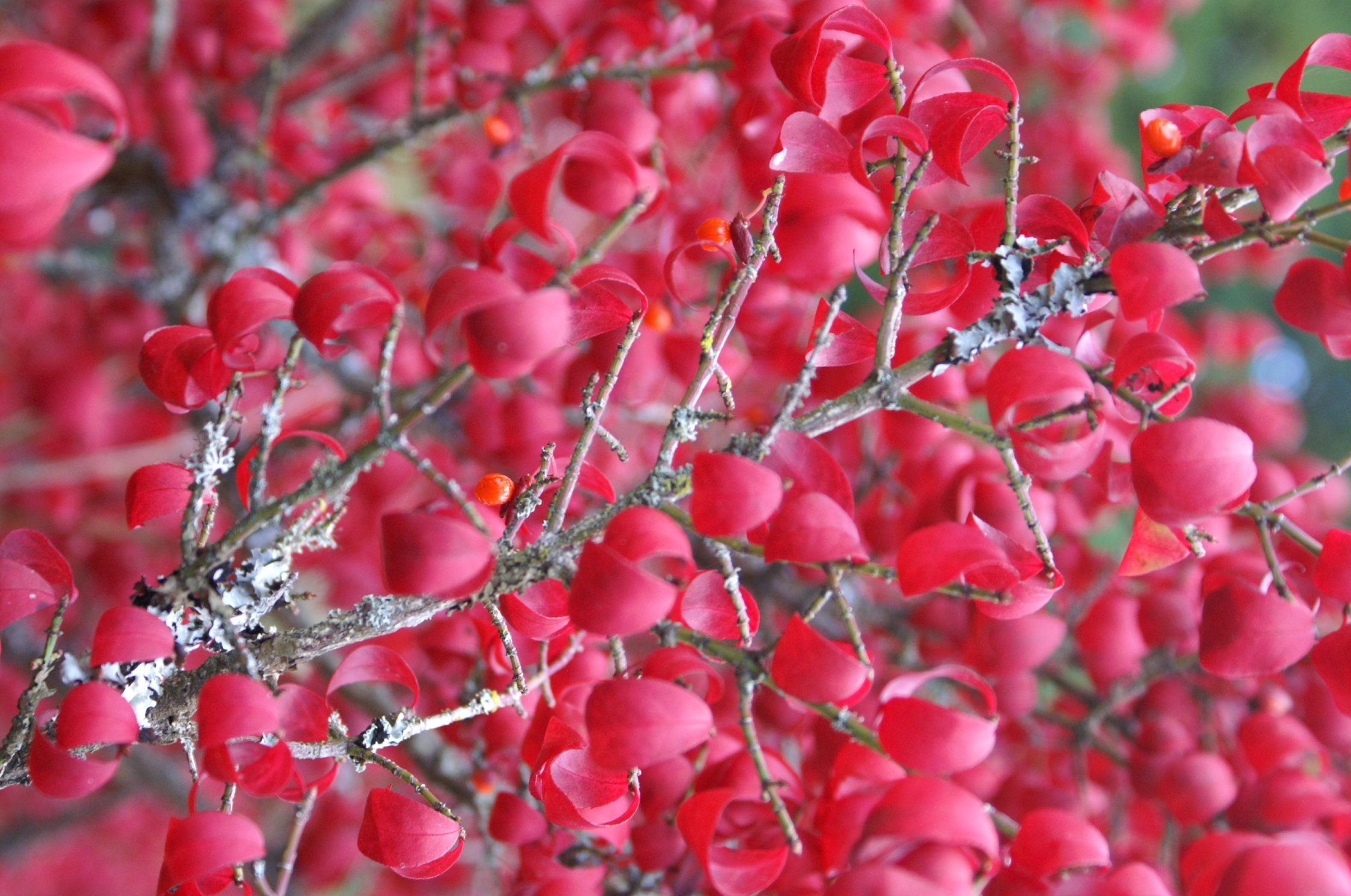
Autumn figures strongly in From the Edge, as it is without doubt my favorite season (how’s that for a smooth segue?), so it should be no surprise that I’ve scheduled some time off for mid-October. We’re not going anywhere special—trips during the pandemic still carry too much anxiety—so we’re planning local activities and, as is our habit, we’re over-planning.
The kitchen white board now lists a few museums to visit and a couple of the bookstores we like to hit on stay-cations, but one category has grown out of all proportion to its fellows: Day Trips for Fall Color.
Seattle and the Puget Sound region are blessed in that we actually have four seasons. Much as we joke about us having only three—Summer (three weeks), Smoke (three weeks), and Rain (all the rest)—we really do have a distinct Spring, Summer, Autumn, and Winter. And though we’re known as the Evergreen State, we have many areas of deciduous flora that make for stunning fall color vistas.
In combination, the region and the season have another advantage: variable elevation. Fall colors peak at different times at different elevations, so if (as has happened) our fall vacation arrives and the colors aren’t ready down hear near the Sound, we can drive up into the Cascades or the Olympics, where the colors get a two-week head start. Of course, if it is peak color time here at sea level, we have a great collection of parks and gardens from which to view them.
More than just driving around to view the colors, though, we like to stop and enter the autumnal world, for there are scents and sounds that only come at this time of year, in leafy places when the colors rage.
There’s the crispness, a bit of sass, that thrives in the morning and evening air. There’s the urgency of chipmunks, seeking oil-laden seeds on which to grow fat for the coming winter. Birds, their feathers adapted for camouflage amid deep summer shadows or against dark wintry limbs, dart about in deep contrast to the bright riot of translucent hues. And the scents! The smell of moisture has returned after summer’s sere mien has passed. The earth-wood aroma of fallen leaves and rising mushrooms are the umami of forest glades. Rivulets and streams chuckle, happy in rebirth, and all around are the tiny paper-rustles of birds searching beneath leaves, the pit-pat of squirrels covering their caches, and the tentative steps of blacktail deer mincing along narrow, leaf-strewn tracks.
Autumn, to me, is a reward. It’s a reward for surviving the busyness of spring and the chores of summer. It’s the year’s twilight before winter’s somnolence. Autumn is the cognac by the fire before I turn in for the day.
Across the Sound there is a place where, when the day is young, I can walk the forest trail and emerge, my shins wet from wading through ferns heavy with dew, and climb the concrete steps to ramparts set high atop a bluff overlooking the steel-grey waters of the Salish Sea. (more…)
Earlier, I waxed a little poetic about crickets and our lack of them here in Seattle. Anyone who’s read my novels might remember that crickets show up pretty regularly, there, and they will always be, for me, a comforting, blanket sound. “Blanket” sounds (in KRAG-speak) are sounds that fill the night air, but stay in the background; you don’t notice them until they’re gone. There are many other sounds that I find especially comforting and that, even when they wake me up in the middle of the night, immediately settle me back to sleep.
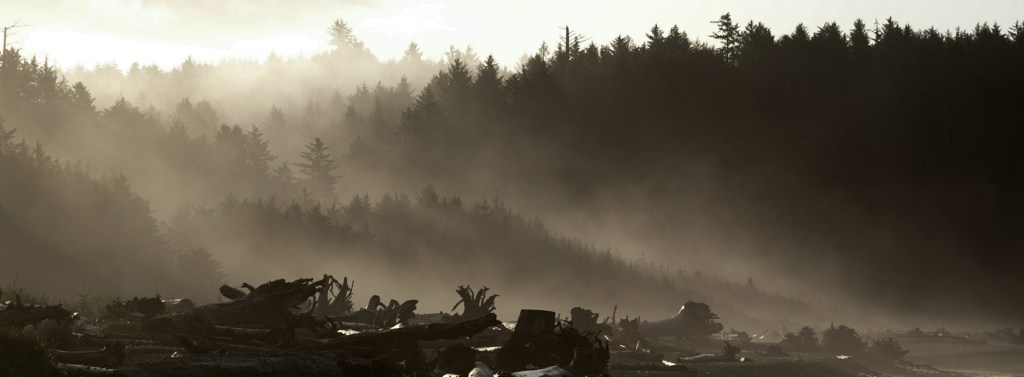
Foghorns are a big one. I grew up in the San Francisco Bay Area, where fog is a fact of life. Here, around the Puget Sound, it is similar. If you live anywhere near the shoreline, you quickly learn whence across the night water you can expect to see the blinking eye of a beacon and hear the comforting hoot of the horns. Foghorns ask their low, gentle questions across the Sound: Are you there? Can you hear me? Are you safe?
Trains, from a distance, evoke a similar mood. When we lived in Richmond Beach, closer to the shore, the coastline trains would sound their horns as they neared town. I always smile at their forlorn, two-toned call.
My favorite “blanket” sound, though, is one I’ve only experienced a few times in my life. Almost 30 years ago, my wife and I stayed in Anchor Bay, a small coastal town in Northern California. We stayed in a small cabin up on a bluff, overlooking the Pacific and a small rocky islet. On the shingled shore of that rock lay hundreds of seals, and they would bark all day and all night, their calls mixing with the rush of the surf to create a foundation of sound that waxed and waned with the strength of the ocean breeze. It took us two nights to become accustomed to this constant noise, but once we did, sleep was deep and satisfying.
I’m sure there are other sounds others find as relaxing as these. I would be interested in what your “blanket” sounds are…



 Kurt R.A. Giambastiani