Feeds:
Posts
Comments

Posts Tagged ‘Movies’

Yesterday was the 450th anniversary of William Shakespeare’s purported birth (we know the day he was christened, but not the day he was born so, as with Most Things William, we’re really just guessing).

In honor of this anniversary, I neither watched one of his plays nor read any of  his poetry.

Nope.

I watched Shakespeare in Love.

Travesty! Sacrilege!

Feh. (more…)

Read Full Post »

I grew up in a black-and-white world. Not exactly like the way Calvin’s dad explained it, but pretty much.

When I was very young, television broadcast in black-and-white, and my life was filled with television. Soon, even though technology advanced and broadcasts switched to color, in our house we still only had a black-and-white television.

In fact, we didn’t have a color television until I was a teenager, when my grandfather passed away and we inherited his old massive oak-wood RCA Color TV console, with the remote control that sighed like a sulking teenager when you pressed down one of its three buttons. Thus, all my childhood TV viewing was black-and-white, never in color.

So how, then did I know that Captain Kirk’s tunic was tan, Spock’s blue, and Scotty’s red? Sure, I suppose my viewing might have been “enhanced” by color pictures in TV Guide, but if that’s so, then why do I also remember To Kill A Mockingbird in color?

When I watch the film, naturally I see it in black-and-white, but when I remember scenes, especially scenes from the book that didn’t make it into the movie, I remember them in color. I remember Scout’s red flannel shirt, her dark indigo overalls. Tom’s overalls were faded, as was the blue of his work shirt. Atticus wore suits of pale linen, grey pinstripe, and solid slate grey. Mayella had pink flowers on her dress, while the ones on Calpurnia’s chintz were blue.

Perhaps it is because so many things in that story were objects familiar to my youth. The bark of trees we climbed, the denim of our jeans, the thin cotton of our shirts, it was all as it was in the book. Or perhaps it’s because Harper Lee’s words were so simple and direct, so mesmerizing, that I couldn’t help but see the world she created in its entirety, vibrant with color.

To Kill a Mockingbird–in both book and film–was important to me when I was young, and it remains so today. Through its story, I discovered fiction that told of kids who were real, not the fantastical wunderkinder that I found in all the other books I was given. It was an adult story told simply, clearly, and with ultimate honesty. Within its pages, I learned that the world is not black and white, right and wrong, but filled with immeasurable greys  in which justice can be evil, and wrong-doing can be justice. I learned of the fallibility of mankind, and of the failures in our shared society when we forget that we are not alone in this world.

I remember Harper Lee’s classic in color, because it taught me about black and white, because it taught me about grey.

k

Read Full Post »

If I told you I watched a movie about an old man, a young woman, and Paris, entitled Last Love, you might very well think it was a reboot of Last Tango in Paris.

And you would be wrong. This movie is not that. No, not that at all.

(more…)

Read Full Post »

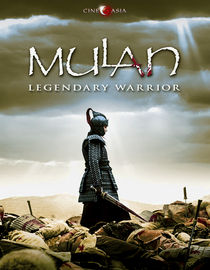
Fifteen years ago, Disney got their hands on Hua Mulan, the legendary Chinese heroine, and used her to anchor their decidedly meh-worthy film, Mulan. Disney’s treatment was not the first film attempt to tell the story of this 6th century legend (the first film was made in 1927) nor, thankfully, was it the last.

Mulan: Rise of a Warrior (2009) is a live-action portrayal of the classic story of a young woman who, to save her ailing father, poses as a young man and takes his place in the military during the battles between the nation of Wei and the tribes of the Mongolian steppes. She spends twelve years a soldier, rising through merit, achieving the rank of general. When the war is resolved, she refuses the offices and lauds offered her for her service, and instead returns home to her village.

While no one is going to really mistake Zhao Wei for a man, she is by far the best choice from the other reported candidates under consideration. Moreover, Zhao turns in a strong performance, building layers of nuance and contradictory emotions, melding fury with vulnerability, grief with honor, and showing us through a strong and character-driven script a real character of strength.

Movies from China tend to have three things I dislike. I don’t like “wire” movies, where everyone is unconstrained by the laws of physics. I don’t like the Hong Kong Cinema kung fu movies, where again, physics are optional. And I don’t like the thoroughly predictable and incredibly depressing endings that a lot of movies out of modern Chinese cinema seem to have.

Therefore, this Mulan is a winner on several levels. It is not a “wire” movie, the battles (though many) are fairly earth-bound in their construction and execution, and though the film doesn’t end with a Big Red Bow, it’s a believable and realistic (for the time) outcome to an exceptionally unusual situation. More importantly, it’s a satisfying ending, and that’s too rare in the modern Chinese cinema (in my opinion).

Some of the characters are rather two-dimensional; villains are villainous without reason, and tyrants are tyrannical because it moves the plot along. Secondary characters are generally the same quirky but loyal caricatures of soldiers you’ll find in any film about the military. However, these failings do not pull down the whole movie. The complexity of characters like Mulan, Wentai, Fei, and the Rouran princess keep this film above the norm, and the intricacies of their relationships–the depth of their thoughts and reactions–keep us engaged.

Also worth mention is the exceptional costume design and art direction, which combine to give a verisimilitude to the exteriors, armor, and battles that can only enhance our enjoyment. Nothing stands out, here, as being anachronistic.

Exception to the above: for some reason, the director chose to cast a Russian singer, Vitas, as a servant to the Mongol khan. He seems to be there solely for his talent as a singer (his falsetto voice is remarkable), but he stands out like, well, like an Anglo amidst the Mongol horde. Frankly, I found him a distraction, and totally unnecessary to the tale.

Overall, though, I really enjoyed this movie, and would recommend it for any rainy weekend this winter.

Read Full Post »

When I learned they were going to make a movie of “The Lone Ranger,” I took it as just another example of the paucity of creativity in Hollywood. When I learned that it was another Disney “reboot,” I said “Ah.”

When I learned that they’d cast Johnny Depp in the role of Tonto, I just shook my head. Another case of the “red face” minstrel show, I thought. Are there zero competent actors of native blood in America? When I learned that Depp had essentially cast himself in the role, I said, “Ah.”

When I learned that Depp’s “look” for the whole film was going to be KISS-like black and white face paint and a dead raven headpiece, I thought that, while such might have been appropriate for a ceremony  (depending on the tribe and the situation), it seemed off-the-mark as daily appearance. When I learned that it was taken from a painting, and a painting by a non-native painter at that, I said, “Ah.

When I learned that a Comanche family had formally adopted Depp, and that the movie had received the blessings of the Navajo nation, and when I read that Chris Eyre (“Smoke Signals” and “The Doe Boy“) had spoken favorably of the project, I thought perhaps I should reevaluate my opinions. When I read Chris Eyre’s response after having seen the movie, I said, “Ah.”

When the reviews for this 2013 reboot of “The Lone Ranger” began to come in, they were overwhelmingly bad. As reaction to Depp as Tonto began to come in, it was almost universally bad.

From whites, that is.

The native community’s reaction? You can sum it up in one word: Meh.

Of course, there are some in the native community who are incensed, just as there are some who are strongly supportive. On the flip side, some in the non-native community are very supportive, notably the Lone Ranger Fan Club (seriously? there is such a thing?). In general, though, the divisions are stark. Whites find the portrayal awful, ridiculous, and (at best) insensitive, while native reaction is basically (if I might put a British phrase into their mouths), “It’s nothing to do with me.”

Why? Why this one-sided response from the hegemony and this tepid response from the population who (whites think) should be the most outraged?

Simple. The native population of this country has a much (much) lower expectation of whites than we do of ourselves. In short, we’ve never done it right before, so why would anyone expect we’d start to do it right, now? Especially when starting with something that has such a woefully racist history (“The Lone Ranger”) and a company that has such a woefully racist track record (Disney)?

From what I’ve read, reaction in the native community is nuanced, realistic (some might say “jaded”), and pragmatic.

Why Depp instead of a native actor? Because it’s a big blockbuster movie and Depp will bring in the bucks. As to the inaccuracies of Tonto’s appearance? To quote Eyre, “It’s Hollywood’s invention of a Native American. It’s a farce, and his character is a farce character.” In other words, it’s a movie, people, and you never go to the movies for historical accuracy, especially not a summer blockbuster.

Balancing these opinions, many in the community are pleased by some of the behind-the-scenes aspects of the movie. There was broad use of native actors in supporting roles and as extras. The film was shot on native land, and the production company poured a lot of money into local businesses, helping the local economy. Disney put a chunk of money into the American Indian College Fund.

And, on a larger scale, the movie has reinvigorated the discussion around the portrayal of Native Americans in film, and that’s never a bad thing.

k

Read Full Post »

Bogie and BacallYesterday, after posting about “Persuasion,” I asked my online peeps what their favorite on-screen kiss was. I did not ask for Best; I asked for Favorite.

When Best walks in the door, it has Judgment on one arm and Argument on the other, while Favorite is pure opinion. You can’t argue or judge someone’s favorite. Best is an opinion. Favorite…Favorite just is.

The list was interesting, and I was surprised by each and every response, in one way or another. Some choices hinted at the flip-side of my friends’ personal coin. Others were obvious sentimental choices. Others were temporal, tied more to a time or event than to the movie itself. All were illuminating, and I can easily see how any of them could be someone’s favorite.

As with everything, this is all grist for the novelist’s Character Creation mill. The quirks and quiet, inner details of personalities fascinate. People are like fractals: the deeper you look, the more detail you see.

Here’s the list. Feel free to add yours in comments! (more…)

Read Full Post »

Mother’s Day was spent, in part, watching dramatizations of Jane Austen novels. I’ll freely admit that this is not a tiresome chore for me.

I love Austen’s novels, as does my wife, and we have nearly every dramatized version of every Austen novel, so we often have discussions of which version is best. The answer often boils down to, “This version is best for a lazy Sunday, but this one is best for a Friday night.” That sort of thing.

But I have decided that there is one Best Austen Dramatization, and it is the BBC’s 2007 version of “Persuasion.”

Full disclosure: Persuasion is my favorite of the Austen novels, but I do believe I was sufficiently objective in my decision.

(more…)

Read Full Post »

« Newer Posts - Older Posts »