 Embedded within this paragraph is an “error.” Can you find it? Is it glaringly obvious? I’m guessing that it isn’t. In fact, I’d bet that until I point it out to you, you won’t realize it’s there. Want a hint? It’s not grammatical. It’s not punctuation, either. It’s . . . Wait for it. Wait for it. . .
Archive for the ‘Books’ Category
Two, Please
Posted in Books, Writing, tagged creative writing, manuscript format, sentence spacing, typesetting, typography, Writing on 26 Aug 2014| 11 Comments »
Bird Brains
Posted in Books, tagged are crows smart, book reviews, books, corvid biology, crow behavior, gifts of the crow, john marzluff, non-fiction books, raven behavior, Tony Angell on 14 Aug 2014| 6 Comments »
 Last week, I made the mistake of going to a bookstore. I avoid bookstores, as a rule. I always leave them with books. More books. Books I want to read. Books that sit on the shelf and taunt me.
This last trip had an interesting twist: I left with all non-fiction.
One of these non-fiction books was Gifts of the Crow, by John Marzluff and Tony Angell. It is dissertation on the nature of corvids–crows, ravens, jays, magpies, etc.–and through the use of anecdotes and field studies, it illustrates how intelligent these birds are, and how many analogues exist between their behavior and ours.
Marzluff is a veteran ornithological biologist and Professor of Wildlife Science at the University of Washington, here in Seattle. Angell is an illustrator whose line drawings accompany the text, and whose schematics of the corvid brain and anatomy fill the appendices. Let’s face it: these guys know their stuff.
It’s an intriguing subject for me. Ravens and crows are strong spiritual icons both here in the Pacific Northwest, and throughout the Native American cultures I studied for the novels of my Fallen Cloud Saga. Personally, blue jays (like the Steller’s jays that come to my deck and jeer at me until I give them some peanuts) are among my favorite birds. I’ve often noted how adaptable, how intelligent these birds seem to be. Their behavior always seemed to be a step more advanced than the other birds that frequent our back garden. In short, when I regarded the crows and jays that live around me, I often felt that there was someone in those birds, regarding me in return.
Unexpected Interest
Posted in Books, Writing, tagged alternate history, books, creative writing, historical fiction, marketing, novel writing, novels, publishing, self-publishing, Sumner, Sumner Public Library, WA, Writing, writing tips on 04 Aug 2014| Leave a Comment »
 Sometimes, the word “interesting” isn’t enough.
This weekend past, as well as being sad, stressful, productive, lazy, and maddening, was also interesting.
It was the 31st anniversary of my wedding. It was the yahrzeit of the death of my wife’s mother. It was a weekend of plans, and of disrupted plans. It was a weekend with three reservations to the same restaurant, each one made and canceled in daily succession. It was a weekend of editing, rereading and rewriting my latest short story (“The Book of Solomon”), proofing it, polishing it, and then sending it off to a paying market.
It was also the weekend when I got an email from the Senior Librarian in Sumner, WA, asking if I’d be interested in participating in a panel, this October.
Yeah, “interesting” doesn’t really cover it.
Tango with the Tiger
Posted in Books, Hi Tech, tagged amazon, creative writing, hachette, publishing, Writing on 24 Jul 2014| Leave a Comment »
 Last weekend, the Seattle Times ran two opposing op-eds on the Amazon/Hachette contretemps. Frank Schaeffer wrote in favor of Amazon, while Nina Laden countered in favor of Hachette, creating a “debate” of sorts. I put “debate” in quotes because, from a purely debating standpoint, it was no contest.
Unfortunately, both pieces missed the main point.
Drop and Give Me Twenty
Posted in Books, Food, tagged book review, cookbooks, cooking, cooking techniques, michael ruhlman, ruhlman's twenty on 10 Jun 2014| 4 Comments »
 When I learn a thing, I like to know the why of it.
It’s not enough to know that something is the way it is; I want to know why it is the way it is. This did not serve me well my study of mathematics since, when I got down to basic axioms and postulates, the answer to why was often: just because.
It’s one of the reasons mathematics and I have had such a rocky relationship.
It’s also why I have a love/hate relationship with recipes.
Recipes tell me what to do, but not why I should do it. Don’t get me wrong; recipes are great as a way to capture a particular dish, but in the end, they teach me little more than a procedure. I can follow each step to perfection and create the best whatever-it-is, but if I mess something up, or if it’s a cool day, or if the humidity is high, and the dish turns out wrong/different/bad, in the end, I do not know why.
I’ve read a lot of books on cooking, and though they’ve tried, none of them have successfully taught me the elusive why of the culinary arts.
Until now. (more…)
Warning: Warnings
Posted in Books, Culture, tagged books, literature, nanny state, Oberlin, trigger warnings, UCSB on 05 Jun 2014| 1 Comment »
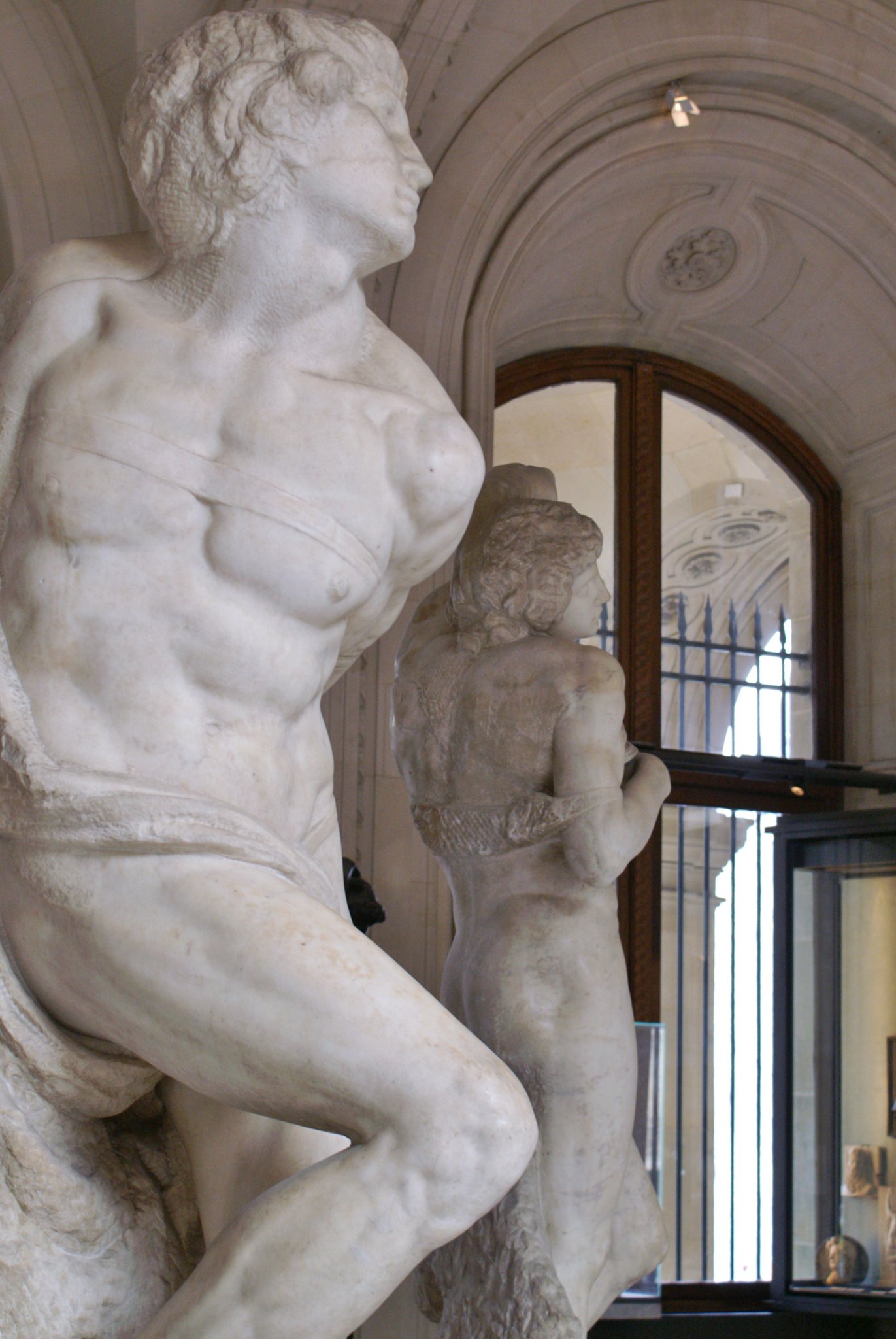 I’m going to kick the poo-pile here, so stand back.
I’m not even going to start with a caveat or a disclaimer.
“Trigger warnings” are ridiculous.
Touring Elizabethan England
Posted in Books, tagged book review, british museum, elizabethan england, history, neil macgregor, Shakespeare on 20 May 2014| Leave a Comment »
 What do a fork, a model of a ship, and a priest’s right eye have in common?
No, they’re not props from a horror movie.
They’re all objects discussed in Neil MacGregor’s book, Shakespeare’s Restless World: A Portrait of an Era in Twenty Objects.
As readers of this blog know, I have a bit of a fascination with Shakespeare, so this book is right in my wheelhouse. The subtitle gave me a general idea of what I was getting, but what I didn’t expect was such a fascinating overview of life in the late Elizabethan/early Jacobean periods.
Neil MacGregor, Director of the British Museum, takes a disparate collection of 16th century objects–ranging from the everyday to the unique–and gives us a chapter on each one. Naturally, he describes each object, its history, its use, and its provenance, but this is all expected content. The lavish photos of the objects themselves (as well as related items) are clear, detailed, and beautiful, but each chapter really shines when MacGregor expands the discussion beyond the basics, showing us the social context of each item. Through MacGregor’s clean, unhurried prose, we learn what each object might have meant to the average groundling in the pit or noble in the tiers. An apprentice’s cap, for instance, looks simply like a cap to us, but if you were one of the Queen’s subjects on the streets of London in 1600, it would tell you of the wearer’s social standing, might remind you of the apprentice-led riots over food prices. Later, when you went to The Rose or The Curtain to see Coriolanus, and saw the cap-wearing citizens berating Menenius over the high cost of corn, you would remember those riots, and know that things might get very ugly, very quickly.
The list of objects MacGregor has chosen is, as I mentioned, varied. He discusses a fork used to eat sweetmeats in the same detail and depth as he does the model ship used as a token, built in thanks by James I for his safe passage home from abroad. Each object is inspected both as a thing from within Shakespeare’s world–i.e., as relates to his plays and the world of the theater–as well as within his world at large. In reading this book, I learned a great deal about the lives and the mindsets of Shakespeare’s patrons, high-born and low, but also expanded my understanding of the period and its conflicts.
This book was of great interest to me, as you might expect, but I wholeheartedly recommend it to anyone interested in history, the history of objects, and the tumultuous, change-filled period of late Elizabethan/early Jacobean England.
Oh, and that priest’s right eye?
Get the book.
k

 Kurt R.A. Giambastiani