Feeds:
Posts
Comments

Posts Tagged ‘self-publishing’

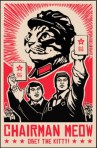
Obey the Kitty!Now hear this!

In the past, people have asked me: Do you get to pick your own title for your books?

  • Short answer: Yes.
  • Longer answer: Yes, but the publisher can override my choice.

Such was the case for two of my books, and I now have the chance to fix at least one of them.

(more…)

Read Full Post »

Kurt R.A. GiambastianiI heard back from Fairwood Press, yesterday. As publisher of Dreams of the Desert Wind (my genre-mashup of speculative fiction, thriller, and corporate espionage), I wanted to give them the “right of first refusal” on the new FC:V. The good news is that Fairwood is doing very well; the bad news is that their docket is filled for 2013, and they couldn’t entertain this title until 2014.

That’s too long a wait. So, I’m moving ahead; Beneath a Wounded Sky will be published by Mouse Road Press (i.e., me) as part of a full, five-book release of The Fallen Cloud Saga.

Which means that everything is now on my plate. Including cover art.

I have an advantage here. I don’t care if this project makes money. In fact, I assume it won’t. So, if I have covers that don’t tick all the boxes on the marketing strategy checklist, no worries. But I do want to have good-looking covers.

However, I do not want to have the standard-style, heavy-detail, photo-realistic cover of men and machines that you see on almost every alternate history title on the shelf. I want something different.

I’m thinking: minimalist.

There’s a new meme out there. Do a Google search on “minimalist movie poster” and you’ll see what I mean. These are evocative but very stylized images. Most of them play on a previous knowledge of the movie, but they needn’t. They’re eye-catching, they’re clean and easy to understand, and they tell a little story all on their own.

So, I’m reaching out to some of my friends who have graphic art experience, to get their input on the process. I already have concept art for each of the five covers. Three of them are pretty much final product, in fact (yes, I was working on this ahead of time, having predicted the Fairwood response).

These covers will be unusual, setting them apart from the standard cover art for the genre. They will have a uniform “look and feel” to them, identifying them as a set. And since I won’t have to use any stock photo images (bonus), they will also be completely free of royalty costs.

I’m not an artist—I’m saving that learning curve for my retirement—but I understand the basics of design. With some educated guidance, I hope I can come up with a set of covers that will do my series proud.

k

Read Full Post »

The goal of almost every writer is to be published by a big publishing firm. These big publishing houses pretty much had a lock on the whole shebang until about 20 years ago, when small and on-demand presses started popping up. Then, when e-publishing started to take off, authors had even more options open to them.

But, for most of us, the Yellow Brick Road still leads to Oz, and all those other venues are just waypoints for which we must “settle” if we can’t get all the way to the Big Publishing House.

I’ve hit pretty much every stop on the Yellow Brick Road. Under normal circumstances, I’d be taking my new novel down as far down that road as possible, but FC:V is a bit of an edge case. (more…)

Read Full Post »

Often, when someone learns that I am a published novelist, they give me a puzzled look. I know what they’re thinking.

Why are you still working that day-job, living in that house, driving that car?

I used to think that, too. I had already figured out where I’d be teaching (after receiving my honorary degree), had already picked my house on the shores of Green Lake,  and had chosen the flash car I would use to zip around town.

Then I sold my first novel. Nothing changes your worldview more than achieving your dream.

As a writer, I have had some successes: eight novels published, four by a large NYC publishing house, plus a smattering of published short stories, articles, and essays. I’ve also had—I used to call them failures, but now after “periods of redefinition,” I think of them as successes, too. You see, when I started out, anything other than a bestseller was a failure, but soon I would only fail if I got anything other than a solid sale. In time, I accepted any sale as a success, and then…you see where this is going.

A long time ago, Dean Wesley Smith asked me, “If you knew you would never sell another story, would you still write?” My answer was flippant. “Of course,” I said, “but tell me now so I won’t worry about it.” I was green as springtime grass, back then, and had yet to feel the heartbreak that only publishing can provide. Today, my answer still stands, but it stands on its own; it doesn’t need the cocksure attitude to prop it up.

When I started, I wrote as a way to achieve fame and fortune. Sure, some people make gazillions at it, but you can count those who do it consistently on your fingers. In reality, writing is a hard way to make a living, and if you’re in it only for the money, my advice is to get out, now.

Here’s what people don’t get: writing is an art, but publishing is a business, and publishing doesn’t give a toss whether your book is good or bad, it cares whether your book will sell or sit on the shelf. Your novel can be total crap, but if it’s the kind of total crap that sells, it’ll get snapped up. But good or bad, if it does get snapped up, there still isn’t a lot of money in it, and one sale is no guarantee of future sales.

Today, I don’t write for fame and fortune, nor do I equate not having them with failure. I write because I want to tell stories, and tell them well. If a book of mine doesn’t get finished, that’s a failure. If I just hammer out some words and have a lackluster product, or write something I don’t love, that’s a failure. If the faithful readers who do love my books don’t get to read any more of the stories I want to tell, that’s a failure.

Of course, if a publisher thinks I’m putting gold on the page, or Hollywood wants to option my novels, I sure as hell won’t complain. But that’s gravy, and I am able to succeed just fine without gravy.

k

Read Full Post »
Harcopies Rule!The topic that keeps popping up among my writerly friends is “E-Books” I will admit to being less-than-enamored of e-books (read as, “I hate them”) but I have bowed before reality.

Ebooks are here.
They are here to stay.
Get over it.
Move on.

Happily, I have to say that two of my greatest fears about e-books—piracy and death of the hardcopy—have not come true.

We just do not have rampant piracy of ebooks. This is in part due to the proprietary lockdown of various e-readers and tablets, but even outside of that, we just don’t see pirated versions of the latest e-bestseller going viral. This bolsters my long-held opinion that, if you make electronic versions of your creation affordable enough and accessible enough, most people will just pay the price and enjoy the product. Piracy is still a problem in those areas that are overpriced and proprietary: movies, software, and video games. Hacking a $50 movie or a $200 software package and selling a couple thousand copies half-price makes total business sense, but hacking a $5 book? Where’s the profit?

As to the death of hardcopy versions (and the loss of the legacy they provide), my fears about this were swept away just a couple of days ago. A Faithful Reader emailed me, asking if the Fallen Cloud books were available in e-versions (like all my other titles). I had to inform her that, sadly, no, the Fallen Cloud books I-IV were not currently available in e-format, but that when FC:V came out, I fully intended to have all five books available in e-format.

Faithful Reader replied that this was great news. Naturally (she said), she would be buying the hardcopy version, but she wanted to have them in electronic format, too.

This was astounding to me; someone liked my work enough not only to get an e-version for her tablet, but she also was willing to shell out money for a legacy hardcopy. It was humbling, and it also pointed out where books win out over music and movies: People just are not going to buy an album or movie on iTunes and then buy a physical CD or DVD. There’s no advantage to that second copy, and there’s no cachet to a physical disk like there is with a physical book. The closest music can come to that is the old albums that covered LP vinyl, and vinyl is a seriously niche market. So, books have a potential second market, whereas music, movies, etc., have only one.

Add to this the increasing ease of bringing an e-book to market for the small publisher or independently-published author, and the question of “going e” becomes moot. With increased profit margins and decreased costs, it’s a no-brainer; you will go “e”. You’d be stupid not to.

k

Read Full Post »

« Newer Posts