Feeds:
Posts
Comments

Posts Tagged ‘editing’

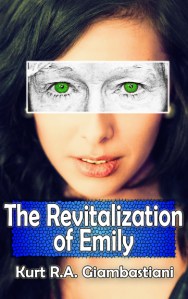
The Revitalization of EmilyWe are live. “The Revitalization of Emily” is live on Amazon, and available for Kindle readers and apps.

Formatting went well, but there’s one new lesson I learned. Fonts that work well on the printed page are often too big for the Kindles. I had a couple of iterations before the headers worked properly.

Overall, though, an easy process.

Some people wonder why I do this on Kindle Direct Publishing (KDP) instead of iBooks or Smashwords or any of the several other venues open to short fiction works. They also wonder why I don’t put it up everywhere, simultaneously.

The main reason is one word: reach. (more…)

Read Full Post »

The Revitalization of EmilyI spent the weekend doing two things: trying to relax, and editing the novelette.

I succeeded in the latter.

Editing went well, both on the story and on the cover art.

Each editing pass revealed fewer errors–reaching zero by the fourth pass–and fewer lines that gave me pause. Eventually, in editing, I like to get to the point where for each possible change, I have to think, play it two or three ways, and then end up with a STET in the margin.

My last pass, I also took special note of the “said” use. They’re still there (despite my earlier efforts), but now each one that is in the story has been considered. If it’s there, I want it there, and I’m happy with that. (more…)

Read Full Post »

Stack of BooksWe all have our individual quirks of style. Little, verbal quirks. We use a phrase once, like it, use it again, and eventually it becomes habit.

For most people (i.e,. non-authors), this isn’t a problem. A quirky turn of phrase, a tag-line, a preference for the spelling “grey” instead of “gray”–these are not problems for most people.

For writers, though, it can be a problem. Why? Because you can’t see them. And because others can.

Yesterday, I discovered a new one of my own. (more…)

Read Full Post »

Kurt R.A. GiambastianiAs I’ve been working on this story, re-creating it from an older model, I’ve been watching over my work. Supervising, if you will.

Overall, the new version is half-again as long–originally around 8,000 words, it now clocks in at about 12,000–and I wondered if that was just because I added a scene here and there.

So I took the opening section. The action is the same. The first and last lines of the section are the same, like fenceposts. But the rest of it has been entirely rebuilt, rewritten, similar only in structure and in what happens. So, what’s the word-count for each version? (more…)

Read Full Post »

Stephen King has spoken. Again.

This time, he speaks in an interview in The Atlantic (that reads more like an essay) about a topic not covered in his On Writing memoir: Opening lines.

I hope aspiring writers read all of what he said, instead of picking their favorite sound bite.

It’s not that the first line of a book isn’t important–it is–and King discusses what a good opening line can bring to the party. On the other hand, he admits he’s not always done well with them, and stresses (waaay at the end) that an opening line won’t make or break a novel. If the story sucks, a good opener won’t save it.

The discussion prompted me to go back and look at the opening lines from my novels. How well did I do? I wondered. Let’s see.

(more…)

Read Full Post »

Composing a post for your blog? Writing an email to a colleague? Here are a couple of tips:

The letter “r” is not a verb.

The letter “u” is not a pronoun.

It doesn’t surprise me when blog posts or emails have this sort of embedded “text-speak.” Nor does it surprise me to find them riddled with bad syntax, incoherent thoughts, and errors both typographic and grammatical. It saddens me that those intent on communicating via the written word don’t have the sense (or self-respect) to proofread what they’ve written before they hit “send,” but it doesn’t surprise me.

What does surprise me is when I come across the same in posts on writers’ discussion boards. What does surprise me is when a writer doesn’t catch his own mistake when he writes “Art thou saint or satin?” And it goes beyond surprise when, as I saw the other day, a presenter of a TED talk repeatedly used the letter “r” as a verb in his Powerpoint presentation.

Dude…srsly?

If you want your words to be taken seriously, stick close to the standards of writing. In speech or in the written word, if you consistently flout the accepted standards of spelling, grammar, and composition, your words, your thoughts, sometimes even you as a person, will be discounted, diminished, or totally ignored by the world at large.

I shouldn’t have to use a secret decoder ring to translate a writer’s words into comprehensible English.

In fact, I won’t.  And I’m not alone.

I’m not being a grammar Nazi or a writerly snob. I’m not asking for high-falutin’ rhetoric or exquisite imagery. I’m asking for comprehensible grammar and correct spelling. Allowances for hurriedly written texts and non-native English speakers aside, a writer must strive for quality in the written word. You can only blame your iPhone’s predictive spelling function for so much.

In the end, if you don’t mind looking like an idiot because you don’t know the difference between “satin” and “Satan,” fine.

Just don’t expect me to take you seriously at the same time.

Read Full Post »
Kurt R.A. GiambastianiIs there anything more desperate than an unpublished writer?

I’ve been participating in some of the writers’ group discussions over on LinkedIn and I swear, never have I seen so many people trying to augur the entrails of the publishing world, never have I read so many vaunted “rules” of writing, and never have I heard so much illogical “advice.” Never.

And yet, I understand it. I understand it all. (more…)

Read Full Post »

« Newer Posts - Older Posts »