Feeds:
Posts
Comments

Posts Tagged ‘Beneath a Wounded Sky’

We have proof!

Yesterday, Brown delivered the proof for FC:I, and once again I was reminded of just how important a hardcopy proof is. For you out there who are thinking about self-publishing a hardcopy book, always get a physical proof copy of the book.

So, how was it?

(more…)

Read Full Post »

Kurt R.A. GiambastianiCounting words used to be important. It also used to be arcane.

As the physically printed word goes slowly out of style, the importance of word count diminishes. When I worked as a head pressman at a small newspaper, word count was king because word count translated to column inches, and you only had so many of those in each issue. Reporters typed up their story, handed it to the typesetter who typed it into a machine the size of a van. Long strips of paper came out the far side which we then painstakingly—and absolutely literally—cut and pasted onto the page mock-up. Word count gave us an idea of how much space each article would use. But it was not a literal count of the words.

(more…)

Read Full Post »

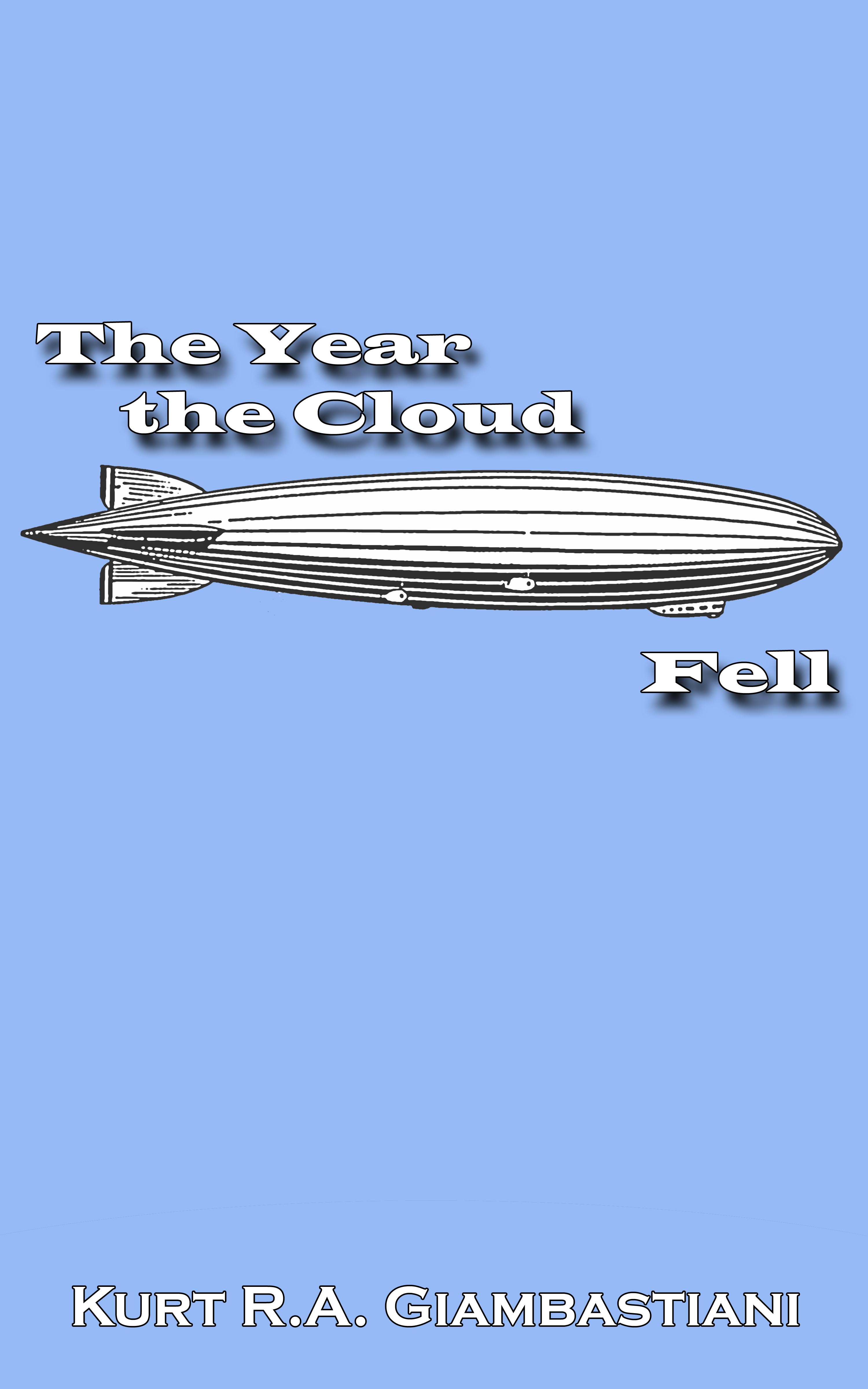
Cover art is here! I’ve also decided that I won’t be going with a hardback version of these books; production costs are too high and the demand is too low. We’ll be putting these out in trade paper and in e-book formats.

Onward!

originally From the Heart of the Storm

Read Full Post »

Kurt R.A. GiambastianiI heard back from Fairwood Press, yesterday. As publisher of Dreams of the Desert Wind (my genre-mashup of speculative fiction, thriller, and corporate espionage), I wanted to give them the “right of first refusal” on the new FC:V. The good news is that Fairwood is doing very well; the bad news is that their docket is filled for 2013, and they couldn’t entertain this title until 2014.

That’s too long a wait. So, I’m moving ahead; Beneath a Wounded Sky will be published by Mouse Road Press (i.e., me) as part of a full, five-book release of The Fallen Cloud Saga.

Which means that everything is now on my plate. Including cover art.

I have an advantage here. I don’t care if this project makes money. In fact, I assume it won’t. So, if I have covers that don’t tick all the boxes on the marketing strategy checklist, no worries. But I do want to have good-looking covers.

However, I do not want to have the standard-style, heavy-detail, photo-realistic cover of men and machines that you see on almost every alternate history title on the shelf. I want something different.

I’m thinking: minimalist.

There’s a new meme out there. Do a Google search on “minimalist movie poster” and you’ll see what I mean. These are evocative but very stylized images. Most of them play on a previous knowledge of the movie, but they needn’t. They’re eye-catching, they’re clean and easy to understand, and they tell a little story all on their own.

So, I’m reaching out to some of my friends who have graphic art experience, to get their input on the process. I already have concept art for each of the five covers. Three of them are pretty much final product, in fact (yes, I was working on this ahead of time, having predicted the Fairwood response).

These covers will be unusual, setting them apart from the standard cover art for the genre. They will have a uniform “look and feel” to them, identifying them as a set. And since I won’t have to use any stock photo images (bonus), they will also be completely free of royalty costs.

I’m not an artist—I’m saving that learning curve for my retirement—but I understand the basics of design. With some educated guidance, I hope I can come up with a set of covers that will do my series proud.

k

Read Full Post »
The goal of almost every writer is to be published by a big publishing firm. These big publishing houses pretty much had a lock on the whole shebang until about 20 years ago, when small and on-demand presses started popping up. Then, when e-publishing started to take off, authors had even more options open to them.

But, for most of us, the Yellow Brick Road still leads to Oz, and all those other venues are just waypoints for which we must “settle” if we can’t get all the way to the Big Publishing House.

I’ve hit pretty much every stop on the Yellow Brick Road. Under normal circumstances, I’d be taking my new novel down as far down that road as possible, but FC:V is a bit of an edge case. (more…)

Read Full Post »

First Reader has come back with comments on Beneath a Wounded Sky (FC:V).
Overall, response was very good. Really good. “I miss them already,” was the comment after the last page.

But, there was room for improvement. Here’s the sort of thing First Reader found:

  • The first major action sequence, written back when I was approaching getting back into a groove, was unclear. I know that I didn’t follow my own advice on writing action sequences, so this is not a surprise.
  • Sequences that referred back to one of the previous books needed more detail. This is because I had re-read FC:I-IV before re-starting my work, but First Reader (intentionally) did not. Since most readers won’t re-read the first four, this was very good feedback.
  • A few of the more complicated sections were unclear as to motivation; why did so-n-so do thus-n-such? Again, great feedback because to be honest, I hadn’t thought it out. I’d cheated, and tap-danced my way through a section to get to a good part. Bad writer! No biscuit! I’d written some action without considering the “why,” and it showed.
  • The denouement seemed rushed. This is a common response, and one I always suspect I’m going to get. With the finish line in sight, I will dash ahead and finish the book, wanting to (a) get it done, and (b) get it to First Reader. It’s nothing tragic; it just needs a little more attention.
  • Throughout the entire novel, only four typos. A record for me.

Now, all the changes have been considered and fixed. The new version is off to a select group of Second Readers. I expect to hear back from them in a couple of weeks.

Meanwhile, I get to think about what to do next? Agent/Publisher (which could take—literally—years)? Self-publication (which would reap little, monetarily)?

k

Read Full Post »

A Sixty-Fourth NoteA canon is a piece of contrapuntal music where first one voice performs a melody, and other voices perform the same melody, entering at specific intervals. “Row, Row, Row Your Boat” is a well-known canon.

A fugue is similar, with one voice performing a melody, but when other voices join, the melody is “developed.” It may start on a different note, be inverted, reversed, ornamented, etc.

In writing, I want to emulate the fugue, not the canon.

(more…)

Read Full Post »

« Newer Posts - Older Posts »