Feeds:
Posts
Comments

Recipe for Love

Lasagna

“I’m a gourmet chef and I don’t measure anything.”

———

“Some people can cook. Others can follow recipes.”

These statements and others like them were leveled at me this weekend, after I mentioned I was going to attempt to capture the recipe for my wife’s world-class lasagna. Frankly, they caught me unaware. Never before had I come up against such blatant and illogical snobbery regarding recipes.

The fact is, if you’ve ever…and I mean everbeen taught how to cook something, you’ve used a recipe. “Recipe,” with its last century cousin “receipt” and the pharmaceutical “Rx,” all come from the Latin recipere, meaning “to receive or take.” Recipe, in fact, is the imperative form: Take! as this was the first word of almost every recipe written in that language.

Whether you were taught at your nana’s knee or trained at the Cordon Bleu, you were given step-by-step instructions on how to construct a dish. Whether you measure by the handful or the gram-weight, you’re following a recipe. Whether it was written down by Julia Child or passed down by oral tradition, you are following a recipe, and to pooh-pooh recipes (and those of us who follow them) as being somehow less than you is to ignore facts and to uselessly denigrate what is for many of us a gift of love.

That little 3×5 card with your grandmother’s crabbed scrawl, that brittle age-browned scrap of paper written by your mother’s hand, and that ancient notebook packed with torn clippings and annotated soup-can labels, those are physical manifestations of devotion, of love. You don’t cook out of hate. You don’t feed people you dislike. You don’t note what pleases the palate of enemies.

You don’t slave in the kitchen for hours and serve it up to people you don’t love.

Recipes are captured moments, repeatable moments. Recipes are confidences held between friends. “Here,” they say, “this is a secret from my heart.”

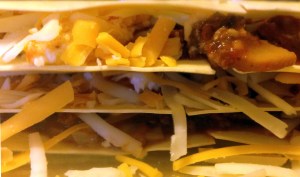
My wife has been making and perfecting her lasagna for thirty years. Each time, something is a little bit different. Ask her for the recipe (and many have), and she can’t tell you; she measures by eye, often has mounds of cheese or cups of sauce left over. And though I am working to write down her recipe from this last weekend’s bake-off, I know that in ten years’ time, it will be different.

But this recipe–this weekend’s recipe–is a starting point for everyone who’s ever asked for the secret. It’s a place for us all to start and then say, “Oh yes, it is wonderful; now I will make it mine.” They can add a bit more heat, a bit less ricotta, cook it a bit longer. They may still call it “Ilene’s World-Class Lasagna” or they may change it enough until, over time, it will be something all their own. It does not matter to me. It does not matter to my wife.

A recipe shared is an act of love. It’s your best effort, writ down and passed along, from hand to hand, kitchen to kitchen, family to family, heart to heart.

k

No-Knead Bread

Revise and Extend

Writing with Pen and Paper

Letters are nice things to get in the mail.

I’m not talking about bills or street-spam from your local dentist. I mean letters. Honest to God Letters, written by a person, meant for you and you alone.

Well, mostly…

There’s one kind of letter that I hate to get:

The Revision Letter.

Continue Reading »

Not That at All

If I told you I watched a movie about an old man, a young woman, and Paris, entitled Last Love, you might very well think it was a reboot of Last Tango in Paris.

And you would be wrong. This movie is not that. No, not that at all.

Continue Reading »

I’ve Got Rhythm

Stack of Books

I do not care for the heroic couplet.

daDa-daDa-daDa-daDa-daDee,
daDa-daDa-daDa-daDa-daDee.

It’s fine for a short poem or sonnet, but when you stack one atop the other for stanza after stanza, it gets predictable, monotonous, and boring. It’s why A Midsummer Night’s Dream is my least favorite of Shakespeare’s plays, as a huge portion of it is written in heroic couplets.

What does this have to do with writing prose? Plenty.

Continue Reading »

Jaybirds and Seahawks

Seattle has its idiosyncrasies. It’s what makes this city unique. It’s what gives the city its specific “feel.”

In general, we don’t use umbrellas. We’re more a head-down-and-face-the-weather sort of town.

In general, we’re polite and courteous. Drop your wallet and chances are someone will help you retrieve it (9 out of 10 times, according to a Reader’s Digest study). We say good morning and thank you to the bus driver. We rarely honk our horns at each other, except for a polite little “bip” when the guy in front hasn’t noticed the light’s turned green.

And, in general, we don’t jaywalk. As evidence of this, I supply a recent video that shows Seahawks fans waiting for the light to turn green before they cross the street to revel in their team’s recent victory over the Broncos.

Continue Reading »

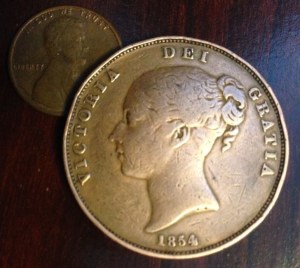
A Penny in my Pocket

Lucky Penny

I don’t really believe in luck.

At least, I don’t believe in luck as something we can affect. Things happen; sometimes they’re good, sometimes they’re not. People who we think have “good luck” are just folks who make better decisions than others. People who have repeated “bad luck” are usually not paying close enough attention to what’s going on around them. Beyond that, it’s just the randomness of life. Stuff happens.

So, why do I have a “lucky penny?”

Continue Reading »

Love and CrO2

Yodeling is not often connected with courtship. Nor humpback whales.

The fact that I employed both in pursuit of love may, in part, explain my somewhat spotty record at wooing women.

If you grew up around San Francisco Bay and remember rotary phones, you know who Pete Seeger was. Pete, who passed away yesterday, was a fixture of the SF and Berkeley folk music scene. Pete Seeger and the Weavers, Arlo Guthrie, Joan Baez, Judy Collins, Buffy St. Marie, Peter Paul & Mary…these were the minstrels of my youth, and Pete was the revered elder, the crafter of anthems, the troubadour whose clear clarion voice would sing us out of troubled times.

His singing style–head up, chin out, a smile on his face–gave me hope, and made me happy, even when the words were sad. I sang his songs around campfires. I listened to his banjo and 12-string riffs with joy. His music was simple, uncomplicated, poetic, and was always there in the backdrop of my youth, like wind in the trees, like the gloaming song of crickets.

Still, not really the stuff of romance.

And yet… Continue Reading »