Feeds:
Posts
Comments

Posts Tagged ‘creative writing’

ND Author Services

Since the day Gutenberg pulled the first sheet off his press, we’ve been told “Don’t judge a book by its cover,” and for just about as long, we’ve done precisely that. It isn’t fair, but we do judge books by their cover and now, with the Big-Bang-like expansion of the self-published sub-industry, we probably do it even more.

For self-published authors, cover art is a morass of high cost and low quality. If you’re lucky enough to be an expert photo-manipulator, you may be able to create a decent cover, but even so, the costs of stock images and the complexity of rights and royalty limitations can be daunting.

I’ve created covers for some of my own titles. I’ve negotiated with photographers, fussed with fonts, and tried to apply the wisdom I’ve gleaned from those who do it for a living. I’ve had varying levels of success (the art for Unraveling Time and Cryptogenesis are probably my best), but I’ve never truly been satisfied. Still, whenever I’ve looked into contracting a graphic artist to create a cover, the prices have been out of my range, especially for shorter works which don’t have as high an earnings potential.

Enter ND Author Services.

ND Author Services (NDAS) is the publishing arm of the Hendee writing empire. The Hendees, Barb and J.C., are the authors of the best-selling Noble Dead Saga and other great series, and I’ve sent you over to NDAS before, to learn from some of their excellent articles on the business side of writing.

What most people don’t know is that J.C. Hendee is the talent behind most of their short-form covers. While all their long-form work is published by major houses, they self-publish all their shorter tie-in works, and J.C. crafts the covers. A while ago, I had the opportunity to look over J.C.’s shoulder and study how he builds layer upon layer of graphic elements to create his unquestionably high-quality covers. At the time, I could only dream of having cover art that good.

Now, however, we can all benefit from J.C.’s graphical talents, and you won’t believe how affordable it is.

NDAS began offering “pre-made” covers last year, and they now have an impressive gallery of artwork available for licensing. There are dozens and dozens of high-quality cover art on display, all organized into genre-specific categories. Select the artwork you want, and NDAS will customize it for your title, name, and other specifics. Then they’ll reserve that artwork for a year, so other authors can’t use the same piece.

You can license the work for e-book, print, or both, and here’s the kicker: the price for these is $30, $75, and $85, respectively.

Yes. You can get quality cover art for your electronic and printed book, both for only $85.

I know I sound like a shill, but anyone who has looked into hiring a cover artist knows that this is an incredibly low price, especially if you consider the quality of the work. I’ve paid more than that just to get the rights to a single photo to use in my covers.

Don’t see that perfect fit your title? No worries. NDAS offers services to create custom cover work, as well.

Trust me on this: if you are part of the self-publishing world, you really need to check this out. It may very well be the only cover art resource you need.

k

Typewriter

Read Full Post »

Stack of BooksI’m still only at about 80% on the health scale–this head cold is a brute–but there’s a definite upward trend, so I figure I can manage one post this week. A dozen topics have risen to the top, only to slip from my focus, except for one. Luckily, it’s a writing topic, so I can indulge myself.
I think it’s fair to say that my writing has evolved over the years. Some of this evolution has been instinctual, which is to be expected from an autodidact like me. Just as I sometimes know that something works without knowing why it works, so do I just sometimes know that something works better without knowing why. Much of the time, though, I am cognizant of the changes in my writing, as they are the result of a conscious shift. Perhaps I’m correcting a bad habit (e.g., an over-reliance on the Rule of Three), or maybe I’m shifting away from one method or style in favor of another.

But then there are the times when a change has been so subtle that I don’t notice it at all. Such is the case with how I deal with antagonists. (more…)

Read Full Post »

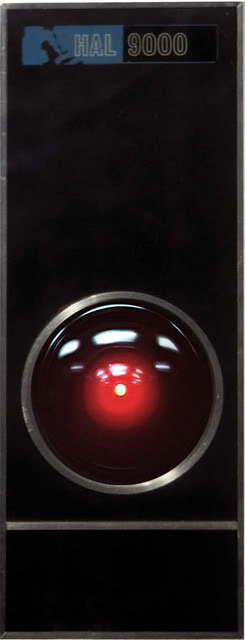
HAL_9000I’ve finished nine novels, but I’ve probably started a hundred.

Not a hundred different ones. Just the same ones, multiple times. And that’s where I am now.

Starting a project is, for me, a difficult transition. There are so many pivots to make–away from research, away from outlines and characters and structural thinking–and so many habits to suppress, that I get locked up, caught in a loop like HAL9000. Each time I start putting words on paper, questions arise, doubts are sown.

It’s hardest when it’s a brand-new project…like The Wolf Tree, the one I’m struggling with now.

(more…)

Read Full Post »

Dragons Ahead

Time for specific answers to burning questions. Just what were the WTF moments IoD slapped me with? Are they legitimate?

(If you’ve just joined, here’s where you can find Part 1 and Part 2 of this conversation.)

The book I submitted was Unraveling Time, which I still feel is one of my best books. It does, unfortunately, suffer from having one of the roughest opening sections I’ve ever written. There are reasons the opening is so rough. The reasons do not excuse or justify its roughness, but they may be instructive to any writer rushing toward self-publication.

So below, after some backstory, I will examine the IoD charges, set down my verdicts, and wrap up this series of posts.

(more…)

Read Full Post »

Dragons Ahead

There are several things that, in younger years, I might have done with such a scathing critique as I received last week from Jefferson Smith’s Immerse or Die report.

(If you’ve just joined, Part 1 of this conversation can be found here.)

Most of these reactions are defensive in nature and, as such, they bring nothing to the table aside from their protective value. As I enter my dotage, I can safely say that one thing I’ know is this:

I can always learn if I want to do so, and I will never learn when I don’t.

And in this case, I want to.

So, here’s what I will not be doing in response to my IoD Smackdown.
(Writers: Pay close attention to Item #4 on the list.) (more…)

Read Full Post »

Dragons AheadThis post is hard to write. It’s uncomfortable, and not a little embarrassing. No. More than that. It’s bloody humiliating. I debated whether or not I could ignore the situation entirely and pretend as if nothing had happened — Move along. Nothing to see here. — That, however, would have been neither honest nor productive, both of which are planks in the platform I use to run this blog.

And so, this post. (more…)

Read Full Post »

A blog post has been going around lately, in which Hugh Howey (bestselling author and book industry watcher) attempts to debunk some myths about publishing. Specifically, he addresses the standard tropes that the fast growth of the e-book market is  (a) materially damaging publishers, and (b) decimating the independent bookstore market.

His post (which is a good read) pulls together simple graphics from sources such as The New Republic, Bloomberg, and Harper Collins’ own PowerPoint slides, and lays it out clearly.

  • Publishers are making more money from e-book sales than from hardcover sales.
  • Independent bookstores are thriving in this post-Recession economy.

As evidence of the first item, Howey shows how the profit margins publishers enjoy from e-book sales is nearly twice the margin provided from hardcovers. Publishers’ profits are not on the MSRP of a book of course, but on the wholesale cost of the book. So, in the graphic I’ve linked to on the right, keep in mind that the 41% and 75% profit figures are based on the publisher’s share of the MSRP (which are $13.72 and $10.49, respectively). (more…)

Read Full Post »

« Newer Posts - Older Posts »